Sustainable Dairy Farming NZ
Sustainable dairy farming in NZ is the practice of producing milk while minimizing environmental impact, ensuring animal welfare, and maintaining economic viability. It focuses on meeting New Zealand’s Zero Carbon Act targets by reducing methane and nitrous oxide emissions, protecting water quality through advanced effluent management, and preserving soil health for future generations.
How does the Zero Carbon Act affect sustainable dairy farming in NZ?
The Climate Change Response (Zero Carbon) Amendment Act 2019 provides the framework for New Zealand to build a low-emissions, climate-resilient future. For the dairy sector, this means a specific target of reducing biogenic methane emissions to 10% below 2017 levels by 2030, and 24-47% by 2050. Sustainable dairy farming in NZ is no longer a voluntary choice but a regulatory necessity. Farmers are now required to measure and report their greenhouse gas (GHG) emissions, leading to a shift in management practices that prioritize efficiency over sheer volume.

The integration of the dairy sector into emission pricing mechanisms remains a central point of policy discussion. Whether through the New Zealand Emissions Trading Scheme (NZ ETS) or a farm-level alternative like He Waka Eke Noa, the financial cost of carbon is becoming a reality for the primary industry. This policy environment encourages farmers to adopt technologies and land-use changes that lower their carbon footprint while maintaining productivity.
What are the best effluent management systems for NZ dairy farms?
Effective effluent management is a cornerstone of sustainable dairy farming in NZ. Farm Dairy Effluent (FDE) is a resource, not a waste product, containing high levels of nitrogen, phosphorus, and potassium. Modern systems focus on the strategic storage and application of this nutrient-rich liquid to maximize plant uptake and minimize environmental runoff.
Advanced Storage Solutions and Pond Design
To comply with regional council regulations, farms must have sufficient effluent storage capacity. This allows farmers to hold effluent when the soil is saturated or when there is a high risk of leaching. Modern storage ponds are now often lined with high-density polyethylene (HDPE) or synthetic liners to prevent seepage into groundwater. Automated monitoring systems can alert farmers to storage levels, ensuring that application only occurs under optimal soil moisture conditions.
Precision Land Application and Nutrient Recycling
The shift from high-rate irrigation to low-rate application systems is a significant trend in sustainable dairy farming in NZ. Low-rate systems, such as traveling irrigators with speed control or stationary pods, apply effluent at a rate that the soil can absorb without runoff. By using GPS mapping and soil moisture sensors, farmers can apply effluent precisely where and when it is needed, effectively reducing the need for synthetic fertilizers and lowering the farm’s overall nitrogen footprint.

How to protect water quality on New Zealand dairy farms?
Water quality protection is vital for maintaining New Zealand’s “clean green” image and meeting the National Policy Statement for Freshwater Management (NPS-FM). Sustainable dairy farming in NZ involves a multi-faceted approach to prevent sediment, nutrients, and pathogens from entering waterways.
Riparian Planting and Stream Fencing
Excluding stock from waterways is the first step in water protection. Over 98% of significant waterways on NZ dairy farms are now fenced. However, sustainable farming goes further by establishing riparian margins—strips of native vegetation along stream banks. These plants act as natural filters, trapping sediment and absorbing excess nutrients before they reach the water. They also provide shade, which lowers water temperatures and supports local biodiversity.
Managing Nitrogen Leaching and Synthetic Fertilizer Use
Nitrogen leaching occurs when plants cannot absorb all the nitrogen applied to the soil, causing it to wash through the soil profile into groundwater. Sustainable dairy farming in NZ employs tools like OverseerFM to model nutrient budgets. By reducing the use of synthetic nitrogen fertilizers and opting for split applications or slow-release formulas, farmers can significantly lower leaching rates. Furthermore, the use of “sacrifice paddocks” or stand-off pads during wet winters prevents soil compaction and reduces the risk of nutrient runoff into adjacent streams.
How does low-emission pasture management reduce methane?
Methane produced by ruminant digestion (enteric fermentation) accounts for the majority of a dairy farm’s emissions. Sustainable dairy farming in NZ is at the forefront of researching and implementing pasture-based solutions to mitigate these gases without compromising animal health or milk quality.
Optimizing Feed Composition and Supplements
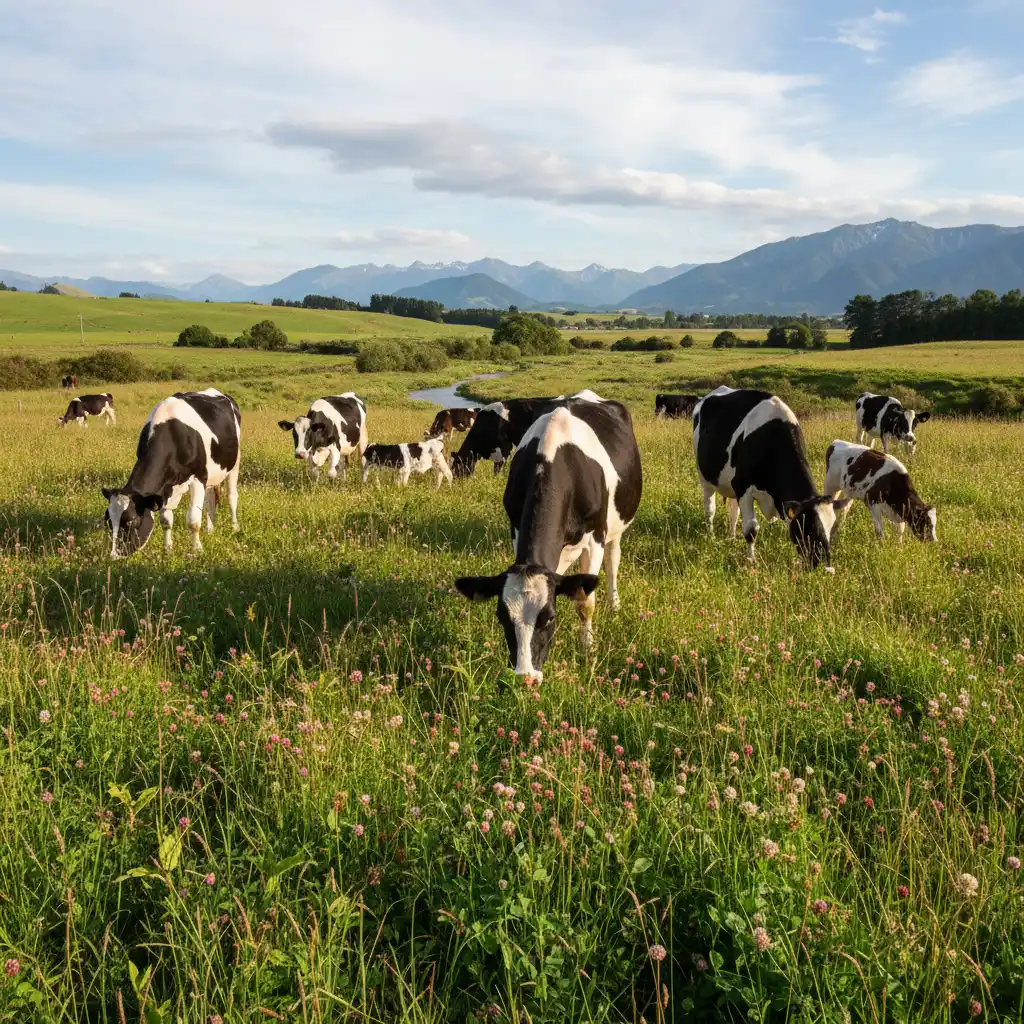
Research has shown that certain forage types can naturally reduce methane emissions. For example, incorporating plantain into pasture mixes has been shown to reduce nitrogen concentration in cow urine, thereby lowering nitrous oxide emissions. Additionally, high-sugar grasses and forage rape can improve digestive efficiency. In the near future, methane inhibitors like Bovaer (3-NOP) or seaweed-based supplements (Asparagopsis) may be integrated into supplementary feed systems to further drive down biogenic methane levels.
Selective Breeding for Low-Emission Traits
New Zealand is a world leader in dairy genetics. Sustainable dairy farming in NZ now includes breeding programs aimed at selecting cows that naturally produce less methane per kilogram of dry matter intake. By utilizing genomic data, farmers can build herds that are more efficient converters of feed into milk, effectively reducing the carbon intensity of every liter of milk produced. This long-term strategy is essential for meeting the 2050 targets of the Zero Carbon Act.
The Role of Technology in Sustainable Dairy Farming
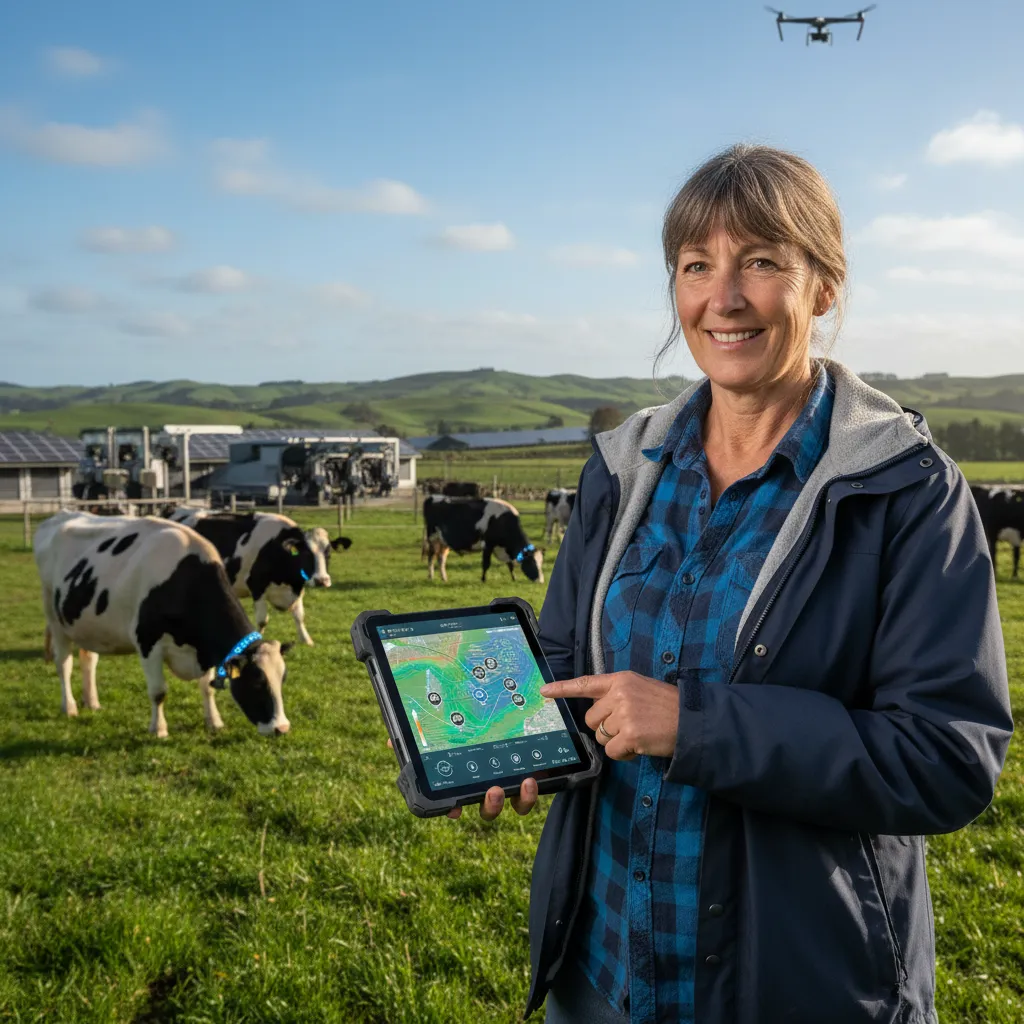
Innovation is the engine of sustainability. From satellite-based pasture mapping to wearable cow collars, technology allows for micro-management of resources. Wearable tech can monitor cow health and heat cycles, reducing the need for hormonal interventions and improving herd longevity. Meanwhile, soil sensors provide real-time data on moisture and temperature, allowing for precision irrigation that saves water and energy.
Ensuring Economic Viability and Global Market Access
Sustainability and profitability are not mutually exclusive. In fact, sustainable dairy farming in NZ is becoming a prerequisite for market access. Global consumers and multinational food companies are increasingly demanding low-carbon, ethically produced dairy products. By adhering to high environmental standards, NZ farmers can command a premium price and secure long-term contracts. Furthermore, reducing waste—whether it is wasted nutrients in effluent or wasted feed—directly improves the farm’s bottom line by lowering input costs.
Ultimately, the transition to sustainable dairy farming in NZ is about resilience. By protecting the natural capital of the land—the water, soil, and climate—farmers ensure that they can continue to produce high-quality food for a growing global population while honoring their role as kaitiaki (guardians) of the environment.
People Also Ask
What is the Zero Carbon Act’s target for NZ dairy?
The Zero Carbon Act requires a 10% reduction in biogenic methane emissions by 2030 and a 24-47% reduction by 2050, compared to 2017 levels.
How does plantain help in sustainable dairy farming?
Plantain reduces the nitrogen concentration in cow urine. This leads to lower nitrous oxide emissions and reduced nitrogen leaching into groundwater.
What is FDE in New Zealand farming?
FDE stands for Farm Dairy Effluent. It is the mixture of dung, urine, and wash-down water from the milking shed, which is recycled as liquid fertilizer.
Why is riparian planting important for dairy farms?
Riparian planting creates a buffer zone that filters nutrients and sediment from runoff, prevents bank erosion, and improves aquatic biodiversity.
Can NZ dairy farms be carbon neutral?
While difficult due to methane emissions, farms aim for ‘net zero’ by reducing emissions and using carbon sequestration methods like planting trees and protecting peatlands.
What are methane inhibitors for cows?
Methane inhibitors are feed additives, such as 3-NOP or certain seaweeds, that disrupt the methane-producing enzymes in a cow’s rumen to reduce gas production.
About The Author
