How the NZ ETS Works
The New Zealand Emissions Trading Scheme (NZ ETS) works as a cap-and-trade system where the government limits total greenhouse gas emissions by issuing tradable New Zealand Units (NZUs). Businesses in regulated sectors must surrender one NZU for every tonne of carbon dioxide equivalent they emit, incentivizing emission reductions to lower compliance costs and meet climate targets.
How Does the NZ ETS Work as a Cap-and-Trade System?
The core of New Zealand’s climate change response is the Emissions Trading Scheme, a market-based tool designed to reduce greenhouse gas emissions. At its simplest, it puts a price on carbon. By creating a financial cost for emitting gases like carbon dioxide, methane, and nitrous oxide, the government encourages businesses to invest in cleaner technologies and more efficient processes.
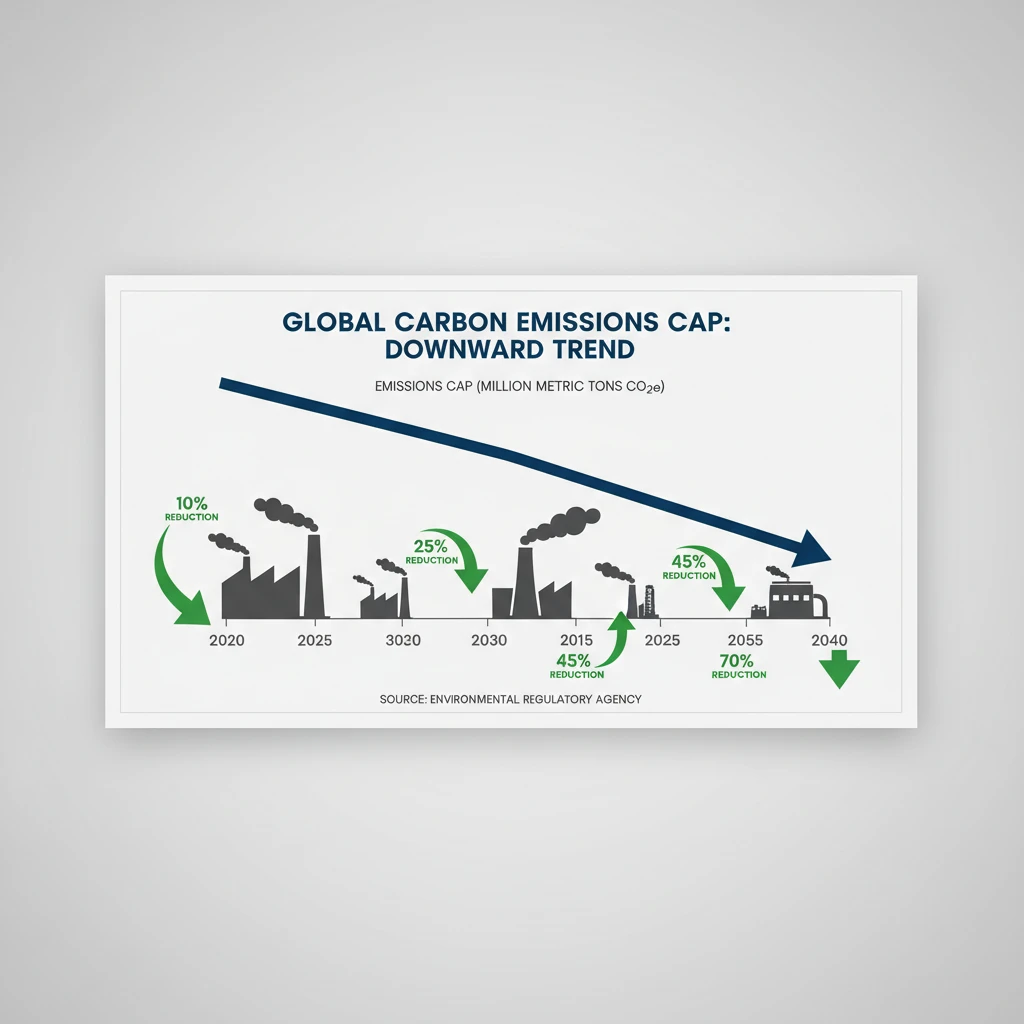
The “cap” in cap-and-trade refers to the limit set by the government on the total amount of greenhouse gases that can be emitted by all sectors covered by the scheme. This cap is not a hard limit on individual businesses but rather a limit on the total supply of emission units (NZUs) available in the market. Over time, the government reduces this cap to align with New Zealand’s international commitments under the Paris Agreement and the domestic targets set by the Climate Change Response (Zero Carbon) Amendment Act 2019.
The “trade” aspect allows businesses to buy and sell NZUs. If a company can reduce its emissions cheaply, it can sell its excess units to another company that finds it more expensive to decarbonize. This ensures that the overall reduction in emissions happens where it is most cost-effective for the economy. The market price of an NZU fluctuates based on supply and demand, influenced by government policy, economic activity, and the availability of units from the forestry sector.
NZUs (New Zealand Units) Explained
The New Zealand Unit, or NZU, is the primary currency of the NZ ETS. One NZU represents one metric tonne of carbon dioxide equivalent (CO2-e). To comply with the law, participants must surrender NZUs to the Crown to account for their emissions. If a business emits 10,000 tonnes of CO2-e in a year, it must provide 10,000 NZUs to the government by a specific deadline.
How are NZUs Created and Distributed?
NZUs enter the market through several primary channels:
- Government Auctions: The government holds quarterly auctions where it sells a predetermined volume of units to the highest bidders. This is now the main way new units enter the system.
- Forestry Credits: Foresters can earn NZUs for the carbon their trees sequester as they grow. This is a unique feature of the NZ system compared to many international schemes.
- Industrial Allocation: To prevent “carbon leakage” (where businesses move overseas to countries with laxer climate rules), the government provides free NZUs to some emissions-intensive, trade-exposed (EITE) industries.

The Value of an NZU
The price of an NZU is a signal to the market. When the price is high, it becomes more profitable for a business to invest in an electric boiler or a fleet of EVs than to keep buying units. Conversely, if the price is too low, it may be cheaper to keep emitting. The government uses price control settings, such as the Cost Containment Reserve (CCR) and the Price Ceiling, to manage extreme volatility, though the long-term trend is designed to be upward to drive deep decarbonization.
Who is Covered? Obligated Sectors
The NZ ETS is comprehensive, covering roughly 50% of New Zealand’s total greenhouse gas emissions. However, not every business interacts with the scheme directly. The scheme targets “upstream” participants to simplify administration. For example, instead of every driver paying for their car’s emissions, the fuel companies (the importers) are the obligated participants who must buy and surrender units.
Energy and Liquid Fuels
This sector includes companies that import or produce coal, natural gas, and liquid fuels like petrol and diesel. Because these companies pass the cost of NZUs down to the consumer, the ETS effectively raises the price of fossil fuels, encouraging a shift toward renewable energy and public transport.
Industrial Processes
Large industrial plants that produce steel, aluminum, cement, or lime have direct obligations. These processes often involve chemical reactions that release CO2 regardless of the energy source used. As mentioned, many of these firms receive free allocations to help them remain competitive while they transition.
Waste and Synthetic Gases
Operators of large landfills must pay for the methane generated by decomposing waste. Similarly, importers of synthetic greenhouse gases (used in refrigeration and air conditioning) must surrender units based on the high global warming potential of these chemicals.

The Agriculture Exception
Agriculture is currently the only major sector that does not have to surrender units for its emissions (methane and nitrous oxide), despite being responsible for nearly half of New Zealand’s total emissions. However, the sector is required to report its emissions, and there have been ongoing legislative debates regarding when and how agriculture will eventually face a price on its carbon footprint.
The Unique Role of Forestry in the NZ ETS
Forestry is a critical component of the NZ ETS because it can act as both a source of emissions and a way to remove carbon from the atmosphere. When new forests are planted (afforestation), they absorb CO2, and the owners can claim NZUs. This provides a financial incentive for land use change, turning marginal farmland into permanent or production forests.
Sequestration and Harvesting
While growing trees earn credits, harvesting them usually results in a liability. When a forest is cut down, the carbon stored is considered “released,” and the owner must surrender NZUs back to the government. This creates a cyclical balance. Recent changes have introduced “averaging carbon accounting” for new forests, which simplifies the process for commercial foresters by allowing them to earn units up to the average carbon storage level of the forest over several rotations without needing to pay them back upon harvest, provided the land is replanted.
Auctions and Price Control Mechanisms
To ensure the market functions smoothly and avoids price spikes that could damage the economy, the government uses several tools. The quarterly auctions have a “floor price” (the confidential reserve price) below which units will not be sold. This prevents the price from crashing and maintaining the incentive to decarbonize.
On the other end, the Cost Containment Reserve (CCR) is a trigger mechanism. If the price of NZUs reaches a certain high threshold during an auction, the government releases a reserve of additional units to increase supply and dampen the price. This protects businesses from sudden, extreme cost increases while still allowing the price to reflect the scarcity of emissions headroom.

Compliance, Reporting, and Penalties
Participation in the NZ ETS is mandatory for businesses that meet the criteria for obligated sectors. These businesses must register with the Environmental Protection Authority (EPA) and open a holding account in the New Zealand Emission Unit Register (NZ EUR). The NZ EUR is essentially an online banking system for carbon units.
The Annual Cycle
The compliance year follows the calendar year. Participants must monitor their emissions and submit an emissions return by March 31 of the following year. Once the return is verified, they must surrender the required number of NZUs by May 31. Failure to comply results in significant financial penalties, often several times the market price of the units owed, and the business still owes the original units to the Crown. This strict enforcement ensures the integrity of the scheme and guarantees that New Zealand’s national emissions accounts are accurate.
The Role of the Climate Change Commission
The government does not set the rules in a vacuum. The Climate Change Commission provides independent, evidence-based advice on the settings of the NZ ETS, including the number of units to be auctioned and the price control levels. This independence is designed to provide long-term certainty to the market, allowing businesses to make multi-decade investment decisions with confidence in the direction of New Zealand’s climate policy.
People Also Asked (PAA)
Does the NZ ETS actually reduce emissions?
Yes, by putting a price on carbon, the NZ ETS makes high-emissions activities more expensive and low-emissions activities more profitable. Over time, this shifts investment toward renewable energy, energy efficiency, and reforestation, which are essential for meeting New Zealand’s 2050 net-zero target.
Who has to pay for the NZ ETS?
Directly, about 300 to 400 large companies (participants) must pay. Indirectly, every New Zealander pays through higher costs for petrol, electricity (if generated from gas or coal), and other goods where carbon costs are passed down the supply chain.
What is the current price of an NZU?
The price of an NZU fluctuates daily on the secondary market. It is influenced by government auction results, policy changes, and global carbon market trends. You can check current spot prices on various New Zealand carbon trading platforms.
Can I buy NZUs as an individual?
Yes, any individual or organization can open an account in the New Zealand Emission Unit Register and buy NZUs through a broker. Some people buy them as an investment, while others buy and “cancel” them to voluntarily offset their own carbon footprint.
What happens to the money from NZ ETS auctions?
The revenue generated from NZU auctions goes into the government’s Climate Emergency Response Fund (CERF). This money is ring-fenced to fund climate-related initiatives, such as decarbonizing the public sector, supporting industrial innovation, and improving public transport.
How does the NZ ETS compare to other countries?
The NZ ETS is unique because it includes forestry and covers almost all sectors of the economy except agriculture. Most other schemes, like the EU ETS, focus primarily on heavy industry and power generation and do not fully integrate forestry credits in the same way.
About The Author
