Voluntary Carbon Markets NZ
Voluntary carbon markets in New Zealand allow businesses and individuals to offset their greenhouse gas emissions by purchasing carbon credits from verified projects, such as native forest regeneration. Unlike the mandatory Emissions Trading Scheme (ETS), participation is optional and driven by Corporate Social Responsibility (CSR) goals to achieve carbon neutrality.
As the global urgency to combat climate change intensifies, New Zealand stands at a pivotal intersection of policy, ecology, and commerce. While the New Zealand Emissions Trading Scheme (NZ ETS) serves as the primary compliance tool for large emitters, the voluntary carbon market (VCM) has emerged as a critical mechanism for businesses aiming to go beyond regulatory minimums. Driven by the Climate Change Response (Zero Carbon) Amendment Act, organizations are increasingly turning to high-integrity offsets to validate their sustainability claims.
Navigating this landscape requires a deep understanding of certification standards, the unique value of native forestry, and the strategic imperatives of Corporate Social Responsibility (CSR). This guide provides an authoritative overview of the voluntary carbon ecosystem in Aotearoa.
What are Voluntary Carbon Markets in New Zealand?
The voluntary carbon market operates in parallel to the compliance market but serves a fundamentally different purpose. In the compliance market (NZ ETS), participation is mandatory for sectors like energy, transport, and forestry. Conversely, the voluntary market is inhabited by organizations and individuals who choose to offset their emissions to meet internal sustainability targets, satisfy stakeholder expectations, or achieve certifications like Carbon Zero.
In New Zealand, a voluntary carbon credit typically represents one tonne of carbon dioxide equivalent (tCO2e) that has been either removed from the atmosphere or avoided entirely. These credits are generated by projects that might not otherwise be viable without carbon finance. The market is fluid, with prices dictated by supply and demand dynamics, project quality, and the specific “story” attached to the credit—such as biodiversity benefits or community engagement.

How Does the Voluntary Market Differ from the NZ ETS?
The distinction between the NZ ETS and the VCM is crucial for investors and corporate sustainability officers. The NZ ETS is a “cap-and-trade” system controlled by the government, where the price of New Zealand Units (NZUs) is heavily influenced by regulatory settings. The VCM, however, is decentralized.
While an NZU is a generic commodity, voluntary credits are often differentiated products. A credit generated from a Verified Carbon Standard (VCS) project involving indigenous reforestation in Northland may command a significantly higher price than a generic renewable energy credit from overseas. This price premium reflects the “co-benefits” of the project, such as habitat restoration for Kiwi or improvement of water quality.
What Standards Ensure Credit Integrity? (VCS & Gold Standard)
In the absence of government regulation, trust is the currency of the voluntary carbon market. Without rigorous verification, the market is susceptible to “greenwashing”—claims of carbon neutrality based on low-quality or non-existent emission reductions. To mitigate this, New Zealand entities rely on internationally recognized standards.
The Verified Carbon Standard (VCS)
The Verified Carbon Standard (VCS), managed by Verra, is the world’s most widely used voluntary GHG program. For a New Zealand project to issue VCS credits, it must undergo a rigorous validation process. This ensures the project is:
- Real: The emission reductions have actually occurred.
- Measurable: The reductions can be quantified using approved methodologies.
- Permanent: The carbon is stored long-term (crucial for forestry).
- Additional: The project would not have happened without the revenue from carbon credits.
For New Zealand businesses, purchasing VCS-accredited units provides a layer of security that protects brand reputation. It ensures that the capital invested in offsets is delivering genuine climate action.
Local Certification Bodies: Toitū and Ekos
While international standards like VCS and Gold Standard are vital, New Zealand has developed robust local certification frameworks tailored to our unique ecosystem. Organizations like Toitū Envirocare and Ekos play a pivotal role. They not only verify credits but also provide certification programs (e.g., Toitū carbonzero) that guide businesses through the measurement, reduction, and offsetting process. These local bodies often prioritize projects that support New Zealand’s specific environmental goals, such as the regeneration of indigenous flora.
Why Are Native Forest Offsets Critical in NZ?
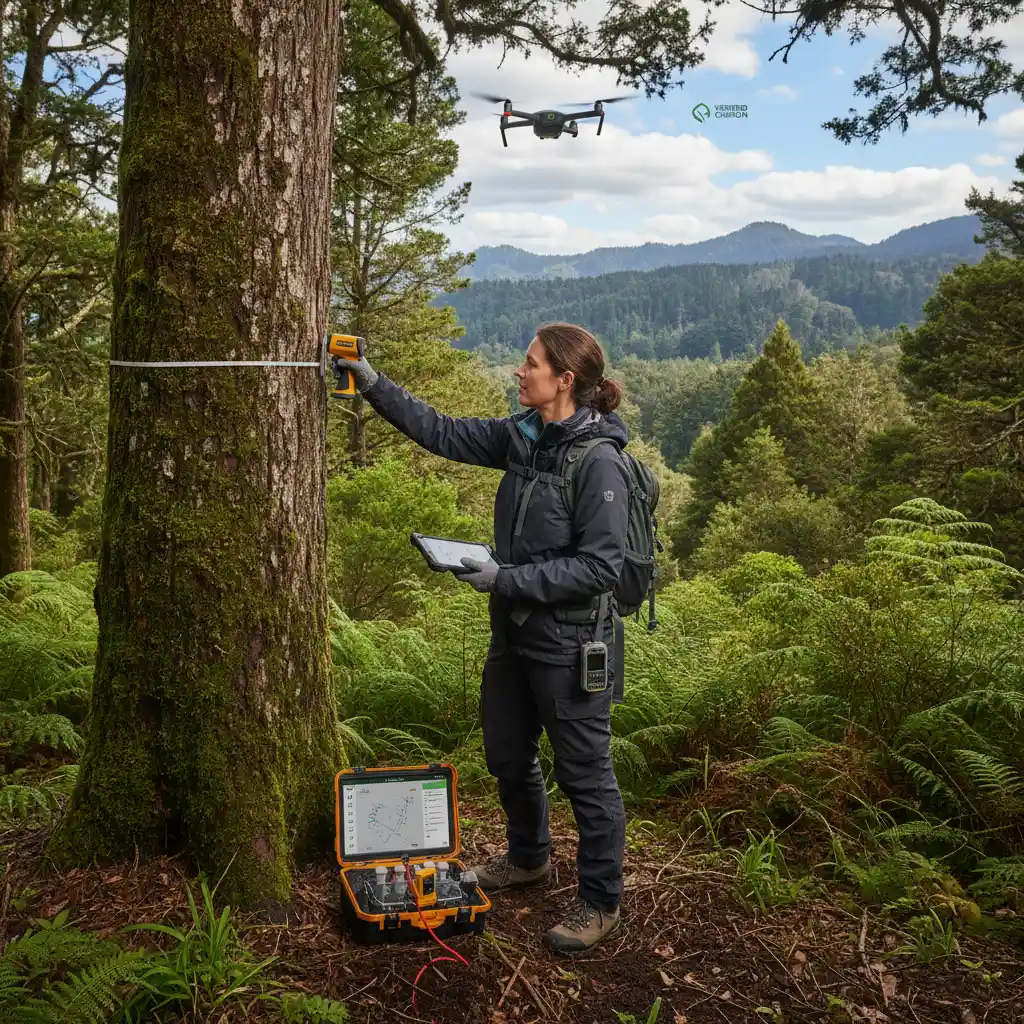
One of the most defining characteristics of the New Zealand voluntary carbon market is the high demand for native forest offsets. Unlike exotic plantations (such as Pinus radiata), which grow quickly and sequester carbon rapidly, native forests sequester carbon over centuries and provide irreplaceable ecological services.
The Biodiversity Premium
Native forest projects involving species like Mānuka, Kānuka, Tōtara, and Rimu offer extensive co-benefits that exotic monocultures cannot match. These include:
- Biodiversity Enhancement: Providing habitat for endangered native birds and insects.
- Erosion Control: Native root systems are often better suited for stabilizing steep New Zealand hill country.
- Water Quality: Native vegetation improves catchment filtration, leading to cleaner waterways.
- Cultural Significance: Many native projects are developed in partnership with Iwi, supporting Māori economic development and Kaitiakitanga (guardianship).
Permanent Carbon Sinks vs. Production Forestry
In the context of the voluntary market, buyers often prefer “permanent” carbon sinks. Production forestry carries the risk that the trees will eventually be harvested, releasing some stored carbon and requiring replanting. Native regeneration projects are typically established as permanent sinks, aligning better with the long-term ethos of the Zero Carbon Act. Consequently, voluntary credits sourced from NZ native regeneration usually trade at a significant price premium compared to international units or local exotic units.

How Does CSR Drive Voluntary Carbon Action?
Corporate Social Responsibility (CSR) has evolved from a philanthropic side-activity to a core strategic imperative. In New Zealand, the Zero Carbon Act has set a national direction, but it is CSR that drives the voluntary market. Businesses are realizing that mere compliance is no longer sufficient to satisfy customers, investors, or employees.
Reputation and Brand Equity
Consumers are increasingly eco-conscious. A study of New Zealand consumer trends indicates a growing preference for brands that can demonstrate tangible climate action. By participating in voluntary carbon markets, companies can earn certifications (like Carbon Neutral or Climate Positive) that serve as powerful marketing differentiators. However, this comes with the responsibility of transparency. The Commerce Commission has warned against unsubstantiated environmental claims, making the provenance of voluntary credits essential.
Supply Chain Pressure (Scope 3 Emissions)
Large entities and government departments are beginning to mandate sustainability requirements for their suppliers. Small to medium enterprises (SMEs) in New Zealand often enter the voluntary carbon market not just for altruistic reasons, but to remain eligible for tenders with larger organizations that are tracking their Scope 3 (supply chain) emissions. Purchasing voluntary offsets allows these SMEs to neutralize their footprint and remain competitive.
Talent Acquisition and Retention
The modern workforce seeks purpose. Companies with robust climate strategies, evidenced by participation in high-quality voluntary offsetting, report higher engagement and retention rates. Employees want to know that their labor contributes to an organization that respects planetary boundaries.

What Are the Risks and Challenges?
Despite the growth, the voluntary carbon market in New Zealand faces significant hurdles that participants must navigate carefully.
The Risk of Greenwashing
As demand for offsets grows, so does the scrutiny. “Greenwashing” occurs when a company uses carbon credits to mask a lack of internal emission reductions. Best practice dictates a hierarchy of action: Measure, Reduce, then Offset. Offsetting should only be used for unavoidable residual emissions. Relying solely on the voluntary market without decarbonizing operations is increasingly viewed as reputational suicide.
Price Volatility and Supply Constraints
The supply of high-quality, NZ-native carbon credits is limited. Establishing native forests is expensive and slow. As demand outstrips supply, prices for these premium units are expected to rise. This volatility makes long-term CSR budgeting difficult for businesses. Furthermore, the global nature of some voluntary markets means that international policy shifts can impact credit availability and pricing.
Regulatory Uncertainty
While the government supports the voluntary market in principle, the interaction between voluntary offsets and national Nationally Determined Contributions (NDCs) under the Paris Agreement is complex. There is ongoing debate regarding “double counting”—whether a credit claimed by a company can also be counted toward New Zealand’s national targets. Clarification on these accounting rules is essential for the long-term integrity of the market.
The Future of NZ’s Voluntary Carbon Market
The trajectory for voluntary carbon markets in New Zealand is upward, driven by the convergence of the Zero Carbon Act, international trade requirements, and escalating climate awareness.
We anticipate a “flight to quality,” where the market bifurcates. Low-quality, cheap international credits will likely fall out of favor as scrutiny increases, while high-integrity, local native forest credits will become the gold standard for NZ businesses. Innovations in “Carbon farming” and biodiversity credits may soon layer upon existing carbon markets, offering landowners new revenue streams and businesses more holistic ways to invest in nature.
Ultimately, the voluntary market serves as the proving ground for climate ambition. It allows the private sector to move faster than regulation, piloting the solutions necessary for a low-carbon future.
People Also Ask
What is the difference between carbon neutral and net zero?
Carbon neutral typically refers to balancing out the total amount of carbon released with an equivalent amount of offsets (buying credits). Net Zero is a more rigorous standard (often defined by the SBTi) that requires reducing emissions across the value chain by 90%+ in line with 1.5°C science, and only neutralizing the residual emissions with permanent removals.
Can I use voluntary carbon credits for NZ ETS obligations?
Generally, no. Voluntary carbon credits (like those from VCS or Gold Standard) cannot be surrendered to the government to meet mandatory obligations under the New Zealand Emissions Trading Scheme (NZ ETS). The NZ ETS requires specific New Zealand Units (NZUs).
How much do voluntary carbon credits cost in NZ?
Prices vary wildly depending on quality and source. International renewable energy credits might cost a few dollars per tonne, whereas high-quality New Zealand native forest regeneration credits can trade for $50 to $100+ per tonne due to their scarcity and biodiversity co-benefits.
How do I verify if a carbon credit is legitimate?
Look for credits verified by reputable third-party standards such as the Verified Carbon Standard (Verra), Gold Standard, or local NZ programs like Toitū Envirocare and Ekos. These bodies maintain public registries where you can track the retirement of credits to ensure they aren’t sold twice.
What is a native forest offset?
A native forest offset is a carbon credit generated by the planting or regeneration of indigenous New Zealand tree species (like Totara, Rimu, or Manuka). These are highly valued because they sequester carbon permanently while also restoring local ecosystems and biodiversity.
Is participation in the voluntary market tax deductible in NZ?
In many cases, businesses can claim the cost of purchasing carbon credits as a deductible business expense if it is connected to deriving assessable income (e.g., for marketing or CSR purposes). However, tax laws are complex, and specific professional advice should be sought from an accountant.
About The Author
