Auckland Regional Climate Action
Auckland regional climate action centers on Te Tāruke-ā-Tāwhiri: Auckland’s Climate Plan, a comprehensive strategy to halve regional emissions by 2030 and reach net zero by 2050. It integrates transport decarbonization, sustainable housing, and community resilience to mitigate climate risks while aligning with New Zealand’s Zero Carbon Act.
As New Zealand’s largest economic hub and most populous city, Auckland plays a pivotal role in the nation’s trajectory toward a low-carbon future. The region faces a dual challenge: drastically reducing greenhouse gas emissions while simultaneously adapting to the increasing frequency of extreme weather events, such as the severe flooding experienced in early 2023. The strategic response is multi-faceted, involving heavy investment in public transport, urban regeneration, and the restoration of natural ecosystems.
What is Te Tāruke-ā-Tāwhiri: Auckland’s Climate Plan?
At the heart of Auckland regional climate action is Te Tāruke-ā-Tāwhiri: Auckland’s Climate Plan. Adopted in July 2020 following the Council’s declaration of a climate emergency, this document is not merely a policy paper but a roadmap for survival and prosperity. The name, gifted by mana whenua, translates to “The Struggle of Tāwhiri,” referencing Tāwhirimātea, the atua (ancestor) of winds and weather. It signifies the turbulent nature of the changing climate and the urgent need for humanity to rebalance its relationship with the environment.
The plan is underpinned by three core pillars that differentiate it from standard municipal climate strategies:
- To be bold and ambitious: Setting a target to reduce emissions by 50% by 2030 (against a 2016 baseline) and achieve net zero by 2050. This is more aggressive than the national target in certain sectors to account for Auckland’s capability to lead.
- A Māori-led approach: Embedding mātauranga Māori (Māori knowledge) and kaitiakitanga (guardianship) into decision-making. This ensures that climate action honors the Treaty of Waitangi and utilizes indigenous wisdom regarding environmental stewardship.
- A fair and just transition: Recognizing that climate change disproportionately affects vulnerable communities. Policies are designed to improve equity, ensuring that low-income households are not burdened by the costs of transition, such as potential increases in energy or transport costs.
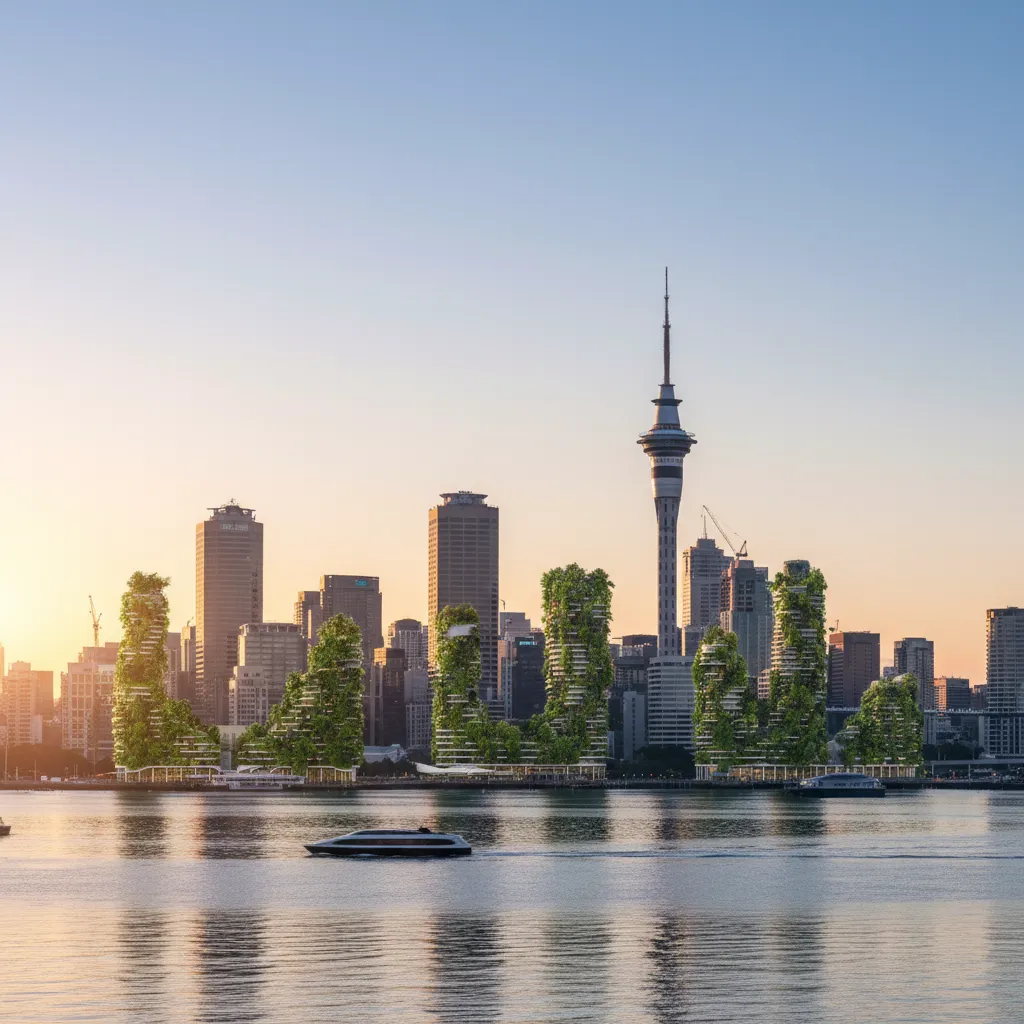
The Eight Priority Areas
Te Tāruke-ā-Tāwhiri breaks down regional action into eight priority areas to ensure comprehensive coverage:
- Natural Environment: Enhancing carbon sequestration through reforestation and wetland restoration.
- Built Environment: ensuring low-carbon construction and energy-efficient retrofitting.
- Transport: Facilitating a massive mode shift away from private vehicles.
- Economy: Transitioning to a circular economy where waste is minimized.
- Communities and Coast: Preparing for sea-level rise and coastal inundation.
- Food: Promoting local, low-carbon food systems to reduce food miles.
- Te Puāwaitanga ō te Tātai: Focusing on Māori resilience and well-being.
- Energy and Industry: Decarbonizing process heat and industrial energy usage.
How is Auckland Reducing Transport Emissions?
Transport is the single largest source of emissions in Auckland, accounting for approximately 43.4% of the region’s total gross emissions. Consequently, Auckland regional climate action is heavily weighted toward revolutionizing how people and goods move across the isthmus. The primary mechanism for this is the Transport Emissions Reduction Pathway (TERP).
The Transport Emissions Reduction Pathway (TERP)
Adopted by Auckland Council and Auckland Transport (AT), TERP sets a hyper-ambitious goal: a 64% reduction in transport emissions by 2030. This is necessary because other sectors, such as agriculture, have slower decarbonization pathways. To achieve this, the region is focusing on three levers:
- Mode Shift: The target requires a substantial reduction in light vehicle kilometers traveled. This involves converting car trips to public transport, walking, and cycling. Projects like the City Rail Link (CRL), the Eastern Busway, and the expansion of the cycleway network are critical infrastructure investments supporting this shift.
- Electrification: Accelerating the uptake of electric vehicles (EVs) for those trips that must be made by car, and transitioning the entire public bus fleet to electric or hydrogen power. Auckland Transport has already ceased purchasing diesel buses, aiming for a fully zero-emission fleet well before 2040.
- Urban Form: Reshaping the city to be a “compact city” where amenities are within a 15-minute walk or bike ride, reducing the need for travel altogether.
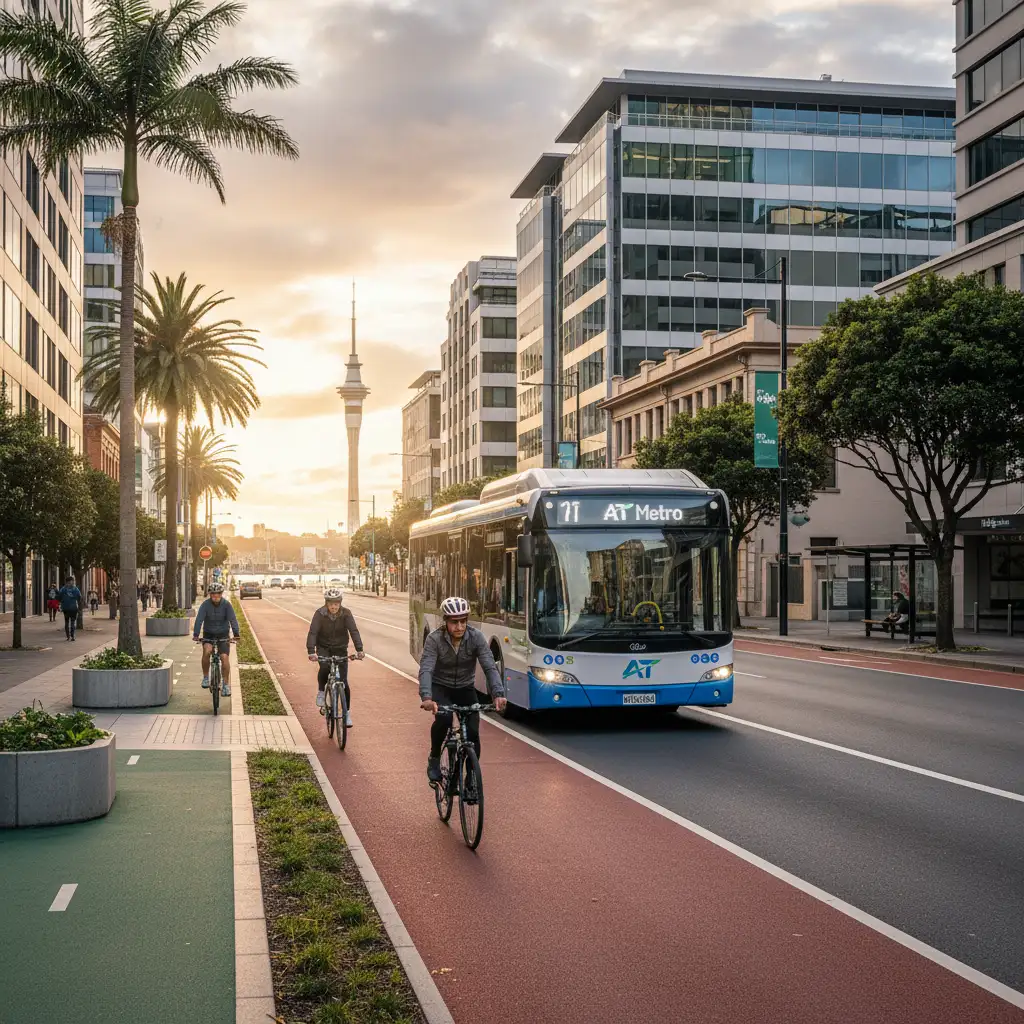
Challenges in Transport Policy
Despite the clear roadmap, implementation faces hurdles. The debate over the allocation of road space—removing parking to create bus lanes or cycleways—remains contentious. However, the data indicates that without these structural changes, the 2030 targets are unattainable. The strategy moves beyond simply providing alternatives; it involves demand management, potentially including future discussions on congestion charging or time-of-use road pricing to disincentivize single-occupancy vehicle use during peak times.
What are the Housing and Built Environment Initiatives?
The built environment contributes to emissions through two main channels: the embodied carbon in construction materials (concrete, steel) and the operational carbon from energy used to heat, cool, and power buildings. Auckland regional climate action addresses both through regulatory levers and incentives.
Low Carbon Urban Development
The National Policy Statement on Urban Development (NPS-UD) mandates intensification around transit hubs. Auckland Council’s response aligns with climate goals by encouraging high-density living near train stations and busways. This “Transit-Oriented Development” (TOD) reduces reliance on cars and prevents urban sprawl into greenfield areas, which are carbon sinks.
Key initiatives include:
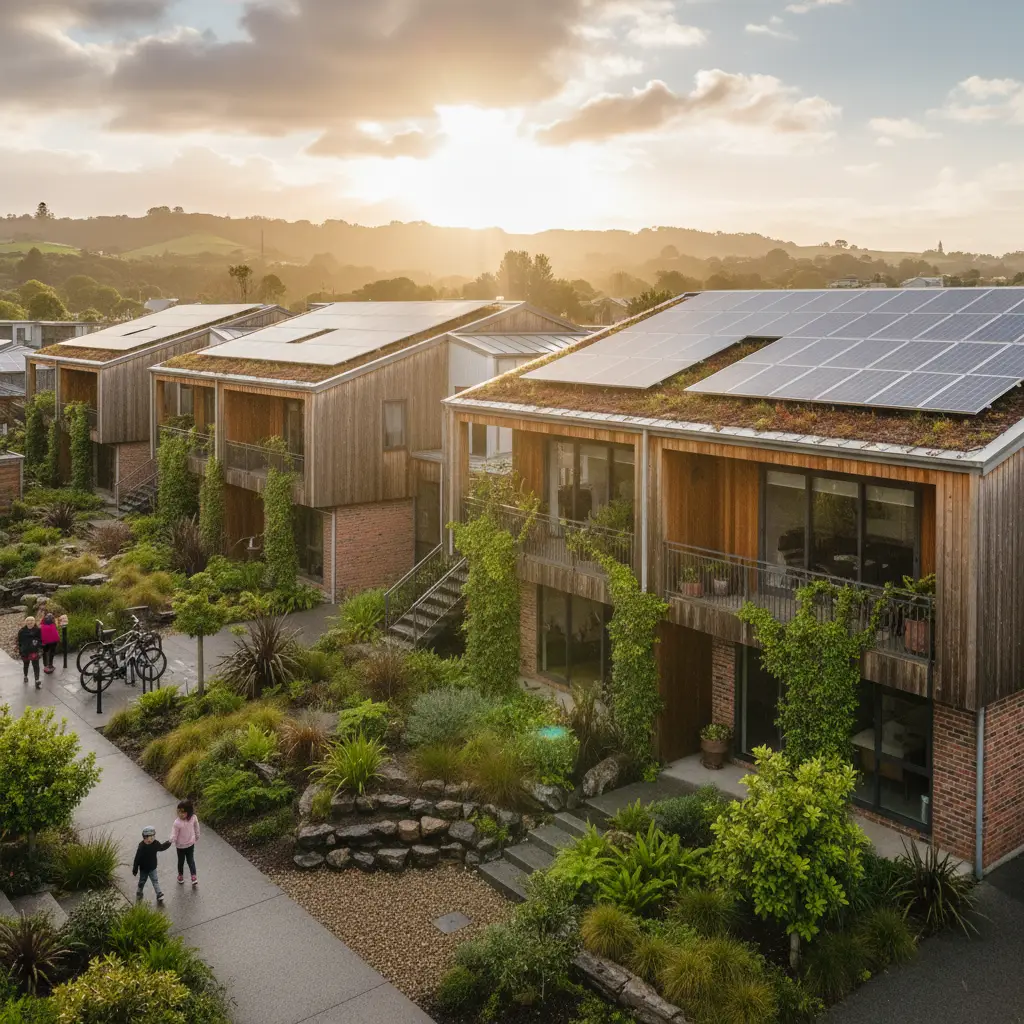
- Retrofitting Schemes: Programs designed to improve the thermal performance of Auckland’s existing housing stock, which is often damp and energy-inefficient. Better insulation reduces the energy load required for heating, lowering peak demand on the grid.
- Green Building Standards: Promoting Homestar and Green Star ratings for new developments. The council is advocating for changes to the Building Code to mandate higher energy efficiency standards and lower embodied carbon in materials.
- Construction Waste Minimization: Construction and demolition waste make up half of New Zealand’s landfill waste. Auckland is piloting projects to deconstruct rather than demolish buildings, recovering materials for reuse in a circular economy model.
How is Auckland Building Community Resilience?
Mitigation (reducing emissions) is only half the battle. Adaptation is now urgent. The Auckland Anniversary Weekend floods of 2023 and Cyclone Gabrielle highlighted the region’s vulnerability to extreme weather. Auckland regional climate action now prioritizes “Making Space for Water.”
Blue-Green Networks and Sponge Cities
Traditional “grey infrastructure” (concrete pipes and drains) is no longer sufficient for the volume of water Auckland now faces. The council is pivoting toward “blue-green networks”—re-naturalizing streams and creating wetlands that act as sponges during heavy rain.
Key Resilience Projects:
- Te Auaunga (Oakley Creek) Restoration: A prime example of replacing concrete channels with a naturalized stream ecosystem that manages floodwater while providing community amenity.
- Coastal Management Plans: Developing strategies for Auckland’s vast coastline, which faces sea-level rise. This involves difficult conversations about “managed retreat”—moving communities away from high-risk coastal zones where engineering solutions like sea walls are no longer viable or cost-effective.
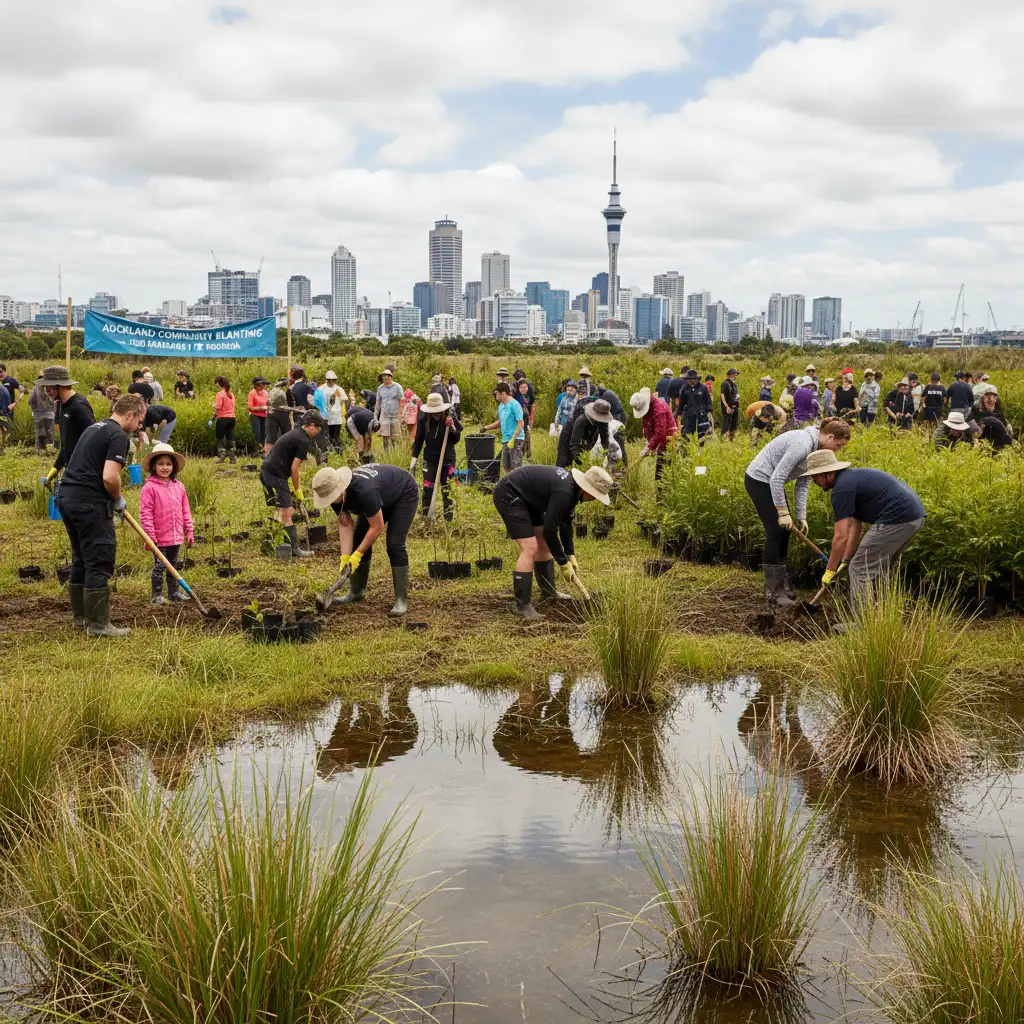
- Urban Ngahere (Forest) Strategy: Increasing the tree canopy cover across the region to mitigate the “urban heat island” effect. Trees provide shade, reduce ambient temperatures, and absorb stormwater. The target is to increase average canopy cover to 30% across urban Auckland, with a focus on equity in South Auckland where canopy cover is currently lowest.
How is Climate Action Funded?
Policy without funding is merely aspiration. To operationalize Te Tāruke-ā-Tāwhiri, Auckland Council introduced the Climate Action Targeted Rate (CATR). This is a ring-fenced tax specifically designed to fund climate initiatives.
The CATR is projected to raise approximately $574 million over ten years (starting from 2022/2023). This funding is allocated directly to:
- Improving Bus Services: Funding frequent bus routes to ensure that over a million Aucklanders live within 500 meters of a frequent service.
- Decarbonizing Ferries: Accelerating the deployment of low-emission ferries.
- Walking and Cycling: Completing key links in the cycle network.
- Urban Ngahere: Planting thousands of mature native trees in thermal hotspots.
This targeted rate ensures that climate projects are not cut during general budget constraints, providing a guaranteed pipeline of investment for the decade.
Alignment with New Zealand’s Zero Carbon Act
Auckland’s regional efforts do not exist in a vacuum; they are tightly coupled with the Climate Change Response (Zero Carbon) Amendment Act 2019. This national legislation sets the legal framework for New Zealand to limit global warming to 1.5 degrees Celsius.
Auckland’s regional targets are actually more aggressive than the national floor. While the Zero Carbon Act sets the destination, Auckland’s Te Tāruke-ā-Tāwhiri dictates the local speed and method of travel. The regional plan informs the Emissions Reduction Plans (ERPs) required by the government, acting as a testing ground for policies that can be rolled out nationally.
The Role of the Emissions Trading Scheme (ETS)
The NZ ETS puts a price on carbon, which impacts Auckland’s industries and waste management sectors. Auckland Council leverages the ETS price signals to justify investments in waste diversion (like the rollout of food scrap bins to every household), as the cost of landfilling rises with the carbon price.
Conclusion
Auckland regional climate action is a complex, high-stakes undertaking that requires the synchronization of transport, housing, and environmental policy. Through Te Tāruke-ā-Tāwhiri, the region has a robust framework that goes beyond simple emissions counting to address social equity and Māori sovereignty. The introduction of the Climate Action Targeted Rate demonstrates a financial commitment to these goals. However, the success of these initiatives depends on the continued acceleration of the Transport Emissions Reduction Pathway and the willingness of the community to embrace a shift in lifestyle—from how they travel to how they live within the built environment.
What is the main goal of Auckland’s Climate Plan?
The main goal of Te Tāruke-ā-Tāwhiri: Auckland’s Climate Plan is to reduce regional greenhouse gas emissions by 50% by 2030 (against a 2016 baseline) and achieve net zero emissions by 2050, while adapting to the impacts of climate change.
What is the Climate Action Targeted Rate (CATR)?
The CATR is a specific tax introduced by Auckland Council to raise approximately $574 million over ten years. It is ring-fenced to fund climate initiatives, primarily focusing on improving public transport, decarbonizing ferries, and increasing the urban tree canopy.
How does Auckland plan to reduce transport emissions?
Auckland plans to reduce transport emissions by 64% by 2030 through the Transport Emissions Reduction Pathway (TERP). This involves a massive mode shift to public transport, walking, and cycling, along with the electrification of the bus fleet and private vehicles.
What is the Urban Ngahere Strategy?
The Urban Ngahere (Forest) Strategy is an initiative to increase Auckland’s average tree canopy cover to 30% across the urban area. It aims to reduce the urban heat island effect, improve air quality, and manage stormwater runoff, with a focus on areas with currently low canopy cover.
How does Te Tāruke-ā-Tāwhiri incorporate Māori values?
The plan is founded on a partnership with mana whenua and incorporates Māori values such as kaitiakitanga (guardianship) and manaakitanga (hospitality/care). It ensures that climate actions respect the natural world as an ancestor and prioritize the well-being of future generations.
What is the role of the Zero Carbon Act in Auckland?
The Zero Carbon Act provides the national legislative framework that Auckland’s regional plans must align with. While the Act sets national targets, Auckland’s plan often sets more ambitious local targets to lead the country’s transition and address specific regional risks.
About The Author
