Community Climate Change Grants
To apply for climate change grants in NZ, identify relevant funding streams such as the Ministry for the Environment’s Community Environment Fund or specific local council sustainability schemes. Review eligibility criteria carefully, ensuring your project aligns with the Zero Carbon Act by demonstrating measurable emission reductions or increased community resilience, and submit a detailed proposal via the provider’s online portal.
Securing funding for environmental initiatives is a critical step for community groups, non-profits, and businesses committed to Aotearoa New Zealand’s transition to a low-emissions future. With the government’s stringent targets set under the Zero Carbon Act, numerous financial pathways have opened up to support grassroots and large-scale climate action.
National Government Climate Funds
When you look to apply for climate change grants NZ wide, the central government is often the primary source of substantial capital. These funds are designed to operationalize the Emissions Reduction Plan and support the national goal of net-zero carbon emissions by 2050.

Ministry for the Environment (MfE) Funds
The Ministry for the Environment administers several key funds. The Community Environment Fund (CEF) empowers New Zealanders to make a positive difference to the environment. Projects must demonstrate how they strengthen community partnerships and raise environmental awareness. Furthermore, the Waste Minimisation Fund is crucial for projects aiming to reduce waste to landfill, which is a significant contributor to methane emissions. While not labeled exclusively as “climate,” waste reduction is a pillar of NZ’s climate strategy.
Energy Efficiency and Conservation Authority (EECA)
EECA provides targeted funding primarily focused on energy transition. While the Government Investment in Decarbonising Industry (GIDI) fund targets large industrial players, there are funds available for community energy projects. These grants often support the installation of renewable energy technologies, such as solar panels on community halls, marae, and social housing, directly reducing reliance on the national grid and fossil fuels.
Department of Conservation (DOC) Community Fund
Biodiversity and climate change are intrinsically linked. The DOC Community Fund supports practical, on-the-ground projects that maintain and restore indigenous biodiversity. Healthy forests and wetlands act as carbon sinks, making these grants highly relevant for groups focusing on nature-based climate solutions.
Local Council Grant Schemes
Local government bodies in New Zealand play a pivotal role in adaptation and mitigation at a granular level. If national funding seems out of reach due to high competition, local council schemes are often more accessible for smaller community groups.
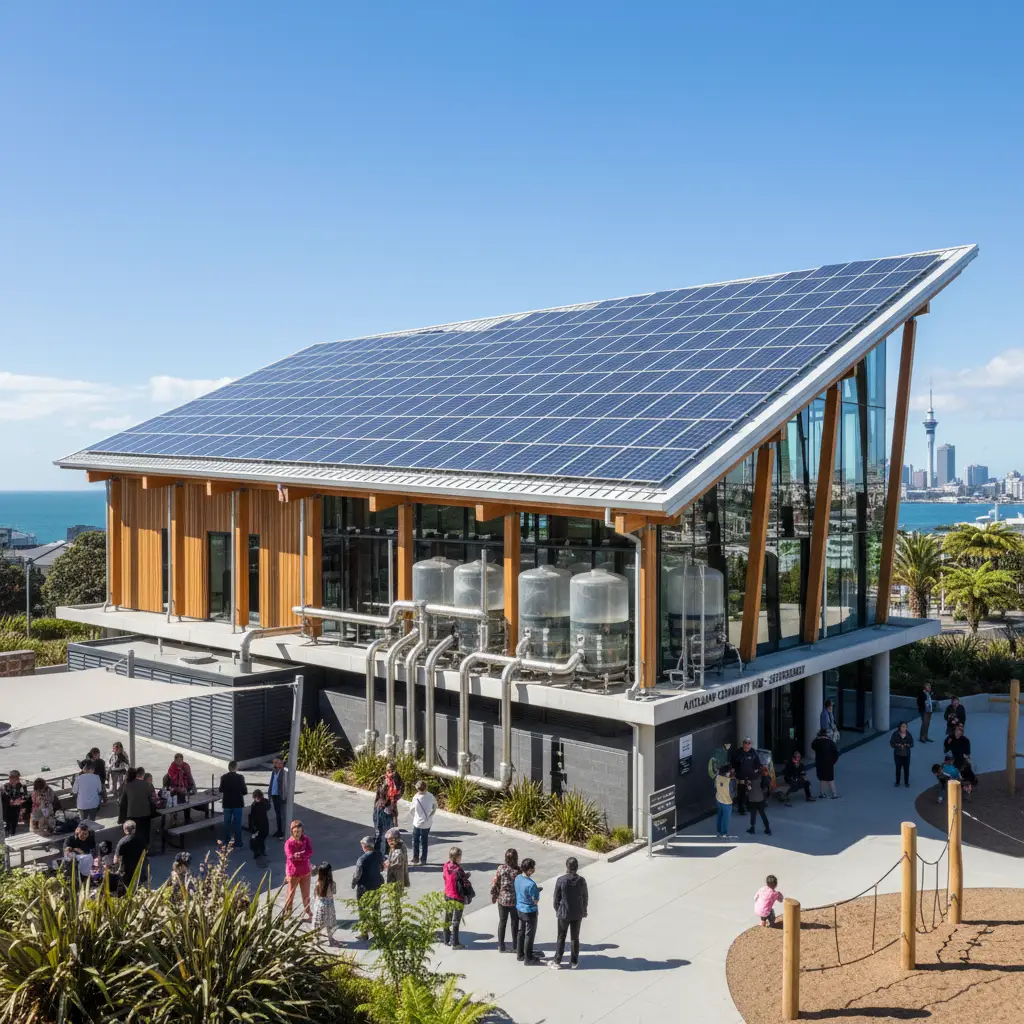
Auckland Council Climate Grant
Auckland Council offers the Auckland Climate Grant, specifically designed to support the implementation of Te Tāruke-ā-Tāwhiri: Auckland’s Climate Plan. This fund targets projects that reduce greenhouse gas emissions, build community resilience to climate impacts, and support Māori-led climate action. Grants generally range from $5,000 to $50,000, depending on the scale and impact of the proposal.
Wellington City Council Climate and Sustainability Fund
In the capital, the Climate and Sustainability Fund supports initiatives that help Wellington become a net-zero carbon city by 2050. This fund is unique as it supports both feasibility studies (to test an idea) and implementation projects. Priority is often given to projects that improve energy efficiency in buildings, promote sustainable transport, or develop the circular economy.
Christchurch and Regional Opportunities
The Christchurch City Council operates the Sustainability Fund, supporting projects that benefit the city’s environment and response to climate change. Similarly, regional councils like Environment Canterbury (ECan) and the Otago Regional Council often have “ECO Funds” or similar mechanisms. It is vital to check your specific regional council’s Long Term Plan (LTP), as funding priorities shift every three years based on local consultation.
Eligibility for Non-Profits and Community Groups
Before you prepare to apply for climate change grants NZ, understanding the eligibility landscape is essential to avoid wasted effort. While criteria vary between providers, there are standard requirements across the board.
Legal Entity Status
Most significant grants require the applicant to be a legal entity. This typically means being registered as a:
- Charitable Trust (registered with Charities Services).
- Incorporated Society.
- Māori Trust or Iwi Authority.
- Social Enterprise (Limited Liability Company with charitable status or clear social mission constitution).
Informal community groups often need to partner with a legal “umbrella” organization to hold the funds on their behalf.
Public Benefit Requirement
Grants are rarely awarded for private gain. The project must demonstrate a clear public benefit. For climate grants, this means the emission reductions or resilience improvements must benefit the wider community, not just a single private residence or business (unless it is a specific business efficiency grant like those from EECA).
Co-Funding and Financial Viability
Many funders prefer not to be the sole financier. They look for “co-funding,” which can be cash from other sources or “in-kind” contributions (volunteer hours, donated materials). Demonstrating that your organization is financially solvent and has the governance structure to manage public money is a non-negotiable prerequisite.
Step-by-Step Guide to Applying
Successfully securing funding is a transactional process that requires a strategic approach. Follow this workflow to maximize your chances.

1. Identify the Search Intent and Fund Match
Do not spray and pray. Read the fund’s guidance document line by line. Does your project align with their specific outcomes? For example, applying to a waste minimization fund with a solar panel project will result in immediate rejection.
2. The Pre-Application Meeting
Most grant managers encourage a pre-application discussion. Use this opportunity. Ask specific questions: “Is this project type a priority this round?” or “What are the common mistakes applicants make?” This establishes a relationship and can save you hours of writing if the fit isn’t right.
3. Developing the Business Case
Your proposal must be robust. It should include:
- The Problem: What specific climate issue are you addressing?
- The Solution: Technical details of your project.
- The Impact: Quantifiable data. Don’t just say “we will reduce emissions.” Say “We estimate a reduction of 50 tonnes of CO2e per year, calculated using MfE emission factors.”
- The Budget: Detailed, realistic, and backed by quotes from suppliers.
4. Submission and Accountability
Submit before the deadline. Online portals often close automatically at 5:00 PM. If successful, be prepared for reporting requirements. You will likely need to submit progress reports and a final accountability report proving the funds were spent as agreed.
Successful Project Examples
Analyzing successful precedents can provide a blueprint for your own application. Here are examples of initiatives that have successfully navigated the process to apply for climate change grants NZ.
Case Study 1: Marae Renewable Energy Resilience
Several Marae across the North Island successfully applied for the Māori Housing Renewable Energy Fund (managed by MBIE). The project involved installing solar PV systems and battery storage. The application highlighted two benefits: reducing electricity costs for the community (social benefit) and providing a resilient power hub during extreme weather events (climate adaptation).
Case Study 2: Urban Food Waste Composting
A Wellington-based community trust secured funding from the Waste Minimisation Fund to establish a localized composting network. By diverting organic waste from landfills, they quantified the methane avoidance. Their application was strong because it combined infrastructure (compost hubs) with education (workshops), ensuring long-term behavioral change.
Aligning with the Zero Carbon Act
The Climate Change Response (Zero Carbon) Amendment Act 2019 provides the framework for New Zealand’s climate policy. To increase your grant success rate, your language should mirror this legislation.

When writing your application, explicitly state whether your project contributes to:
- Mitigation: Reducing the amount of greenhouse gas released into the atmosphere (e.g., electric vehicle charging stations, energy efficiency retrofits).
- Adaptation: Adjusting to the current and future effects of climate change (e.g., planting mangroves to stop coastal erosion, upgrading stormwater infrastructure).
Reference the National Adaptation Plan or the Emissions Reduction Plan. Showing that your local project contributes to these national statutory obligations makes it difficult for government funders to ignore your proposal.
People Also Ask
Who is eligible for climate change grants in NZ?
Eligibility typically includes registered charities, incorporated societies, iwi/hapũ organizations, and sometimes businesses (for specific technology adoption funds). Individuals are rarely eligible for direct grants but may benefit from subsidies like the Clean Car Discount or Warmer Kiwi Homes programme.
How much funding can I apply for?
Funding amounts vary drastically. Local council community grants may range from $2,000 to $10,000, while major government funds like the Waste Minimisation Fund or GIDI fund can award hundreds of thousands, or even millions, for large-scale infrastructure projects.
What is the Community Climate Fund?
The Community Climate Fund is a generic term often used to describe various funding pools administered by local councils (like Auckland or Wellington) aimed at supporting community-led initiatives that reduce carbon emissions or build community resilience against climate change impacts.
When are the deadlines for climate grant applications?
Deadlines are specific to each fund. Some, like the Lottery Grants Board, have multiple rounds per year. Council grants often align with the financial year (opening in July) or operate on an annual cycle. Always check the specific funder’s website for the most current dates.
Can I get funding for a for-profit business?
Yes, but usually only for projects that demonstrate significant public benefit or technological innovation that can be scaled. EECA administers several funds for businesses to decarbonize process heat or switch to electric fleets. The focus is on emission reduction, not business profit.
Do I need to pay tax on government grants?
Generally, if you are GST registered, the grant is inclusive of GST. For income tax, grants are often treated as income unless specific exemptions apply. It is critical to consult with an accountant to understand the tax implications for your specific entity type.
About The Author
