Waste Minimisation Act NZ
The Waste Minimisation Act 2008 is New Zealand’s primary legislation aimed at reducing waste generation and disposal. It establishes a waste disposal levy to fund minimization initiatives, creates a regulatory framework for product stewardship schemes, and mandates the formation of a Waste Advisory Board to guide the nation toward a circular economy.
As New Zealand accelerates its transition toward a low-emissions future, understanding the legislative framework governing resource recovery is critical. The Waste Minimisation Act 2008 (WMA) serves as the backbone of the country’s strategy to move away from a linear “take-make-dispose” model. By placing responsibility on producers and incentivizing diversion from landfills, the Act aligns directly with the broader Zero Carbon goals and climate policy.
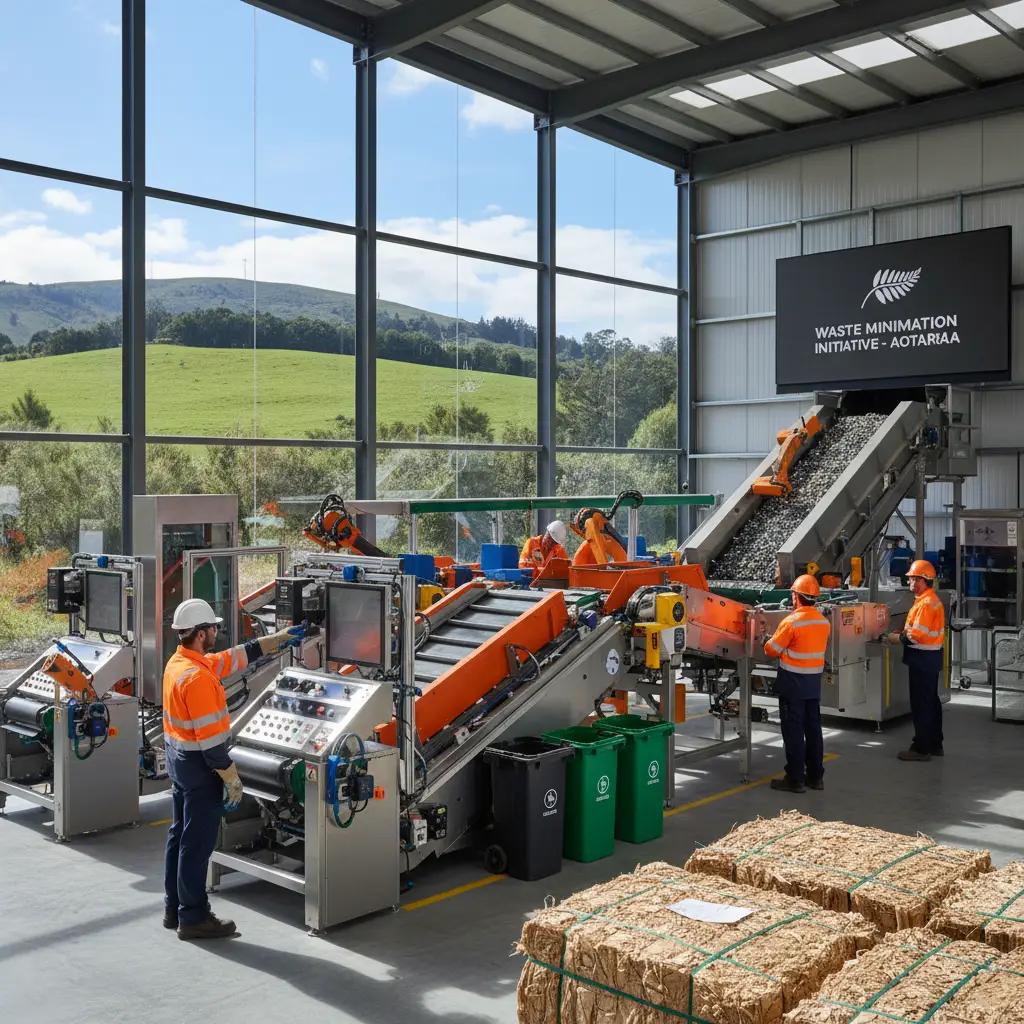
What is the Core Purpose of the Waste Minimisation Act?
The Waste Minimisation Act 2008 was enacted to encourage a reduction in the amount of waste generated and disposed of in New Zealand. Its primary objective is to protect the environment from harm and provide economic, social, and cultural benefits. Unlike previous legislation which focused primarily on the sanitary management of waste, the WMA 2008 focuses on resource efficiency.
The Act operates under a philosophy that waste represents an inefficiency in the economy and a loss of resources. By creating mechanisms to value these resources, the government aims to decouple economic growth from waste generation. This is particularly relevant in the context of New Zealand’s climate policy, as the decomposition of organic waste in landfills is a significant source of biogenic methane, a potent greenhouse gas.
Key Mechanisms of the Act
To achieve its objectives, the Act utilizes several distinct statutory tools:
- The Waste Disposal Levy: A financial instrument to increase the cost of dumping and fund alternatives.
- Product Stewardship: Regulations ensuring producers take responsibility for the lifecycle of their products.
- Waste Management and Minimisation Plans (WMMPs): Mandatory planning documents for Territorial Authorities.
- The Waste Advisory Board: An independent body providing advice to the Minister for the Environment.
How Do Waste Disposal Levies Work?
The waste disposal levy is perhaps the most visible and impactful component of the Waste Minimisation Act NZ. It is a tax applied to waste deposited in disposal facilities, designed to create a financial disincentive for landfilling while generating revenue for waste minimization projects.
Historically, the levy only applied to municipal landfills (Class 1). However, recent amendments have significantly expanded the scope and increased the rates to accelerate diversion. The levy helps correct the market failure where the cost of disposal does not reflect the true environmental cost.
Levy Expansion and Classes
The government has implemented a phased increase in levy rates and expanded coverage to include construction and demolition fills. The facilities are categorized into classes:
- Class 1 (Municipal Landfills): These facilities accept household and commercial waste. They have the highest environmental standards and consequently the highest levy rates.
- Class 2 (Construction and Demolition): These accept inert materials like concrete and rubble, alongside some organic material.
- Class 3 & 4 (Managed and Controlled Fills): These accept earth and inert materials with very low contamination potential.
Allocation of Levy Revenue
The revenue generated from the waste disposal levy is legally hypothecated, meaning it must be spent on waste minimization. The Act dictates a specific split:
- 50% to Territorial Authorities (City and District Councils): This funding is allocated based on population. Councils must use this money to implement their Waste Management and Minimisation Plans (WMMPs). This supports curbside recycling, composting facilities, and community education.
- 50% to the Waste Minimisation Fund (WMF): The remaining half (minus administration costs) goes into a central contestable fund. Businesses, iwi, community groups, and educational institutions can apply for this funding to launch innovation projects, infrastructure development, or waste reduction trials.
What Are Product Stewardship Schemes?
Product stewardship is the concept that those who design, manufacture, sell, and use a product share responsibility for minimizing its environmental impact. The Waste Minimisation Act NZ provides the legislative framework for both voluntary and mandatory product stewardship schemes.
Under the Act, the Minister for the Environment can declare certain products as “priority products.” Once a product is declared a priority, a product stewardship scheme becomes mandatory. This prevents “free-riding,” where some companies pay for recycling while competitors avoid the cost.
Priority Products in New Zealand
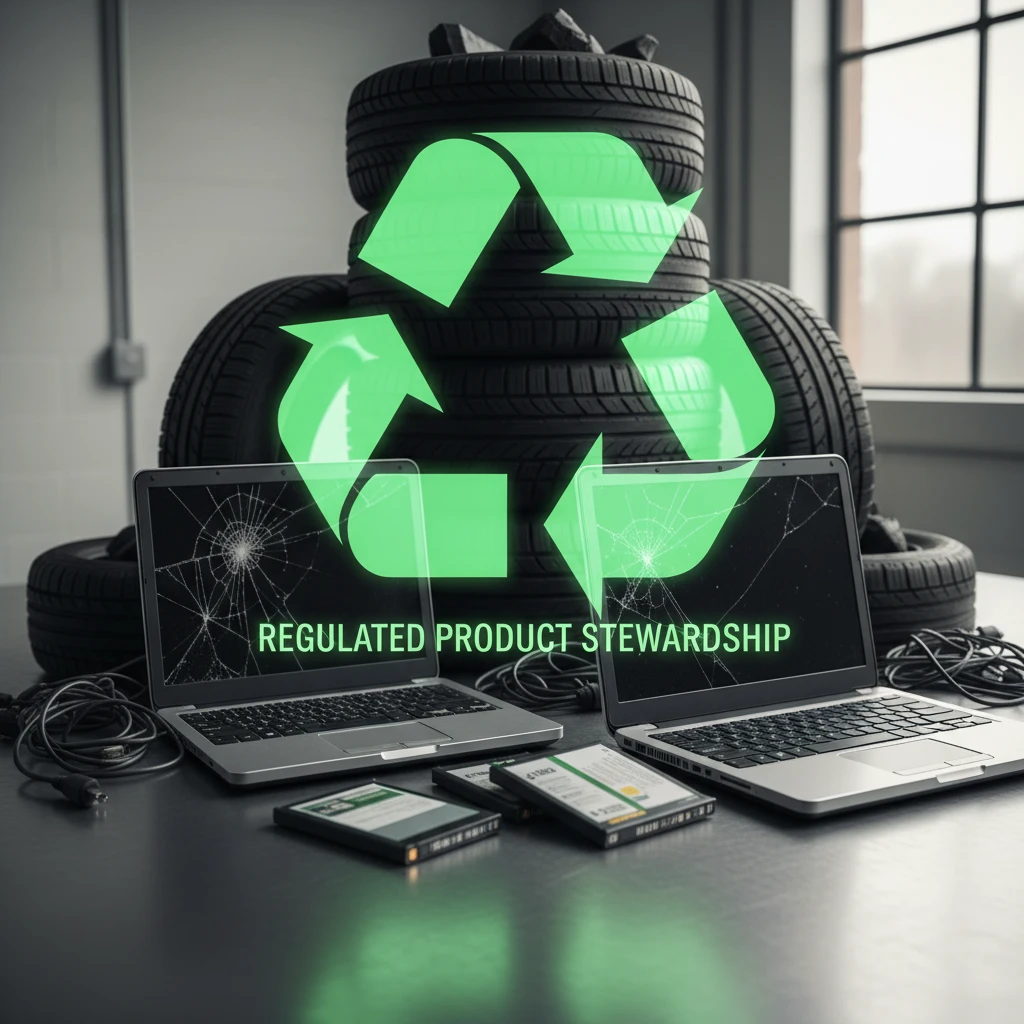
In July 2020, the government made a landmark decision to declare six product classes as priority products. This triggered the development of mandatory schemes for:
- Tyres: To prevent stockpiling and illegal dumping.
- Electrical and Electronic Products (e-waste): Including batteries, TVs, and computers, which contain hazardous materials.
- Agrichemicals and their containers: To ensure safe recovery from the rural sector.
- Refrigerants: Synthetic greenhouse gases that contribute to climate change.
- Farm Plastics: Silage wrap and pesticide containers.
- Plastic Packaging: Specifically single-use plastic packaging.
Accreditation of Schemes
For a scheme to be accredited under the Act, it must meet specific criteria regarding waste reduction targets, public awareness, and monitoring. Accreditation provides consumers with confidence that the disposal fees they pay (often embedded in the purchase price) are genuinely funding the recovery of that product.
How Does the Act Support Circular Economy Goals?
The Waste Minimisation Act is the primary engine driving New Zealand toward a circular economy. A circular economy is an alternative to the traditional linear economy (make, use, dispose) in which we keep resources in use for as long as possible, extract the maximum value from them while in use, and then recover and regenerate products and materials at the end of each service life.
The Role of the Waste Advisory Board
The Act established the Waste Advisory Board to provide independent advice to the Minister. Their role is crucial in identifying new priority products and assessing the effectiveness of the levy. The Board ensures that policy decisions are evidence-based and aligned with long-term circular economy goals, such as designing out waste and pollution and regenerating natural systems.
Alignment with the Emissions Reduction Plan
Waste is not just a litter problem; it is a climate problem. The Act is now being interpreted and applied in conjunction with the Zero Carbon Act. Reducing organic waste in landfills is identified as a key strategy in New Zealand’s Emissions Reduction Plan. By using the WMA to increase levies and fund composting infrastructure, the government aims to drastically cut biogenic methane emissions.

What is the Waste Minimisation Fund (WMF)?
The Waste Minimisation Fund (WMF) is the investment arm of the Act. Funded by the disposal levy, it provides millions of dollars annually to projects that promote waste minimization. Since its inception, the WMF has funded hundreds of projects, ranging from large-scale infrastructure to community-led initiatives.
Eligibility and Assessment
Funding is contestable. Applicants must demonstrate that their project will result in new or increased waste minimization. The Ministry for the Environment assesses applications based on criteria set out in the Act, including:
- Strategic Value: Does the project fill a gap in New Zealand’s waste infrastructure?
- Commercial Viability: Is the project financially sustainable in the long term?
- Scale of Diversion: How many tonnes of waste will be diverted from landfill?
Notable successes funded by the WMA include facilities for recycling construction timber, nationwide food rescue networks, and advanced plastics recycling plants.
Responsibilities of Territorial Authorities
The Act places significant responsibility on local government. Every Territorial Authority (City or District Council) is required to conduct a waste assessment and adopt a Waste Management and Minimisation Plan (WMMP). These plans must be reviewed every six years.
The WMMP sets the strategy for how the council will manage waste in its district. This includes decisions on curbside collection services, the operation of transfer stations, and the enforcement of bylaws regarding waste disposal. The 50% share of the levy revenue provides the funding to execute these plans, ensuring that ratepayers do not bear the full cost of waste innovation.
Legislative Reform and Future Outlook
While the Waste Minimisation Act 2008 has been instrumental, the government has acknowledged that more comprehensive legislation is needed to fully realize a circular economy. Proposals are underway to replace or significantly amend the Act to provide stronger regulatory powers.
Future legislation is expected to focus on:
- Standardizing kerbside collections: Ensuring consistency across all councils.
- Right to Repair: Legislation encouraging product durability and repairability.
- Stronger Data Requirements: Mandating better reporting from the waste sector to track material flows.
Businesses operating in New Zealand should prepare for a regulatory environment that increasingly penalizes waste and rewards circularity. The trajectory set by the WMA 2008 is accelerating, and compliance will require proactive management of supply chains and waste streams.
People Also Ask
What is the purpose of the Waste Minimisation Act 2008?
The purpose of the Act is to encourage waste minimisation and a decrease in waste disposal to protect the environment from harm and provide environmental, social, economic, and cultural benefits. It sets up the legal framework for levies, product stewardship, and waste management planning.
How much is the waste disposal levy in NZ?
As of July 2024, the waste disposal levy for Class 1 municipal landfills is $60 per tonne. This rate has been progressively increased from $10 per tonne to incentivize diversion. Levies also apply to construction and demolition fills (Class 2) at lower rates, which are also subject to scheduled increases.
What are the priority products under the Waste Minimisation Act?
The six priority product classes declared in 2020 are tyres, electrical and electronic products (e-waste), agrichemicals and their containers, refrigerants and other synthetic greenhouse gases, farm plastics, and plastic packaging. Mandatory stewardship schemes are being developed for these items.
Who pays the waste levy in New Zealand?
The operator of the waste disposal facility (landfill) is legally responsible for paying the levy to the government. However, this cost is almost always passed on to the user—meaning businesses, waste collection companies, and households pay the levy through their gate fees or bin collection charges.
What is a Waste Management and Minimisation Plan (WMMP)?
A WMMP is a strategic document that Territorial Authorities (councils) are legally required to produce under the Act. It outlines the council’s strategy, objectives, and policies for managing and minimizing waste within their district, usually covering a six-year period.
How can businesses apply for the Waste Minimisation Fund?
Businesses can apply for the Waste Minimisation Fund (WMF) through the Ministry for the Environment’s annual funding rounds. Applications typically require a detailed project plan, budget, and evidence of how the project will reduce waste to landfill. The fund is contestable, meaning only the most effective projects are selected.
About The Author
