Coastal Hazards and Managed Retreat
Managed retreat NZ policy refers to the strategic relocation of communities, assets, and infrastructure away from areas at high risk of natural hazards, particularly coastal erosion and sea-level rise. This framework integrates central government legislation, such as the National Adaptation Plan, with local council planning to proactively manage climate resilience and reduce long-term exposure to extreme weather events.
The Context: Zero Carbon Act and Adaptation
New Zealand stands at a critical juncture in its response to climate change. While the Climate Change Response (Zero Carbon) Amendment Act 2019 set the stage for mitigation—reducing emissions to limit global heating—the conversation is rapidly shifting toward adaptation. Mitigation alone can no longer prevent the sea-level rise locked into the global climate system. This reality places “managed retreat NZ policy” at the forefront of national discourse.
Managed retreat is not merely a reaction to disaster; it is a proactive, albeit difficult, tool within the broader National Adaptation Plan (NAP). The policy landscape is evolving to address the inevitability that certain coastal and riverine areas will become uninhabitable within the next century. This shift requires a departure from traditional “hold the line” engineering solutions, such as sea walls, which are often cost-prohibitive and ecologically damaging in the long term.
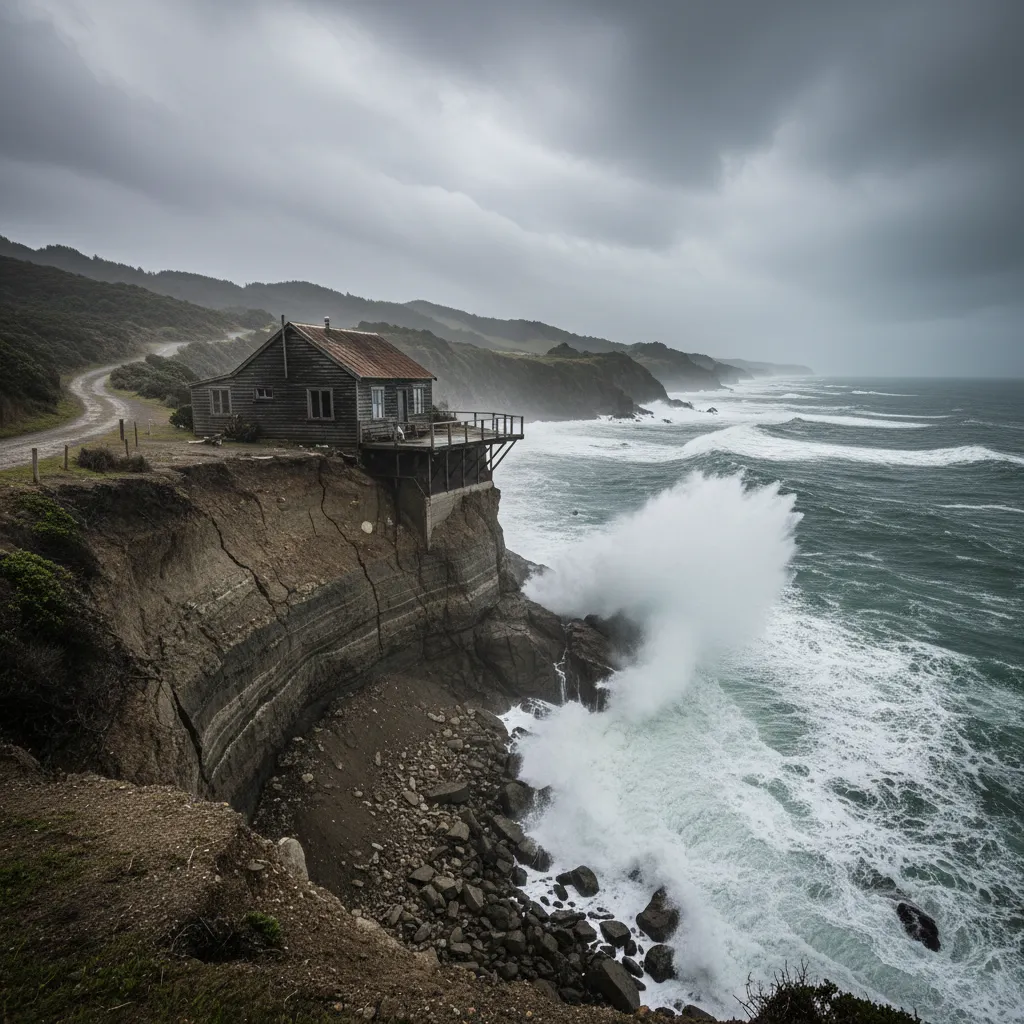
The integration of managed retreat into policy is driven by the need to provide certainty for homeowners, insurers, and local councils. Without clear legislative frameworks, New Zealand faces a fragmented response where wealthy communities might afford defences while vulnerable communities are left to face the tide alone. The central government is currently working to standardize how retreat is funded and executed, moving away from ad-hoc responses to a systemic, national approach.
Coastal Hazard Assessments: The Scientific Basis
Before any policy of retreat can be enacted, there must be a rigorous, evidentiary basis for decision-making. Coastal hazard assessments form the foundation of managed retreat strategies. These assessments utilize advanced data modeling to predict how coastlines will behave under various climate scenarios.
Methodologies and Technologies
Councils across New Zealand rely on Light Detection and Ranging (LiDAR) mapping to create high-resolution topographical models of the coast. By overlaying these maps with projected Sea Level Rise (SLR) scenarios—typically ranging from 0.5m to 1.5m over the next 100 years—planners can identify “hazard zones.” These zones are often categorized by timeframe (e.g., immediate risk, 50-year risk, 100-year risk).
Furthermore, these assessments must account for compound hazards. It is not just the passive rise of the ocean; it is the combination of SLR, storm surge, groundwater rise (leading to liquefaction and dampness), and increased fluvial (river) flooding during extreme weather events like Cyclone Gabrielle.
The Role of LIM Reports
A critical intersection between science and policy is the Land Information Memorandum (LIM). Under the Local Government Official Information and Meetings Act (LGOIMA), councils are legally obligated to disclose known natural hazards. When a coastal hazard assessment identifies a property as being at risk, this information is added to the LIM.
This action often triggers immediate economic consequences, affecting property values and insurance availability. Consequently, the methodology behind these assessments is frequently contested in environment courts by affected property owners, highlighting the tension between scientific prudence and private property rights.

Legal and Financial Frameworks for Retreat
The most contentious aspect of managed retreat NZ policy is the question of liability and funding. Who pays when a home is no longer safe to live in? Currently, the legal framework is in a state of transition, moving from the Resource Management Act 1991 (RMA) to new legislation focused on climate adaptation.
The Climate Adaptation Framework
The government has signaled the introduction of a Climate Adaptation Bill (or similar legislative instrument) to specifically address the complex legal issues of retreat. Key components of this emerging framework include:
- Expropriation vs. Voluntary Acquisition: Determining whether the government has the power to force residents to move for their own safety, or if retreat must always be voluntary.
- Compensation Models: Will the government offer “fair market value” (pre-hazard discovery), rateable value, or a capped contribution? The precedent set by the “Red Zone” in Christchurch following the 2011 earthquakes offers lessons, but a national rollout for climate change is financially vastly different.
- Existing Use Rights: Under current planning laws, existing structures often have rights to remain even if rules change. Managed retreat policy seeks to extinguish these rights in high-risk zones to prevent people from entrenching themselves in dangerous areas.
The Insurance Retreat
While the government deliberates, the private sector is already acting. “Insurance retreat” occurs when insurers either withdraw cover entirely or raise premiums to unaffordable levels for high-risk properties. In New Zealand, partial insurance retreat is already visible in areas like South Dunedin and parts of the Kapiti Coast.
If insurance becomes unavailable, mortgages become unobtainable, causing a property market crash in specific zones. Policy-makers are racing to implement frameworks that manage this economic transition before the market forces a chaotic correction.

Community Engagement Models in New Zealand
Implementing managed retreat is 10% technical and 90% social. The displacement of communities involves the loss of history, connection to place, and social cohesion. Therefore, successful policy relies heavily on robust community engagement models.
Dynamic Adaptive Pathways Planning (DAPP)
The Ministry for the Environment advocates for Dynamic Adaptive Pathways Planning (DAPP). Unlike traditional static plans, DAPP creates a series of “signals and triggers.”
- Signals: Early warnings that the environment is changing (e.g., frequency of nuisance flooding).
- Triggers: Pre-agreed decision points (e.g., when sea level rises by 0.3m) that activate the next stage of the plan.
This model allows communities to agree on a long-term strategy without needing to move immediately. It reduces the “paralysis by analysis” by breaking the adaptation journey into manageable steps. However, DAPP requires high-trust relationships between councils and communities, which can be difficult to maintain if communication is poor.
Case Study: The Matatā Experience
The managed retreat of Matatā in the Bay of Plenty serves as a sobering case study for NZ policy. Following debris flows in 2005, a long process ensued where engineering solutions were explored and eventually deemed unviable. The eventual retreat was fraught with legal battles and emotional distress. It highlighted the need for clear national legislation, as the local council struggled to navigate the process using only the RMA, resulting in significant financial and social costs.
Specific Challenges: Whenua Māori and Heritage
Managed retreat policy in New Zealand must account for the unique status of Whenua Māori (Māori land). Unlike fee-simple title, Māori land is often held collectively and represents a spiritual connection to ancestors (tūrangawaewae) that cannot simply be “compensated” with a cheque and a new plot of land elsewhere.
Many marae and urupā (burial grounds) are located on low-lying coastal land. The policy challenge is how to support hapū and iwi in adapting to climate change while respecting their rangatiratanga (self-determination). This may involve funding for lifting marae buildings, building protective barriers where culturally appropriate, or facilitating land swaps that allow hapū to remain within their rohe (territory) but on higher ground.

The Future of Managed Retreat Policy
As New Zealand moves forward, the harmonization of the Zero Carbon Act’s adaptation mandates with local government planning is essential. The future policy landscape will likely feature a “National Adaptation Framework” that dictates where development is banned entirely.
We can expect to see stricter controls on new subdivisions in coastal areas. The concept of “time-limited consents”—where a house is consented only for 20 or 30 years—may become standard practice. Ultimately, managed retreat is an intergenerational challenge. The policies written today will determine whether the New Zealand of 2100 is a nation of resilient, relocated communities or one battling a losing war against the ocean.
Frequently Asked Questions
What is the main goal of managed retreat NZ policy?
The primary goal is to reduce the risk to human life and economic assets by systematically moving communities out of areas that will become uninhabitable due to climate change, rather than relying on expensive and temporary defensive structures.
Is managed retreat mandatory in New Zealand?
Currently, there is no blanket law making retreat mandatory nationwide. However, local councils can restrict land use through the Resource Management Act, and future legislation is expected to provide stronger powers for mandatory acquisition in extreme hazard zones.
Who pays for managed retreat?
This is the most debated aspect of the policy. Currently, costs are shared between property owners, local ratepayers, and central government (in specific disaster recovery scenarios). A permanent national funding model is being developed to clarify the split between public and private liability.
What is Dynamic Adaptive Pathways Planning (DAPP)?
DAPP is a planning tool used in NZ that sets out multiple potential futures and pathways. It uses “triggers” (like a specific sea level) to activate pre-agreed actions, allowing communities to adapt over time rather than making one irreversible decision immediately.
How does managed retreat affect insurance?
Managed retreat is often precipitated by insurance retreat. If insurers stop covering a region due to high risk, mortgages become invalid, and property values drop, effectively forcing a retreat. Policy aims to manage this process before insurance disappears completely.
How does the Zero Carbon Act relate to managed retreat?
The Zero Carbon Act mandates a National Climate Change Risk Assessment and a National Adaptation Plan. Managed retreat is a key tool within the Adaptation Plan to address the risks identified by the Act.
About The Author
