Sustainable Transport Wellington
Sustainable transport in Wellington refers to the capital city’s comprehensive strategy to achieve net-zero carbon emissions by 2050 through the electrification of public transit fleets, the rapid expansion of the Paneke Pōneke cycleway network, and urban design changes that prioritize pedestrian mobility over private vehicle ownership.
Wellington stands at a critical juncture in its urban evolution. As the capital of New Zealand, it faces the dual challenge of accommodating population growth while adhering to the strict mandates of the Climate Change Response (Zero Carbon) Amendment Act. The transition away from fossil-fuel dominance is no longer optional; it is a legislative and environmental necessity.
The Current Landscape of Wellington Transport
Wellington’s geography presents unique challenges and opportunities for sustainable transport. Confined by a harbour on one side and steep hills on the other, the city possesses a compact Central Business District (CBD) that is ideally suited for walking and cycling. However, the wider region relies heavily on commuter corridors that have historically prioritized private vehicle throughput.
The push for sustainable transport in Wellington is driven by the Wellington City Council’s (WCC) declaration of a climate emergency and the Greater Wellington Regional Council’s (GWRC) aggressive targets for fleet decarbonisation. Transport accounts for the single largest share of the region’s emissions, making it the primary battleground for climate action.
The Transition from “Let’s Get Wellington Moving”
For several years, the primary vehicle for transport transformation was the “Let’s Get Wellington Moving” (LGWM) program—a partnership between WCC, GWRC, and Waka Kotahi (NZ Transport Agency). However, with recent shifts in central government priorities and local council restructuring, the LGWM brand has been dissolved, with its core projects being absorbed directly by the local and regional councils.
What Projects Survived the Restructure?
Despite the dissolution of the overarching LGWM body, the critical infrastructure projects required for sustainable transport remain active, albeit under new governance structures. The focus has shifted towards delivery efficiency and cost control. Key survivors include the Golden Mile revitalization and specific mass rapid transit investigations, though the latter faces ongoing scrutiny regarding funding and route selection.
The shift represents a move from high-level, expensive consultancy phases to “shovel-ready” implementation managed by local authorities who are directly accountable to Wellington ratepayers. This transition aims to accelerate the delivery of bus priority lanes and safety improvements that were previously bogged down in bureaucratic processes.
Paneke Pōneke: Cycleway Expansion Plans
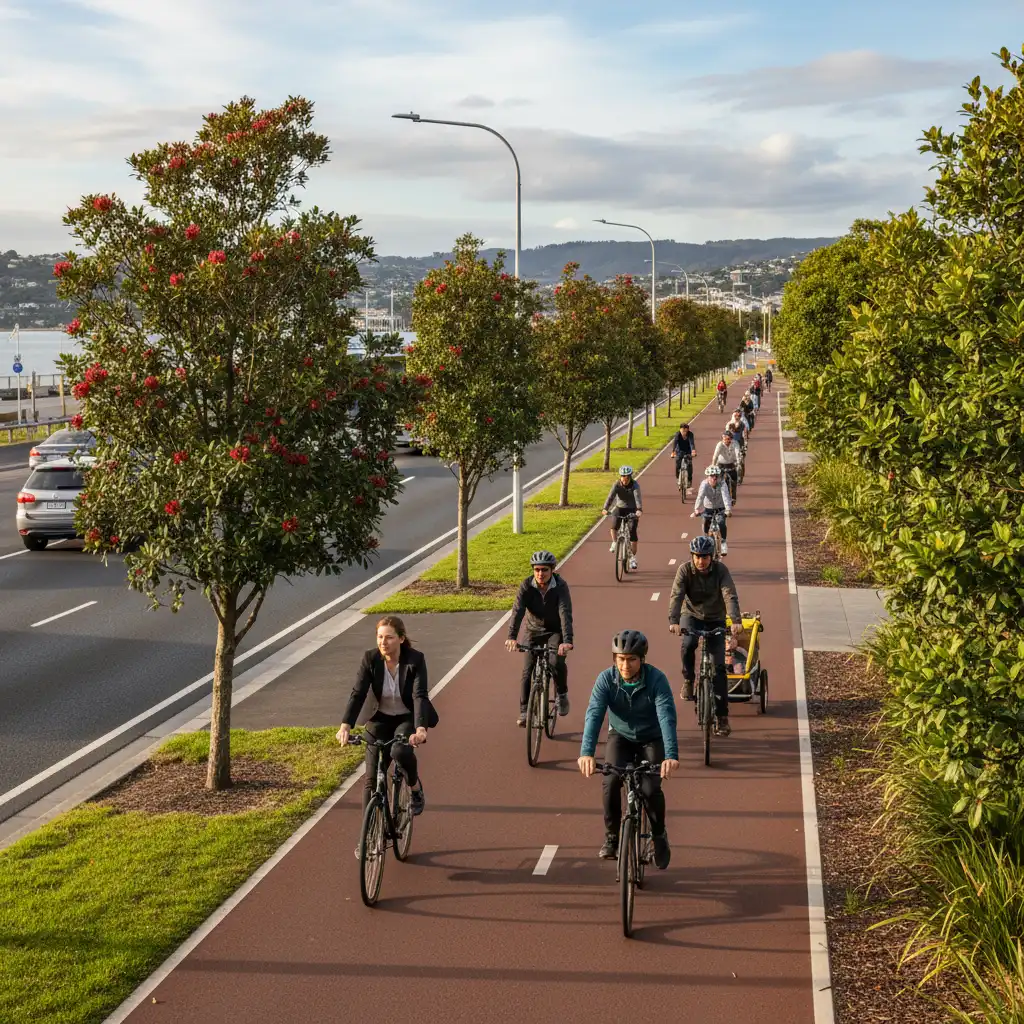
At the heart of Wellington’s modal shift is Paneke Pōneke, the city’s bike network plan. The objective is to create a connected, safe citywide network that makes cycling a viable option for people of all ages and abilities, not just confident commuters.
Connecting the Suburbs to the City
The strategy focuses on establishing primary corridors that link major suburbs to the CBD. Unlike the disjointed cycle lanes of the past, Paneke Pōneke prioritizes separated, protected bike lanes that physically divide cyclists from heavy traffic. This infrastructure is crucial for encouraging the “interested but concerned” demographic to switch modes of transport.
Key routes undergoing development or recently completed include:
- Newtown to City: A contentious but vital artery connecting the hospital and southern suburbs to the CBD.
- Botanic Garden ki Paekākā: Improving access from the western suburbs.
- Evans Bay Parade: A scenic but functional route connecting the eastern suburbs and airport zone.
The “Tactical Urbanism” Approach
To speed up delivery, WCC has utilized transitional designs—using planter boxes and bolt-down separators—to install bike lanes rapidly. This allows for real-time monitoring and adjustment before permanent concrete infrastructure is poured. While this approach has generated debate regarding aesthetics and parking removal, it has successfully accelerated the rollout of the network, providing immediate safety benefits.
Decarbonising Public Transport: Metlink’s Strategy
Public transport is the backbone of any sustainable city. In the Wellington region, this responsibility falls to Metlink (managed by GWRC). The goal is total decarbonisation of the public transport fleet, a move that significantly reduces the region’s carbon footprint.
Electrification of the Bus Fleet
Wellington has one of the highest rates of electric bus adoption in New Zealand. The gradual retirement of diesel buses is well underway. The strategy involves not only purchasing EV buses but also upgrading the charging infrastructure at depots across the region (such as in Kilbirnie and Kaiwharawhara). These high-capacity electric vehicles operate on core routes, offering a quieter, smoother, and emission-free ride.
The Future of Regional Rail
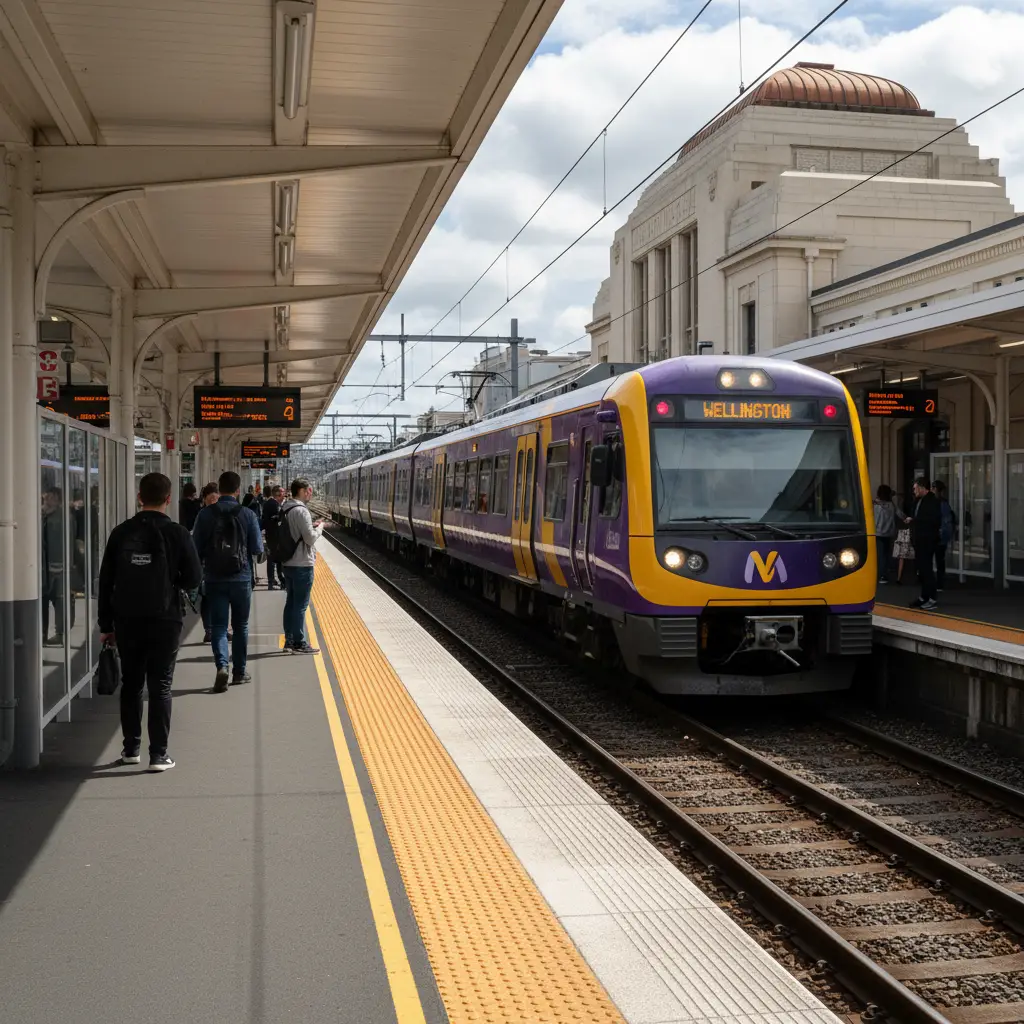
While the bus network electrifies, the rail network—which services the Kapiti Coast, Hutt Valley, and Wairarapa—is also undergoing transformation. The Lower North Island Rail Integrated Mobility (LNIRIM) business case outlines the need for new hybrid trains. These tri-mode trains (battery, electric, and diesel backup) are designed to replace aging rolling stock and enable service on lines that are not fully electrified, such as the Masterton line, without relying on diesel locomotives.
The Golden Mile and Pedestrianisation
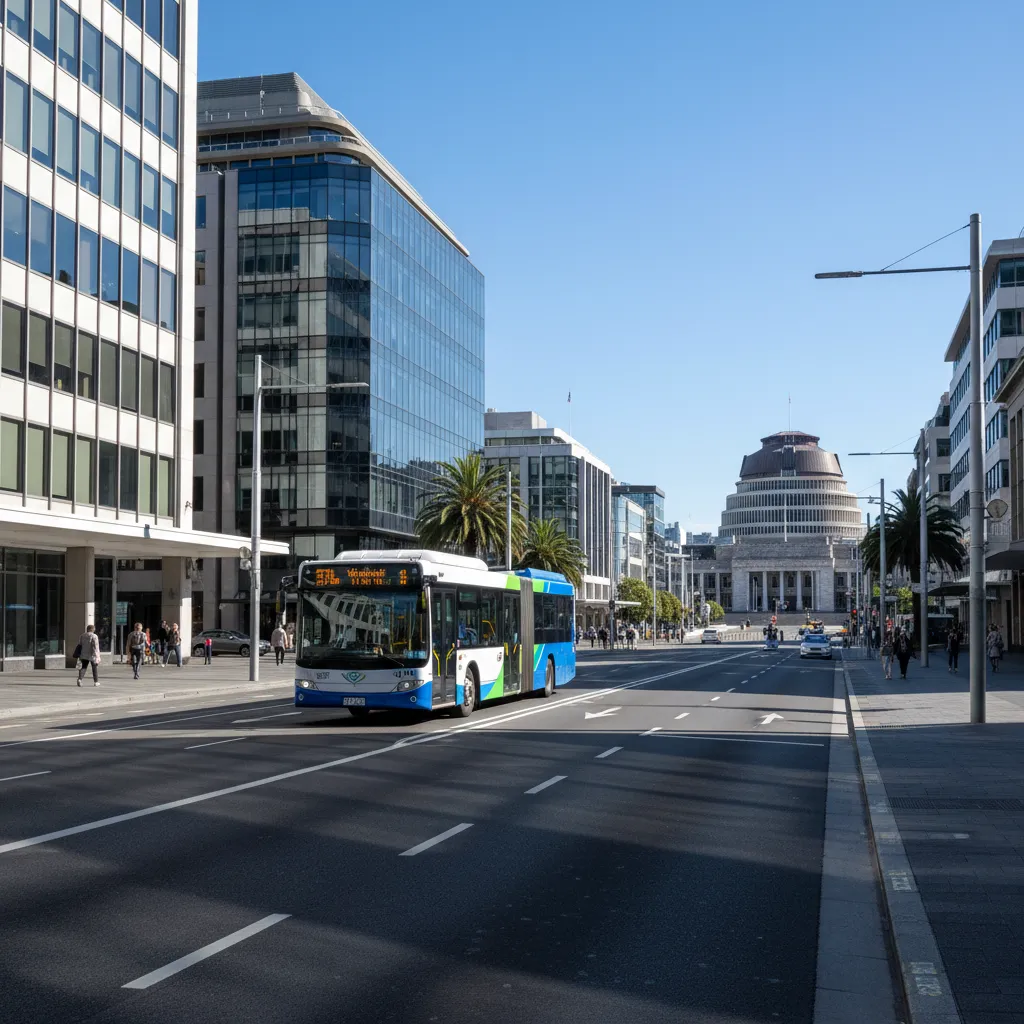
The “Golden Mile” refers to the primary retail and business corridor spanning from the Embassy Theatre on Courtenay Place, through Manners and Willis Streets, along Lambton Quay to Parliament. Currently, this stretch is often congested with mixed traffic, making it inefficient for buses and unpleasant for pedestrians.
Transforming the CBD Experience
The revitalization plan aims to remove private vehicles from this corridor almost entirely, restricting access to buses, service vehicles, and emergency services. The reclaimed road space is dedicated to:
- Widened Footpaths: Increasing pedestrian capacity by up to 75% in some areas.
- Amenity Strips: Adding greenery, seating, and outdoor dining spaces to boost local retail economy.
- Bus Reliability: By removing cars, bus travel times through the CBD become faster and more consistent.
This project is not merely about transport; it is an urban design intervention intended to make the city center a destination rather than a thoroughfare. It aligns with global “15-minute city” concepts where amenities are easily accessible by walking.
Alignment with NZ Zero Carbon Policy
All transport initiatives in Wellington are underpinned by the Climate Change Response (Zero Carbon) Amendment Act 2019. This legislation sets a legally binding target for New Zealand to be net-zero by 2050. For Wellington, this translates to specific obligations.
The Mode Shift Targets
To meet these legislative requirements, Wellington cannot simply rely on electric vehicles (EVs). Replacing every internal combustion car with an EV does not solve congestion or the carbon cost of vehicle manufacturing. Therefore, the policy framework emphasizes “Mode Shift”—moving people from private cars to active modes (walking, cycling) and public transport.
The targets are ambitious: reducing private vehicle travel by significant percentages over the coming decade. This requires a “carrot and stick” approach: making sustainable options cheaper and faster (the carrot) while making private driving less convenient in the city center (the stick), primarily through parking reduction and speed limit reductions.
Conclusion: The Road Ahead
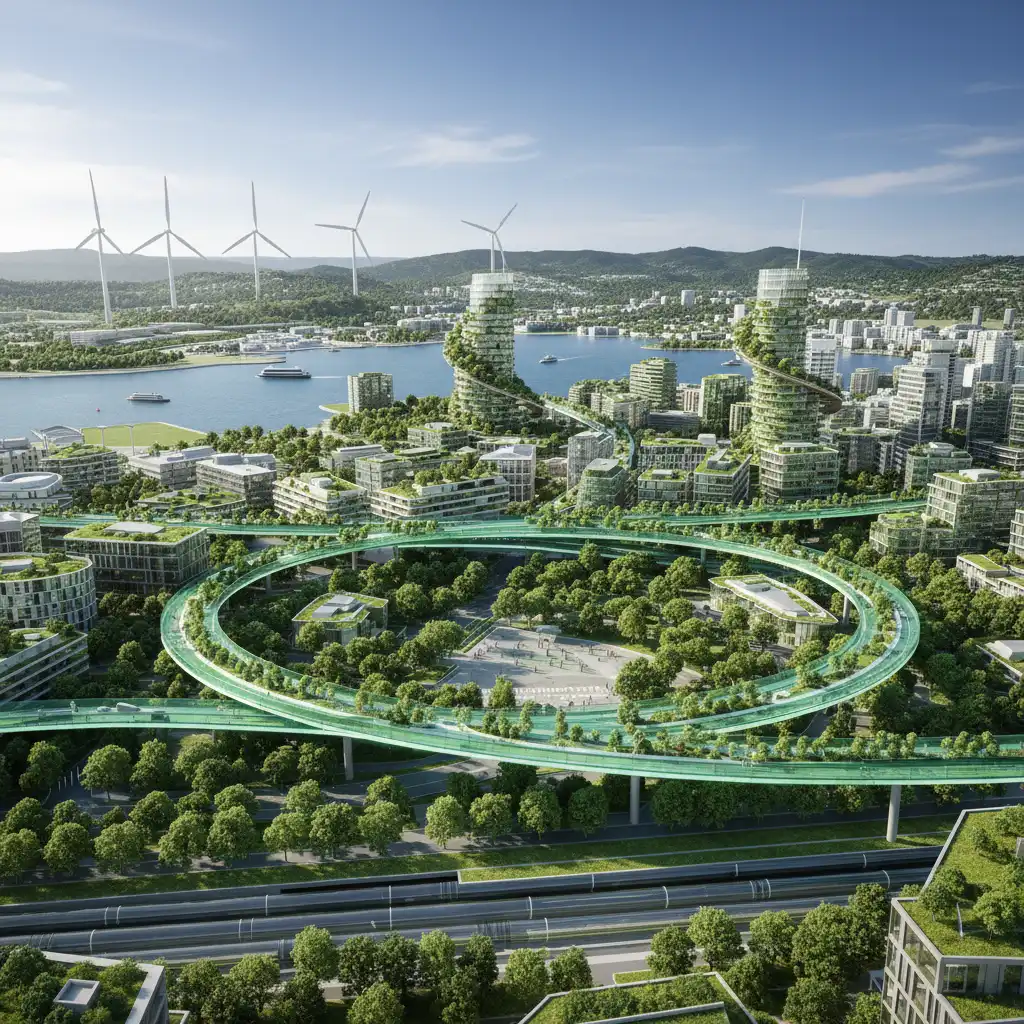
Sustainable transport in Wellington is moving from the planning phase to the delivery phase. While the political landscape has shifted with the dissolution of Let’s Get Wellington Moving, the underlying necessity to decarbonise remains unchanged. Through the Paneke Pōneke cycleways, the electrification of Metlink’s fleet, and the pedestrianisation of the Golden Mile, Wellington is slowly transforming into a modern, climate-resilient capital. The success of these projects depends on continued public support and the willingness of residents to adapt their daily travel habits for the greater environmental good.
People Also Ask
What happened to Let’s Get Wellington Moving?
Let’s Get Wellington Moving was dissolved following an agreement between the new coalition government and local councils. The program was scrapped, and responsibility for key projects like the Golden Mile and diverse transport improvements was returned to the Wellington City Council and Greater Wellington Regional Council to deliver directly.
Is public transport free in Wellington?
Public transport is not generally free in Wellington for all users. However, there are concessions available for children, students, and Community Services Card holders. Children under 13 travel for free, and half-price fares apply to frequent users aged 13-24 (subject to current government policy changes).
What is the Paneke Pōneke bike network?
Paneke Pōneke is Wellington City Council’s strategic plan to deliver a citywide network of connected, safe cycleways. It focuses on creating protected lanes that link suburbs to the city center, aiming to make cycling a viable transport option for people of all abilities.
Are Wellington buses electric?
A significant and growing portion of the Wellington bus fleet is electric. Metlink has been aggressively replacing older diesel buses with modern electric vehicles (EVs) to meet climate targets. The goal is to have a completely decarbonised public transport fleet.
What is the Golden Mile project?
The Golden Mile project involves revitalizing the main route from Courtenay Place to Lambton Quay. The plan removes private vehicles to prioritize buses and pedestrians, widening footpaths and improving public spaces to create a more people-friendly city center.
How does transport affect Wellington’s carbon footprint?
Transport is the largest single source of carbon emissions in the Wellington region, accounting for over 50% of the city’s emissions. Transitioning to sustainable transport modes like cycling, walking, and electric public transit is the most impactful way to reduce the region’s contribution to climate change.
About The Author
