NZ ETS vs Australia Safeguard Mechanism
The Australia Safeguard Mechanism is a regulatory framework requiring the nation’s largest industrial emitters to keep net emissions below specific baselines. Unlike the New Zealand Emissions Trading Scheme (NZ ETS), which is a broad-based cap-and-trade system, the Safeguard Mechanism focuses on heavy industry, utilizing a baseline-and-credit model to drive decarbonization across high-emitting sectors.
Understanding the Core Frameworks
For businesses operating across the Tasman, understanding the nuances between the Australia Safeguard Mechanism and the New Zealand Emissions Trading Scheme (NZ ETS) is no longer optional—it is a strategic necessity. While both systems aim to reduce greenhouse gas emissions in line with Paris Agreement targets, they utilize fundamentally different economic levers. The NZ ETS is one of the world’s oldest and most comprehensive cap-and-trade systems, covering almost all sectors of the economy. In contrast, the Australia Safeguard Mechanism has recently evolved from a passive reporting tool into a rigorous baseline-and-credit system targeting the country’s most carbon-intensive facilities.
Structural Differences in Carbon Pricing
The primary distinction lies in the “Cap” vs. the “Baseline.” The NZ ETS operates on a fixed volume of emissions units (NZUs) that the government issues or auctions each year. This creates a hard cap on total emissions for covered sectors. As the cap decreases over time, the scarcity of units drives the price up, incentivizing lower emissions.
How the Australia Safeguard Mechanism operates?
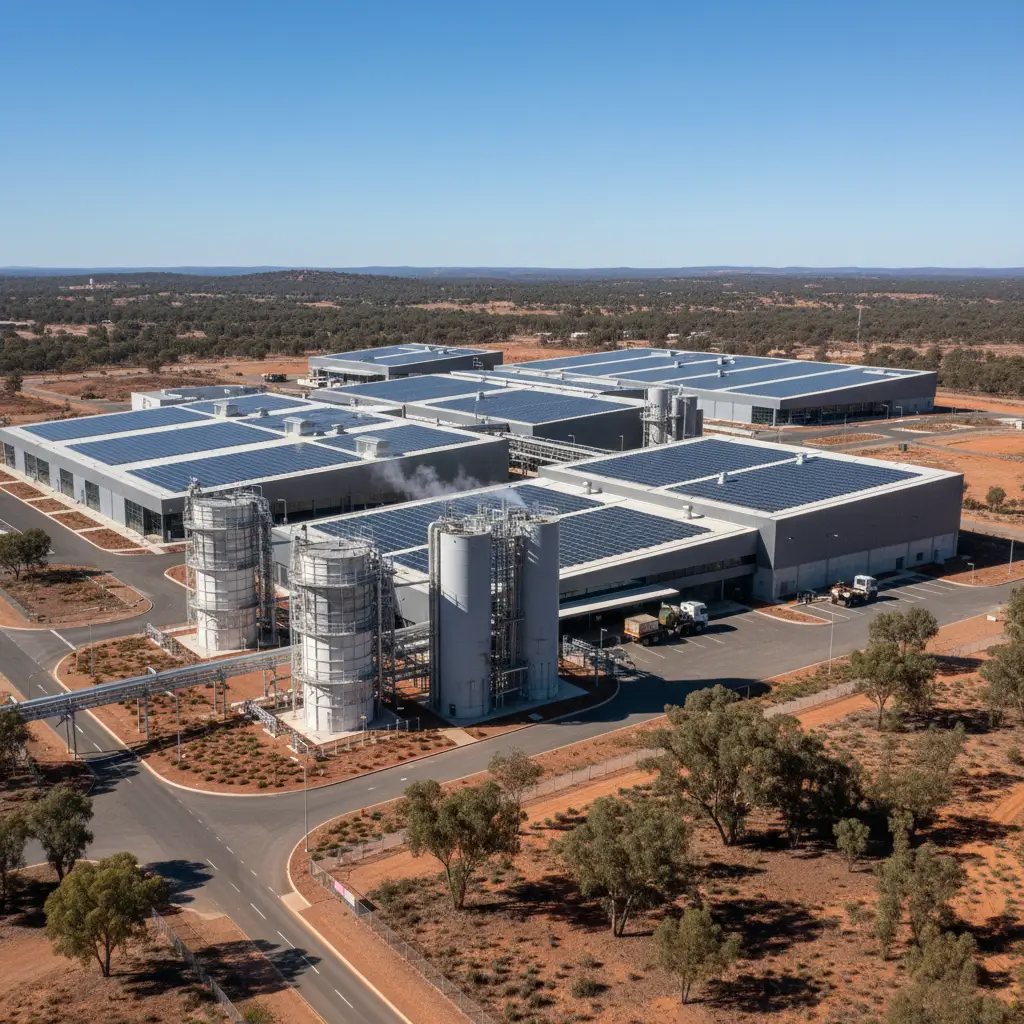
The Australia Safeguard Mechanism applies to facilities that emit more than 100,000 tonnes of CO2-equivalent (CO2-e) per year. Instead of an economy-wide cap, it sets specific “baselines” for each facility. Under the 2023 reforms, these baselines are now set to decline by an average of 4.9% annually through 2030. This transition effectively creates a “performance-based” pricing model where facilities that beat their baseline can earn Safeguard Mechanism Credits (SMCs), while those that exceed it must purchase offsets or credits.
Sector Coverage Comparison
The NZ ETS is famously broad, covering forestry, energy, industry, and waste, with ongoing debates regarding the inclusion of biological emissions from agriculture. The Australia Safeguard Mechanism is narrower but deeper, focusing on approximately 215 facilities in the mining, manufacturing, transport, and oil and gas sectors. Together, these facilities account for about 28% of Australia’s total emissions.
Compliance Obligations for Trans-Tasman Firms
Firms with operations in both Sydney and Auckland face a complex dual-regulatory environment. In New Zealand, compliance is typically managed at the corporate level, where the entity must surrender one NZU for every tonne of CO2-e emitted. The reporting is centralized through the Environmental Protection Authority (EPA).

Australian Reporting Standards
In Australia, the National Greenhouse and Energy Reporting (NGER) scheme provides the data foundation for the Safeguard Mechanism. Compliance is facility-specific. This means a large mining company may have multiple facilities, each with its own baseline and compliance obligation. If a facility exceeds its baseline, it must surrender Australian Carbon Credit Units (ACCUs) or the newly created SMCs to make up the difference.
Trans-Tasman Corporate Governance
Companies must now integrate carbon accounting into their core financial reporting. The divergence in rules means that a carbon-neutral strategy in New Zealand (often involving forestry offsets) looks very different from a decarbonization strategy in Australia (which emphasizes facility-level efficiency and technological upgrades). Trans-Tasman firms must maintain separate carbon accounts and navigate different tax treatments for credits in each jurisdiction.
Unit Eligibility and Trading Links
A critical question for market participants is the fungibility of units. Currently, there is no direct link between the NZ ETS and the Australia Safeguard Mechanism. You cannot use an NZU to satisfy an Australian Safeguard obligation, nor can you use an ACCU in the NZ ETS.
The Rise of Safeguard Mechanism Credits (SMCs)
The introduction of SMCs in Australia marks a significant shift. These are generated by facilities that stay below their baseline. Unlike ACCUs, which are often generated by land-based projects (like reforestation or soil carbon), SMCs are a direct byproduct of industrial efficiency. This creates a specialized market for industrial abatement that is distinct from the broader voluntary carbon market.

International Unit Restrictions
Both nations have historically been cautious about international offsets. New Zealand transitioned to a domestic-only market several years ago to ensure local price signals remained strong. Australia’s Safeguard Mechanism currently prioritizes domestic ACCUs and SMCs, though the government has left the door open for high-quality international units in the future to help keep compliance costs manageable for trade-exposed industries.
ACCUs vs. NZUs: Navigating the Currency of Carbon
While both are units representing one tonne of CO2-e, their market dynamics vary wildly. NZUs are influenced heavily by government auction settings and forestry supply. Because forestry is a major part of the NZ ETS, the price of NZUs is sensitive to land-use policy and timber prices.
ACCUs, on the other hand, are influenced by the diverse methodologies approved by the Clean Energy Regulator, ranging from landfill gas capture to savanna burning. The Safeguard Mechanism has created a “floor” for ACCU demand, as large emitters are now mandated buyers. This has led to a more robust and liquid market in Australia, attracting significant institutional investment.
Policy Outlook for 2025 and Beyond
As we approach 2025, both systems are entering a period of refinement. In New Zealand, the focus is on the “Review of the NZ ETS,” which seeks to better balance the role of gross emissions reductions versus forestry removals. There is also the persistent question of how to integrate agriculture—a sector that accounts for nearly half of NZ’s emissions profile.
Australia’s 2025 Trajectory
For Australia, 2025 will be a pivotal year for the Safeguard Mechanism as the first major compliance deadlines under the new 4.9% decline rate take effect. We expect to see the first significant volumes of SMCs hitting the market. Furthermore, the Australian government is investigating a Carbon Border Adjustment Mechanism (CBAM), similar to the EU’s, to protect domestic industries from carbon-intensive imports. This would have massive implications for trans-Tasman trade, potentially requiring New Zealand exporters to prove their carbon credentials to avoid Australian border levies.

Strategic Implications for Investors
The divergence in these two systems creates both risks and opportunities. Investors are increasingly looking at “carbon alpha”—the ability to outperform the market by anticipating regulatory shifts. In Australia, the focus is on technology: green hydrogen, carbon capture and storage (CCS), and electrification of heavy heat. In New Zealand, the focus remains on land-use optimization and the transition of the electricity grid toward 100% renewables.
For a trans-Tasman entity, the goal is to create a unified climate strategy that respects the local rules of each market while leveraging global capital. The Australia Safeguard Mechanism is essentially a signal to heavy industry that the era of free emissions is over, while the NZ ETS continues to signal to the entire economy that carbon has a price that will only go up.
Conclusion
The Australia Safeguard Mechanism and the NZ ETS represent two different paths to the same destination: a net-zero future. While Australia focuses on a facility-led, baseline-reduction approach for its industrial giants, New Zealand maintains a broad-based, cap-and-trade system. For firms operating across both, the challenge lies in managing the technicalities of two distinct compliance regimes while preparing for a 2025 landscape that promises tighter baselines, higher prices, and more rigorous reporting standards.
What is the main difference between the NZ ETS and the Australia Safeguard Mechanism?
The NZ ETS is a cap-and-trade system covering most of the economy, where the government limits the total volume of units. The Australia Safeguard Mechanism is a baseline-and-credit system specifically for large industrial facilities, requiring them to stay below a declining emissions limit or buy credits.
Can NZUs be used for compliance in Australia?
No, currently New Zealand Units (NZUs) cannot be used for compliance under the Australia Safeguard Mechanism. The markets are not linked, and each requires its own specific domestic units (ACCUs/SMCs in Australia and NZUs in New Zealand).
Who is covered under the Australia Safeguard Mechanism?
The Safeguard Mechanism covers facilities with annual direct (Scope 1) emissions of more than 100,000 tonnes of CO2-equivalent. This includes roughly 215 facilities across mining, oil and gas, manufacturing, and transport.
What are Safeguard Mechanism Credits (SMCs)?
SMCs are a new type of credit in Australia. They are issued to Safeguard facilities that reduce their emissions below their assigned baseline. These credits can be sold to other facilities that have exceeded their baselines.
How does the 4.9% decline rate work in Australia?
Under the 2023 reforms, the emissions baselines for all Safeguard facilities are reduced by an average of 4.9% each year until 2030. This forces companies to either invest in decarbonization technology or purchase credits to cover their excess emissions.
Will Australia and New Zealand link their carbon markets?
While there are ongoing discussions about climate policy alignment, there are currently no formal plans to link the NZ ETS and the Australia Safeguard Mechanism. Differences in unit pricing, sector coverage, and forestry inclusion make linking complex.
About The Author
