Supply Chain Emissions Tracking
Supply chain emissions tracking in NZ refers to the systematic process of measuring greenhouse gas emissions across a company’s entire value chain, including Scope 3 indirect emissions. Driven by the Zero Carbon Act and XRB standards, it enables New Zealand businesses to identify environmental risks, improve operational efficiency, and meet mandatory climate-related disclosure requirements.
Why is Supply Chain Emissions Tracking Important in NZ?
In the context of New Zealand’s ambitious climate goals, supply chain emissions tracking is no longer a niche environmental effort; it is a core business necessity. The Climate Change Response (Zero Carbon) Amendment Act 2019 sets a legal framework for New Zealand to reach net-zero emissions by 2050. For businesses, this means that the spotlight has shifted from direct operational emissions (Scope 1 and 2) to the much larger, more complex category of Scope 3 emissions.
Scope 3 emissions often account for more than 80% of a company’s total carbon footprint. These include everything from the extraction of raw materials overseas to the final delivery of goods to a Kiwi doorstep. As New Zealand implements mandatory climate-related disclosures (CRD) for large financial institutions and listed issuers, the pressure is trickling down to SMEs (Small and Medium Enterprises) that form the backbone of these supply chains. If you are a supplier to a large NZX-listed company, your carbon data is now their business.
How to Identify Emission Hotspots in Your Supply Chain?
Identifying emission hotspots is the first critical step in a robust carbon management strategy. A hotspot is a point in the supply chain where the volume of greenhouse gas (GHG) emissions is disproportionately high. For New Zealand businesses, these hotspots often cluster around specific activities due to our unique geography and economic structure.
1. International and Domestic Freight
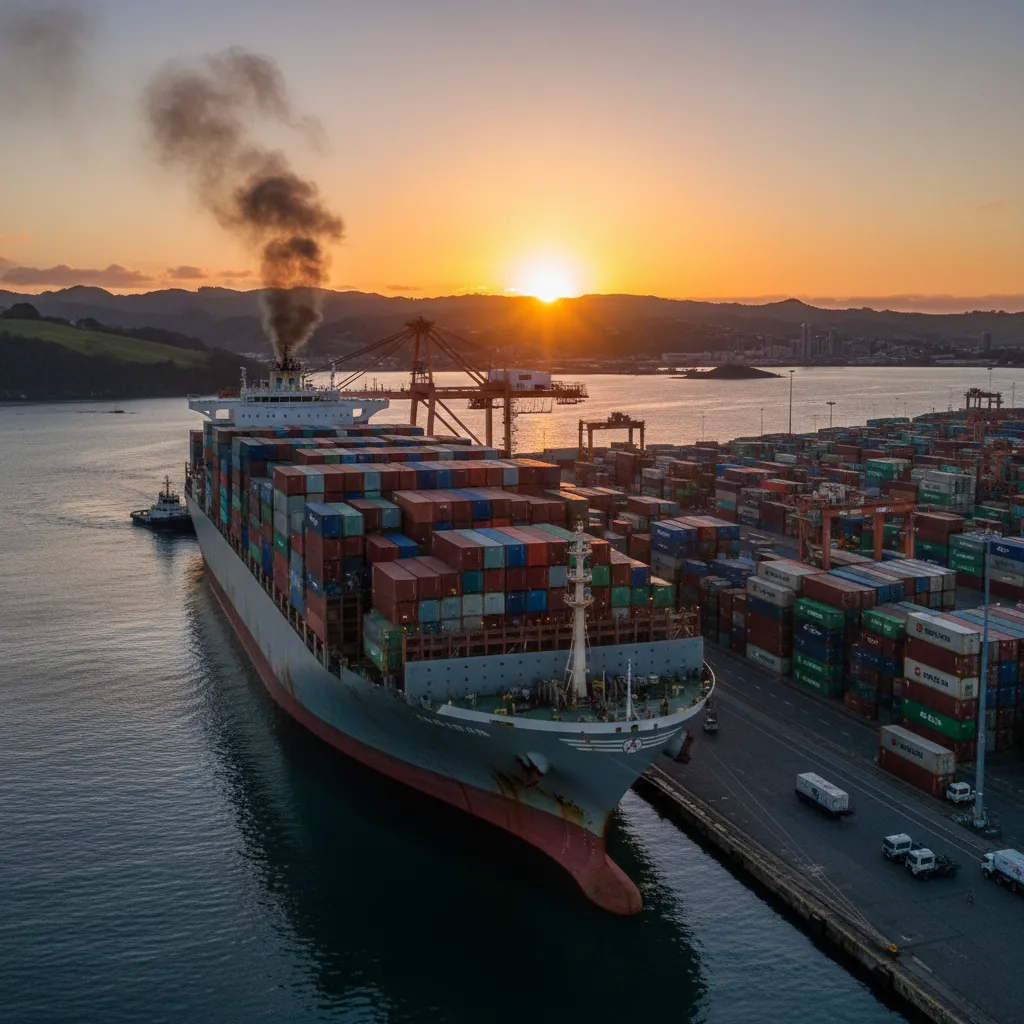
New Zealand’s geographic isolation means that international air and sea freight are massive contributors to carbon footprints. Within the country, the reliance on heavy road transport for moving goods between regions—particularly across the Cook Strait—creates significant hotspots. Analyzing ton-kilometer data for freight is essential for identifying where logistics optimizations can be made.
2. Raw Material Procurement
The “embodied carbon” in materials such as steel, cement, and plastic often represents a massive portion of upstream emissions. In the NZ construction and manufacturing sectors, sourcing materials from countries with high-emissions energy grids can drastically inflate a company’s carbon profile. Identifying these materials allows for the exploration of low-carbon alternatives, such as recycled steel or bio-based polymers.
3. Agricultural Inputs
Given that agriculture is a pillar of the NZ economy, many supply chains lead back to the farm gate. Biological emissions (methane and nitrous oxide) from livestock and fertilizer use are significant hotspots. For food and beverage exporters, tracking these emissions is vital for maintaining access to premium international markets that increasingly demand low-carbon credentials.
What are the Primary Data Collection Challenges?
While the intent to track emissions is clear, the execution is fraught with data-related hurdles. In New Zealand, these challenges are amplified by the high proportion of small businesses that may not have the resources to provide granular data.

The Transparency Gap
Many suppliers are several tiers removed from the reporting entity. Obtaining data from a “Tier 3” supplier in a different country involves navigating different reporting standards, languages, and levels of climate literacy. Without direct transparency, businesses are often forced to rely on “spend-based” modeling, which uses financial expenditures to estimate emissions. While useful for a start, spend-based data is notoriously inaccurate compared to activity-based data.
Data Fragmentation
Data is often siloed within different departments—procurement has the invoices, logistics has the fuel receipts, and sustainability has the goals. Integrating these data streams into a single source of truth is a monumental task. Furthermore, the lack of standardized reporting formats among NZ suppliers leads to a “manual data entry nightmare,” where sustainability officers must reconcile disparate spreadsheets and PDF reports.
What are Effective Supplier Engagement Strategies?
You cannot manage what you do not measure, and you cannot measure what your suppliers do not share. Engaging suppliers in a collaborative rather than a punitive manner is the key to successful supply chain emissions tracking in NZ.
1. Capability Building and Education
Many NZ SMEs want to reduce their impact but don’t know where to start. Leading companies are now hosting workshops and providing toolkits to help their suppliers understand the GHG Protocol. By investing in your suppliers’ climate literacy, you improve the quality of the data they return to you.
2. Procurement Policy Integration
Sustainability should be weighted alongside price and quality in procurement decisions. By including carbon reporting requirements in Requests for Proposals (RFPs) and contracts, you signal to the market that carbon management is a non-negotiable aspect of doing business. This “green procurement” approach incentivizes suppliers to innovate and lower their own footprints to remain competitive.
3. Collaborative Reduction Projects
Instead of just demanding lower numbers, work with suppliers on joint projects. This could involve co-investing in more efficient packaging, coordinating back-loading in freight to reduce empty runs, or switching to a shared renewable energy provider. Collaboration fosters long-term partnerships and shared accountability for the 2050 net-zero goal.
Understanding the MfE Guidance and NZ Standards
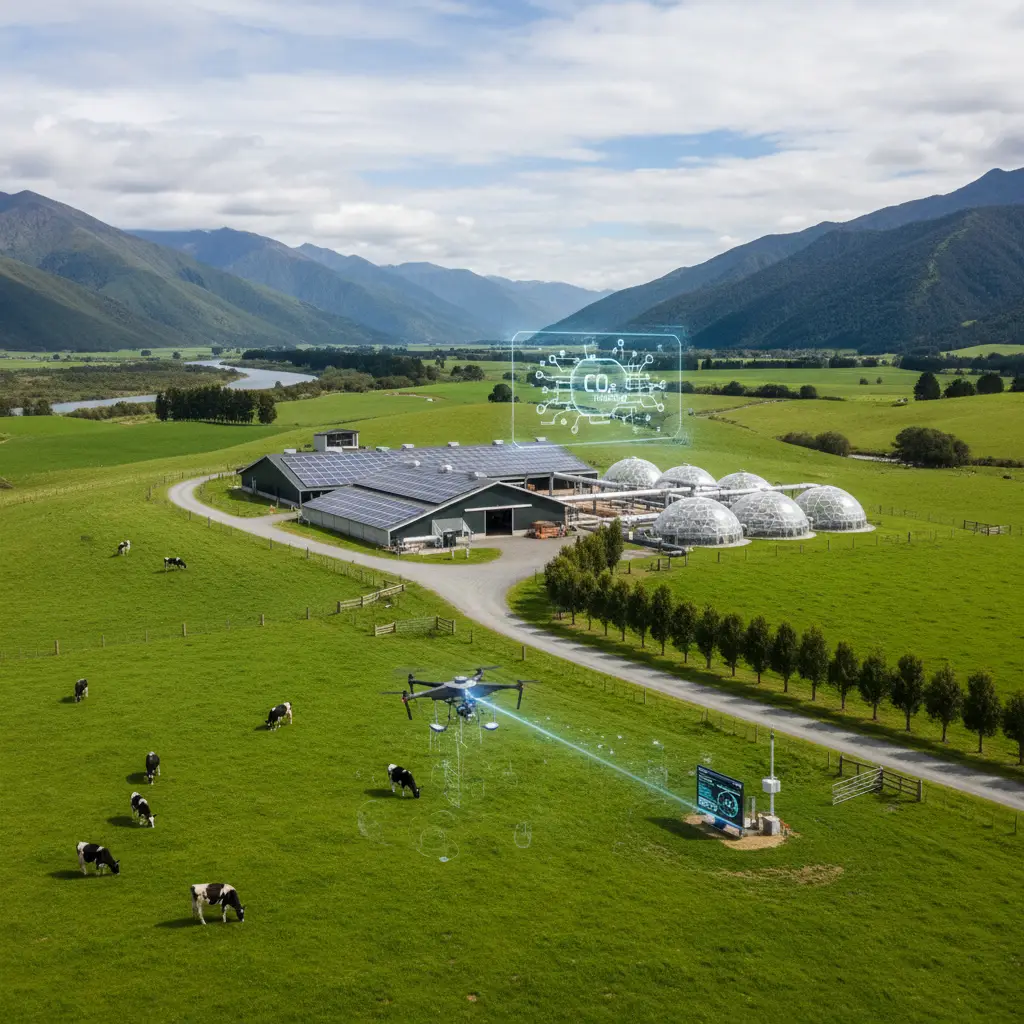
The Ministry for the Environment (MfE) provides the definitive guidance for voluntary greenhouse gas reporting in New Zealand. This guidance is updated annually and provides the specific “emission factors” required to convert activity data (like liters of diesel or kWh of electricity) into CO2 equivalents (CO2e).
For NZ businesses, using the MfE emission factors is crucial for consistency. It ensures that when you report your supply chain emissions, you are using the same benchmarks as the government and your industry peers. The guidance covers everything from waste and water to business travel and freight, providing a standardized methodology that simplifies the complex math of carbon accounting.
Furthermore, the External Reporting Board (XRB) has issued the Aotearoa New Zealand Climate Standards. These standards are mandatory for about 200 large entities but serve as the “gold standard” for all businesses. They emphasize the need for transparency regarding climate-related risks and opportunities within the supply chain, pushing for a more strategic view of carbon as a financial risk.
Which Technologies Assist in Carbon Tracking?
Manual spreadsheets are no longer sufficient for the scale of tracking required today. A new wave of ClimateTech is enabling New Zealand firms to automate and scale their emissions monitoring.

Carbon Accounting Software
SaaS platforms specifically designed for carbon accounting allow businesses to ingest data from ERP systems, utility bills, and supplier surveys. These platforms often come pre-loaded with global and NZ-specific emission factors, automating the calculation process and providing real-time dashboards for decision-making.
Blockchain for Traceability
In complex supply chains, blockchain technology can provide an immutable record of a product’s journey. This is particularly relevant for NZ’s high-value exports like Manuka honey or premium wine. By tagging products with a digital twin, businesses can track the carbon intensity of every step from production to export, providing verifiable proof of sustainability to international buyers.
AI and Predictive Analytics
Artificial Intelligence can help fill the “data gaps” mentioned earlier. By analyzing historical data and industry benchmarks, AI can predict the carbon footprint of a supplier with high accuracy, even when primary data is missing. It can also identify inefficiencies in logistics routes that a human analyst might miss, offering immediate opportunities for both cost and carbon savings.
Conclusion: The Path Forward for NZ Businesses
Supply chain emissions tracking in NZ is a journey of continuous improvement. It begins with understanding the regulatory landscape, moves through the difficult phase of data collection and supplier engagement, and eventually becomes an integrated part of business strategy. As the world moves toward a low-carbon economy, those Kiwi businesses that master their supply chain data today will be the ones that thrive in the regulatory and commercial environment of tomorrow. Embracing this challenge is not just about compliance—it’s about resilience, efficiency, and playing a part in New Zealand’s sustainable future.
What are Scope 3 emissions?
Scope 3 emissions are all indirect emissions that occur in the value chain of the reporting company, including both upstream and downstream emissions. This includes purchased goods and services, business travel, waste disposal, and the use of sold products.
Is carbon reporting mandatory in NZ?
Currently, mandatory climate-related disclosure applies to large financial institutions, insurers, and NZX-listed issuers (around 200 entities). However, many other businesses are tracking emissions voluntarily to meet supplier requirements and prepare for future regulations.
How do I calculate freight emissions in New Zealand?
Freight emissions are typically calculated by multiplying the weight of the cargo by the distance traveled (ton-km) and then applying the relevant emission factor for the mode of transport (e.g., heavy truck, rail, or coastal shipping) provided by the MfE.
What is the Zero Carbon Act 2019?
The Climate Change Response (Zero Carbon) Amendment Act 2019 provides a framework by which New Zealand can develop and implement clear and stable climate change policies. It sets a target for net-zero greenhouse gas emissions (except biogenic methane) by 2050.
How can small NZ businesses track their carbon footprint?
Small businesses can start by using free tools like the Climate Action Toolbox provided by Sustainable Business Network or the MfE’s voluntary reporting guidance. Focusing on electricity, fuel, and waste is a great first step before moving to complex supply chain data.
What are emission factors?
An emission factor is a representative value that attempts to relate the quantity of a pollutant released to the atmosphere with an activity associated with the release of that pollutant (e.g., kg of CO2e per liter of petrol).
About The Author
