Carbon Neutral Tour Operator Certification
A carbon neutral tour operator is a travel entity that has achieved a net-zero carbon footprint by measuring annual greenhouse gas emissions, implementing documented reduction strategies, and offsetting any residual emissions through verified environmental projects. In New Zealand, this certification typically involves rigorous auditing through recognized bodies like Toitū Envirocare or Ekos.
What are the certification pathways for a carbon neutral tour operator?
In the New Zealand market, becoming a certified carbon neutral tour operator involves choosing a partner that aligns with international standards such as ISO 14064-1. The two primary pathways are Toitū Envirocare and Ekos, each offering distinct advantages depending on the scale and nature of your tourism business.
Toitū Envirocare (Toitū net carbonzero)
Toitū is often considered the gold standard for New Zealand businesses. Their “net carbonzero” certification is accredited by the International Accreditation Forum (IAF) and is recognized in over 60 countries. For a tour operator, this pathway provides a high level of scientific rigor and third-party verification, which is essential for attracting high-value international travelers who prioritize sustainability. The process involves a multi-step audit of your operational data, ensuring that every liter of fuel and kilowatt of electricity is accounted for.
Ekos: Regenerative and Local Focus
Ekos specializes in carbon management with a heavy emphasis on nature-based solutions and community development. For smaller tour operators or those focused on regenerative travel, Ekos offers a more accessible entry point. They focus heavily on developing carbon forest projects within New Zealand and the Pacific Islands. Their certification process is robust but often feels more integrated into the local environmental narrative, making it a popular choice for boutique eco-lodges and adventure tourism providers.
How do you measure a tour operator’s carbon footprint?
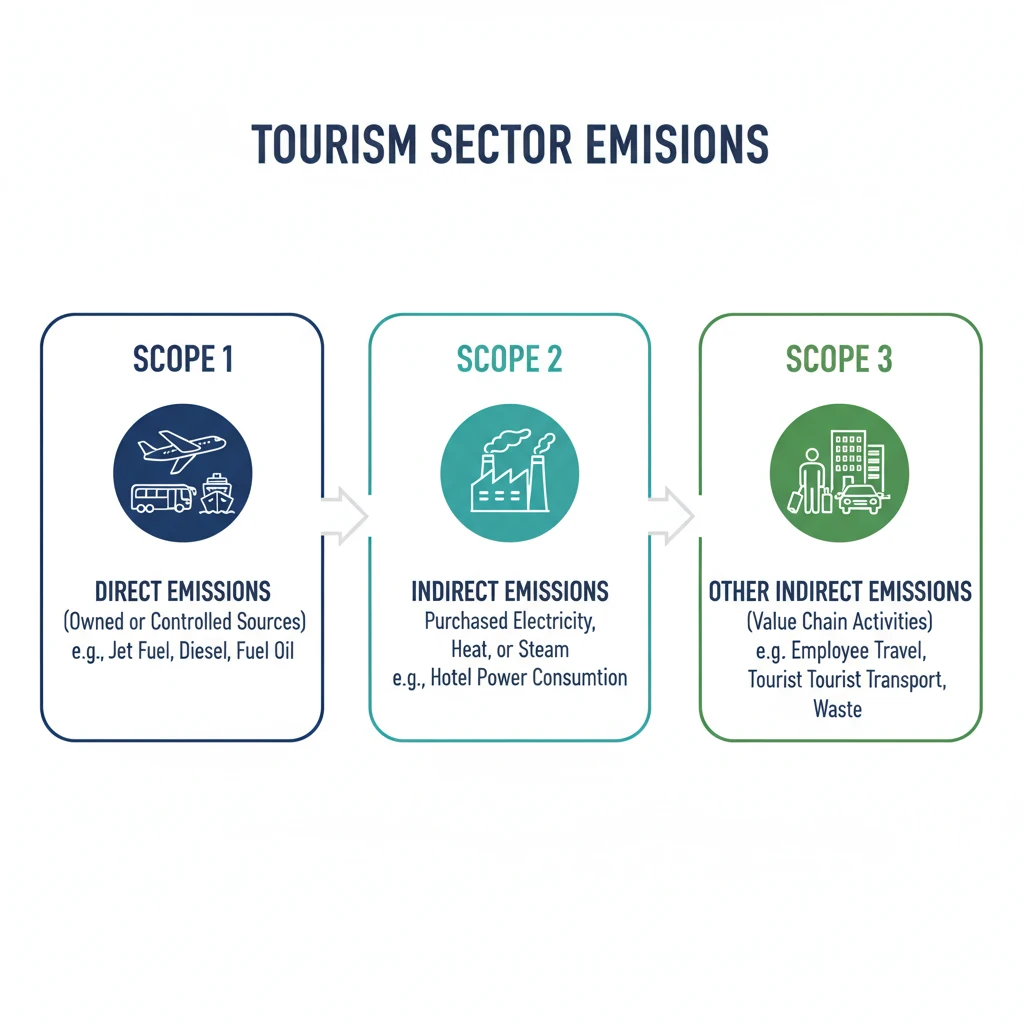
Before you can claim neutrality, you must establish an accurate baseline of your emissions. For a carbon neutral tour operator, this measurement is divided into three scopes as defined by the Greenhouse Gas (GHG) Protocol.
Scope 1: Direct Emissions
These are emissions from sources that are owned or controlled by your company. For tour operators, this predominantly includes the fuel used in tour vehicles (coaches, vans, boats, or helicopters) and any gas used for heating in company-owned facilities.
Scope 2: Indirect Energy Emissions
This covers the emissions from the generation of purchased electricity, heat, or cooling consumed by your business. In New Zealand, while our grid is highly renewable, there is still a carbon factor associated with peak demand periods when fossil fuels are utilized.
Scope 3: Supply Chain and Indirect Emissions
This is the most complex category for the tourism sector. It includes emissions that occur in the value chain, such as staff commuting, waste disposal, and—most importantly—the emissions from outsourced services like third-party accommodation or flights booked on behalf of clients. Leading certifications now require a significant portion of Scope 3 emissions to be included to prevent “carbon leakage.”
What are the emission reduction plan requirements?
Certification is not just about paying to offset your impact; it requires a genuine commitment to decarbonization. To maintain status as a carbon neutral tour operator, you must demonstrate year-on-year reductions against your baseline.
Setting Science-Based Targets
Your reduction plan must include specific, measurable goals. This might involve transitioning your fleet to Electric Vehicles (EVs) or Plug-in Hybrids, optimizing tour routes to reduce mileage, or implementing energy-efficiency retrofits in your offices. For example, a marine tour operator might invest in newer, more efficient outboard motors or explore electric propulsion systems for harbor cruises.
Operational Efficiency
Beyond hardware, behavioral changes are required. This includes driver training for fuel-efficient operation, reducing waste-to-landfill (which produces methane), and choosing suppliers who also hold environmental certifications. Auditors will look for evidence that these plans are being actively managed and are not just theoretical documents.
How to offset residual emissions for certification?
Even the most efficient tour operator will have “residual” emissions—impacts that cannot yet be eliminated due to current technology limitations (such as long-haul aviation or heavy vehicle requirements). To achieve carbon neutrality, these must be offset.
Verified Carbon Credits
Not all carbon credits are created equal. To satisfy New Zealand certification bodies, credits must be permanent, additional, and verifiable. Common standards include:
- Permanent Forest Sink Initiative (PFSI): New Zealand-based credits from permanent forests.
- Gold Standard: High-impact international projects often focused on renewable energy or social enterprise.
- VCS (Verified Carbon Standard): A widely recognized global standard for carbon reduction projects.
As a carbon neutral tour operator, choosing local NZ-based credits can be a powerful marketing tool, as it allows you to tell a story of regional restoration that resonates with domestic and international visitors alike.

Applying for the carbon neutral label
The final step in the journey is the formal application and audit process. This is where your data meets the scrutiny of the certifying body.
The Audit Process
An independent auditor will review your GHG inventory, your reduction plan, and your proof of offset retirement. They will verify that your calculations are accurate and that you have followed the specific rules of the certification program. This process can take several months, especially in the first year as you establish your data collection systems.
Annual Renewal
Carbon neutrality is not a one-time achievement. It is an annual cycle. Every year, you must re-measure, report on your progress against reduction targets, and offset the new year’s emissions. This ensures the integrity of the label and drives continuous improvement within the business.
Marketing your certification responsibly
Once certified, you gain the right to use the “Carbon Neutral” or “Net Carbonzero” logos. However, with the rise of anti-greenwashing legislation in New Zealand and globally, how you communicate this is critical.
Transparency is Key
Always link your certification logo to a public summary of your emissions report. Explain exactly what was measured and how you are reducing your impact. Avoid vague claims like “Greenest Tour in NZ” and instead use specific, verified language such as “Toitū net carbonzero certified since 2023.” This builds trust with an increasingly cynical consumer base.
The Competitive Advantage
In the New Zealand Climate Compliance landscape, being a carbon neutral tour operator is becoming a prerequisite for government contracts and partnerships with major international travel wholesalers. It positions your brand as a leader in the transition to a low-carbon economy, making you a preferred choice for the modern, conscious traveler.
How much does carbon neutral certification cost for a NZ tour operator?
Costs vary based on the size of the business and the volume of emissions. Typically, you can expect to pay between $2,000 and $10,000 annually for the audit and certification fee, plus the cost of the carbon offsets themselves, which fluctuate based on market prices.
Which is better for tourism: Toitū or Ekos?
Toitū is better for larger operators requiring international ISO-level recognition. Ekos is often preferred by smaller, community-focused operators who want to support local New Zealand biodiversity projects specifically.
Do I have to include my customers’ flights in my carbon footprint?
Standard certification usually covers the operator’s operational footprint (Scope 1 and 2). Including customer flights (Scope 3) is optional but increasingly encouraged for a truly comprehensive ‘Carbon Neutral’ tour product.
How long does it take to get certified?
The initial certification process typically takes 3 to 6 months. This allows time for data collection, the formal audit, and the procurement of offsets.
What are the tax implications of buying carbon offsets in NZ?
In many cases, the cost of carbon certification and offsets can be treated as a deductible business expense for tax purposes in New Zealand, provided they are incurred in the course of producing assessable income.
Can I call myself carbon neutral without a third-party certification?
While you can make the claim, it carries significant legal risk under the Fair Trading Act. Without third-party verification, you may be vulnerable to accusations of greenwashing and regulatory fines.
About The Author
