Green Building Consultants Wellington
Green building consultants in Wellington provide expert guidance on sustainable construction, helping developers achieve certifications like Green Star, Homestar, and NABERSNZ. They navigate New Zealand’s carbon compliance laws and seismic requirements, ensuring commercial projects minimize environmental impact while maximizing energy efficiency and long-term asset value in the capital’s unique climate.
The Strategic Importance of Green Building Consultants in Wellington
Wellington, the vibrant capital of New Zealand, stands at a critical juncture of environmental necessity and architectural innovation. As the nation moves toward its 2050 net-zero carbon goals, the role of green building consultants in Wellington has evolved from a niche advisory service to a fundamental pillar of the commercial real estate sector. These experts are tasked with interpreting the complex intersection of the New Zealand Climate Change Response Act and the practicalities of building in a high-wind, high-seismic zone. In the current carbon economy, a building’s value is no longer measured solely by its square footage or location; it is increasingly defined by its energy performance, carbon footprint, and resilience to climate-related risks.

The Wellington market presents unique challenges. The city’s geography requires buildings to withstand significant lateral forces from earthquakes while simultaneously managing the intense thermal demands of its maritime climate. Green building consultants provide the technical bridge between these competing requirements. They utilize advanced modeling software to predict how a building will perform over its entire lifecycle, accounting for the embodied carbon in construction materials and the operational carbon consumed through heating, cooling, and lighting. For commercial developers, engaging a consultant early in the design phase is essential to avoid the “brown discount”—the declining value of properties that fail to meet modern sustainability standards.
Navigating the NZ Climate Compliance and Carbon Economy
What is the impact of NZ climate compliance on Wellington property? The answer lies in the increasing stringency of the Building Code and the introduction of mandatory energy reporting. Green building consultants help firms navigate these regulations, ensuring that new developments and major retrofits are future-proofed against rising carbon prices and stricter environmental mandates. By optimizing for energy efficiency, these consultants help clients secure lower insurance premiums and better financing terms, as banks increasingly favor assets with high Environmental, Social, and Governance (ESG) ratings. This economic shift has made sustainability a core component of financial risk management in the Wellington property market.
Comprehensive Certification Services: Green Star, Homestar, and NABERSNZ
In the realm of sustainable development, certifications serve as the verifiable proof of a building’s environmental credentials. Wellington consultants specialize in three primary frameworks: Green Star, Homestar, and NABERSNZ. Each of these serves a distinct segment of the market and requires a specific set of technical competencies to achieve. Green Star is the preeminent rating system for commercial buildings in New Zealand. It evaluates projects across categories such as management, indoor environment quality, energy, transport, water, materials, land use and ecology, and emissions. A Wellington consultant will guide a project from the initial registration through to the final certification, ensuring that every design choice aligns with the New Zealand Green Building Council (NZGBC) standards.

Homestar, on the other hand, is tailored for the residential sector. In Wellington, where housing quality is a major public health concern, Homestar ratings of 6 or higher are becoming the target for new multi-unit developments and social housing projects. Consultants working in this space focus on moisture control, thermal comfort, and energy efficiency, which are vital in Wellington’s damp and windy environment. Finally, NABERSNZ (National Australian Built Environment Rating System New Zealand) provides a performance-based rating for the energy efficiency of office buildings. Unlike Green Star, which evaluates design and construction, NABERSNZ measures actual energy use, providing a benchmark for how well a building is managed in practice. This is particularly important for commercial landlords in Wellington who wish to attract high-value tenants, such as government agencies, which often require a minimum NABERSNZ rating for their leased spaces.
Green Star: The Gold Standard for Commercial Excellence
How do Green Star ratings benefit Wellington commercial projects? By achieving a 5 or 6-star Green Star rating, developers demonstrate world-class leadership in sustainability. Consultants assist in sourcing low-impact materials, such as cross-laminated timber (CLT) or recycled steel, which significantly reduce the embodied carbon of the structure. They also implement sophisticated Building Management Systems (BMS) that optimize energy use based on occupancy levels and external weather conditions. In a city like Wellington, where the wind can be harnessed for natural ventilation, consultants play a key role in designing passive systems that reduce the reliance on mechanical cooling, thereby lowering operational costs and carbon emissions.
Integrating Seismic Resilience with Sustainable Design
Wellington’s status as a high-seismic zone introduces a layer of complexity that is rarely seen in other global green building markets. Traditionally, seismic strengthening and sustainable design were viewed as separate, or even conflicting, goals. However, modern green building consultants in Wellington treat them as integrated components of building longevity. The most sustainable building is one that does not need to be demolished and replaced after a major earthquake. Therefore, resilience is a form of sustainability. Consultants advocate for technologies such as base isolation and fluid viscous dampers, which protect the building’s structure and its internal contents during a seismic event.
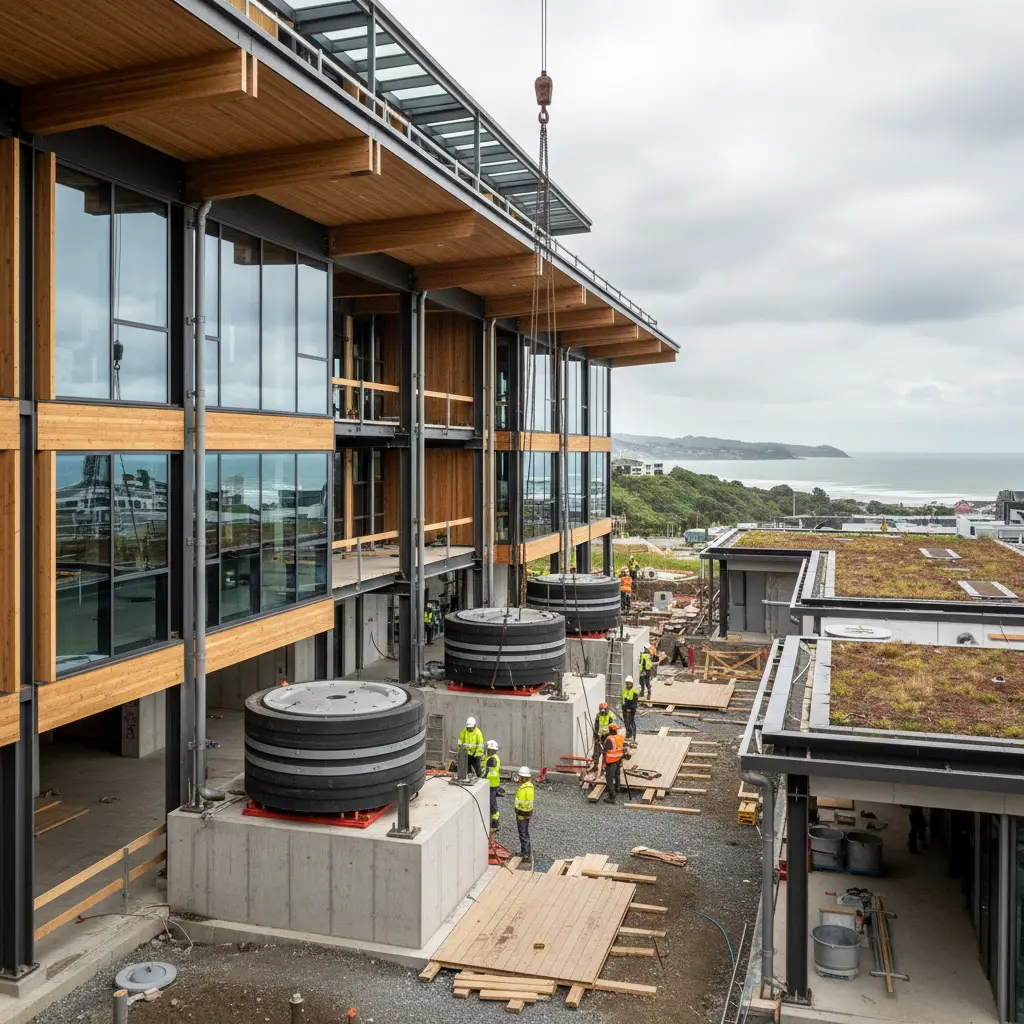
From a carbon perspective, the choice of materials in seismic design is critical. Heavy concrete structures provide excellent thermal mass but carry a high carbon price. Conversely, lightweight timber structures are excellent for seismic performance and carbon sequestration but require careful engineering to meet acoustic and fire standards. Green building consultants perform lifecycle assessments (LCA) to determine the optimal balance between these factors. They provide the evidence-based data needed to make informed decisions that satisfy both the structural engineer’s safety requirements and the architect’s sustainability goals. This holistic approach ensures that Wellington’s built environment is both safe for its inhabitants and gentle on the planet.
Directory of Leading Green Building Consultants in Wellington
Wellington is home to a dense concentration of sustainability expertise, ranging from large multi-disciplinary engineering firms to specialized boutique consultancies. Selecting the right partner depends on the scale, complexity, and specific goals of the project. The following directory highlights the types of firms operating in the capital:
- Tier 1 Multi-Disciplinary Firms: Large organizations like Beca, WSP, and Mott MacDonald offer a full suite of services, including structural engineering, building services, and dedicated sustainability teams. These firms are well-equipped to handle large-scale commercial developments and government infrastructure projects, providing integrated solutions that cover everything from Green Star certification to climate risk disclosure.
- Specialist Sustainability Consultancies: Boutique firms focus exclusively on environmental performance. These consultants are often highly agile and provide deep expertise in specific areas such as Homestar assessments, carbon footprinting, and passive house design. They are ideal for developers looking for high-touch service and innovative, out-of-the-box thinking.
- Seismic and Retrofit Specialists: Given Wellington’s aging building stock, many consultants specialize in the sustainable retrofit of existing structures. They combine seismic strengthening with energy upgrades, transforming inefficient heritage buildings into high-performing modern assets.
These consultants often collaborate within the NZGBC network, sharing best practices and contributing to the development of local building standards. When browsing a directory of Wellington-based consultants, it is important to look for those with a proven track record in the local market, as they will have the most relevant experience dealing with the Wellington City Council’s planning requirements and the specific environmental conditions of the region.
Client Reviews and Project Portfolios
When evaluating green building consultants in Wellington, their project portfolio is the most reliable indicator of their capability. A strong portfolio should demonstrate a diversity of project types and a consistent ability to achieve high certification scores. For example, the redevelopment of the Bowen Campus in Wellington’s government precinct is a landmark project that showcases the power of sustainable design. Consultants on this project successfully integrated modern energy systems into a massive commercial footprint, achieving high Green Star ratings while maintaining the functional requirements of high-security government tenants.

Client reviews often highlight the importance of the consultant’s communication and their ability to work within a wider project team. Sustainable design is a highly collaborative process; a consultant must be able to influence architects, engineers, and contractors to align with the project’s environmental goals. Reviews that mention a consultant’s ability to find cost-effective solutions to complex technical problems are particularly valuable. In the Wellington market, where construction costs are high, the ability to deliver a green building that is also financially viable is the ultimate mark of a successful consultant. Prospective clients should look for case studies that quantify the benefits of the consultant’s work, such as percentage reductions in energy use or the successful navigation of complex regulatory hurdles.
Selecting the Right Consultant for Your Project
Choosing a green building consultant is a strategic decision that will impact the entire lifecycle of your asset. To ensure the best outcome, developers should consider several key criteria. First, verify the consultant’s credentials. Are they NZGBC Accredited Professionals (APs)? Do they have experience with the specific certification you are targeting? Second, evaluate their technical toolkit. Do they use advanced modeling software like IES or Grasshopper to simulate building performance? The ability to provide data-driven insights during the early design phase can save significant costs later in the project.
Third, consider their local knowledge. Wellington’s microclimates—from the wind-swept hills of Karori to the reclaimed land of the CBD—require localized expertise. A consultant who understands the nuances of the Wellington District Plan and the local supply chain for sustainable materials will be an invaluable asset. Finally, assess their commitment to the carbon economy. The best consultants are not just reactive to current laws; they are proactive in anticipating future shifts in climate policy. They should be able to provide advice on embodied carbon reporting and the potential for carbon offsetting, helping you position your project at the forefront of New Zealand’s green building movement.
How much does a Green Star consultant cost in Wellington?
The cost of a Green Star consultant in Wellington typically ranges from 1% to 3% of the total project cost, depending on the complexity and scale of the development. This fee covers the technical modeling, documentation, and coordination required to achieve certification. While it represents an upfront investment, it is often offset by long-term energy savings and increased asset value.
What is the difference between Homestar and Green Star?
Homestar is a rating system specifically designed for residential buildings, focusing on health, warmth, and efficiency for homes. Green Star is a holistic rating system for commercial and large-scale buildings, covering a broader range of environmental categories including transport, land use, and office-specific indoor environment quality.
Is NABERSNZ mandatory for Wellington commercial buildings?
NABERSNZ is currently mandatory for government agencies leasing more than 2,000 square meters of office space. While not yet mandatory for all private commercial buildings, many landlords adopt it voluntarily to demonstrate energy performance to prospective tenants and to benchmark their buildings against industry standards.
How does seismic strengthening impact a building’s green rating?
Seismic strengthening is increasingly recognized as a sustainable practice because it preserves the embodied carbon of an existing structure and prevents the environmental waste associated with demolition. In frameworks like Green Star, the longevity and resilience of a building can contribute to its overall sustainability score.
Who are the leading green building firms in New Zealand?
Leading firms include large multi-disciplinary practices like Beca, WSP, and Mott MacDonald, as well as specialized consultancies such as eCubed Building Workshop and Tricia Love Consultants. These firms are active members of the New Zealand Green Building Council and have extensive portfolios across the country.
How do I find a carbon-neutral building consultant in Wellington?
You can find carbon-neutral consultants by searching the New Zealand Green Building Council (NZGBC) member directory or looking for firms with Toitū carbonzero or carbonreduce certification. These consultants have verified their own carbon footprints and are experts in helping clients achieve similar goals for their building projects.
“,”metaTitle”:”Top Green Building Consultants Wellington | NZ Climate Compliance”,”metaDescription”:”Professional guide to Wellington’s green building consultants. Learn about Green Star, NABERSNZ, seismic-sustainable design, and NZ climate compliance strategies.”,”tags”:[“Green Building Wellington”,”Sustainable Architecture NZ”,”Green Star Consultants”,”NABERSNZ Wellington”,”Carbon Economy NZ”]}
About The Author
