Agricultural Emissions Pricing
Agricultural emissions pricing in NZ is a world-first regulatory framework designed to charge farmers for greenhouse gas emissions, specifically biogenic methane and nitrous oxide. Integrated into the Zero Carbon Act, this pricing mechanism incentivizes the reduction of farm-level emissions to meet national 2030 and 2050 climate targets while maintaining agricultural productivity.
What is the difference between Farm-Level and Processor-Level Pricing?
The debate between farm-level and processor-level pricing has been central to the development of agricultural emissions pricing in NZ. Each approach offers distinct advantages and challenges regarding administrative complexity, equity, and the direct incentive for farmers to reduce their environmental footprint. Understanding these differences is crucial for any primary sector stakeholder navigating the transition to a low-emissions economy.
Farm-Level Pricing: Precision and Agency
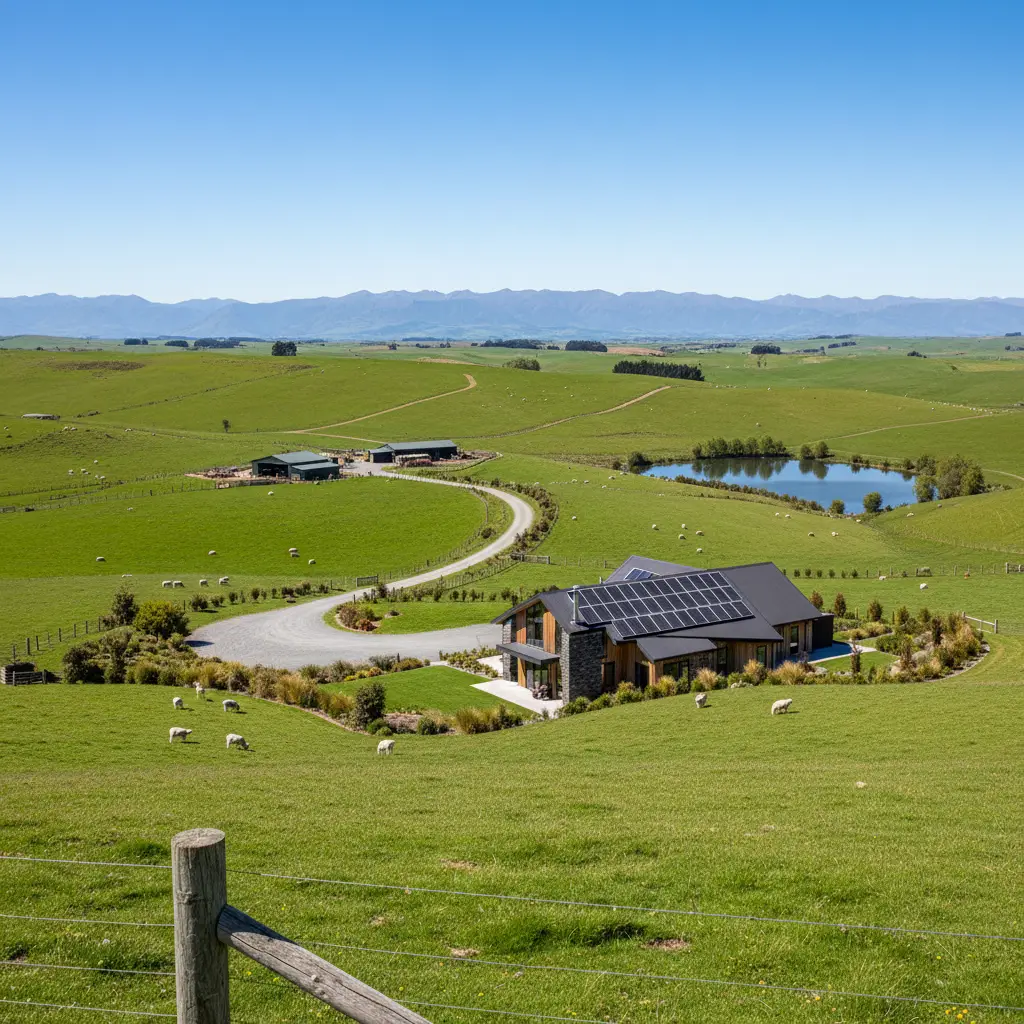
Farm-level pricing is the preferred model for many industry bodies and the government because it provides a direct link between a farmer’s management decisions and their financial liability. In this model, emissions are calculated based on the specific activities occurring within the farm boundary. This includes the number and type of livestock, the amount of synthetic nitrogen fertilizer applied, and the specific mitigation technologies employed.
The primary advantage of farm-level pricing is the agency it grants the landowner. Farmers who invest in low-methane genetics, high-quality forage, or precision fertilizer application see an immediate reduction in their emissions bill. This granularity encourages innovation and rewards those who are ahead of the curve in environmental stewardship. However, the administrative burden is significantly higher. Farmers must maintain rigorous records and use approved software tools to report their annual emissions, which requires both time and digital literacy.
Processor-Level Pricing: Simplicity and Efficiency
In contrast, processor-level pricing applies the levy at the point where agricultural products enter the supply chain—typically at the dairy factory or the meat processing plant. The cost is usually passed back to the farmer as a lower payout per kilogram of milk solids or per head of livestock. This system is far simpler to administer because the government only needs to deal with a handful of large companies rather than tens of thousands of individual farm businesses.
The downside of processor-level pricing is its lack of nuance. It functions as a blunt instrument, charging all farmers based on their output regardless of the specific efficiencies they have implemented on-site. Under this model, a farmer who has significantly reduced their methane intensity through advanced breeding would pay the same rate as a neighbor with a higher environmental impact, provided their production volume is the same. This creates a ‘free-rider’ problem and fails to provide a strong financial signal for individual farm-level improvements.
What are the Cost Projections for 2025?
As New Zealand prepares for the formal introduction of agricultural emissions pricing in 2025, financial modeling has become a priority for the Ministry for Primary Industries (MPI) and industry groups like Beef + Lamb NZ and DairyNZ. The pricing structure is expected to follow a ‘split-gas’ approach, acknowledging that short-lived gases like methane behave differently in the atmosphere than long-lived gases like nitrous oxide and carbon dioxide.

Methane Pricing and the Levy Structure
Biogenic methane, primarily from ruminant belching, accounts for the largest portion of New Zealand’s agricultural emissions profile. Current projections suggest that the initial levy for methane will be set at a level that encourages reduction without compromising the economic viability of the sector. While specific figures are subject to final cabinet approval, early estimates have suggested a starting price in the range of $0.11 to $0.15 per kilogram of methane. For an average dairy farm, this could translate to a cost of several thousand dollars annually, though this can be mitigated through efficiency gains.
Nitrous Oxide and Nitrogen Fertilizer
Nitrous oxide, which stems from animal urine patches and the application of synthetic nitrogen fertilizers, will likely be priced in alignment with the New Zealand Emissions Trading Scheme (NZ ETS) but with significant discounts or ‘free allocations’ initially. The goal is to gradually transition the sector toward the full market price of carbon. By 2025, farmers will need to account for every tonne of nitrogen fertilizer used, with costs projected to rise as the free allocation phase-out accelerates toward 2030. This makes precision agriculture and the use of urease inhibitors more financially attractive.
Economic Impact on Different Farm Types
The impact of 2025 pricing will not be uniform across the sector. Dairy farms, which are generally more intensive and have higher per-hectare emissions, may face higher absolute costs but often have more capital to invest in mitigation technologies. Sheep and beef farms, particularly those on extensive hill country, may face lower per-hectare costs but operate on tighter margins. Financial modeling suggests that without significant mitigation, some marginal sheep and beef operations could see a 10-20% reduction in net profit, highlighting the urgent need for sequestration credits and efficiency improvements.
What are the Incentives for Early Adoption?
To ease the transition and maintain New Zealand’s competitive edge in the global market, the government and industry partners have introduced several incentives for farmers who take proactive steps before the 2025 deadline. These incentives are designed to turn environmental compliance into a value proposition.
Sequestration Credits: Recognizing On-Farm Vegetation
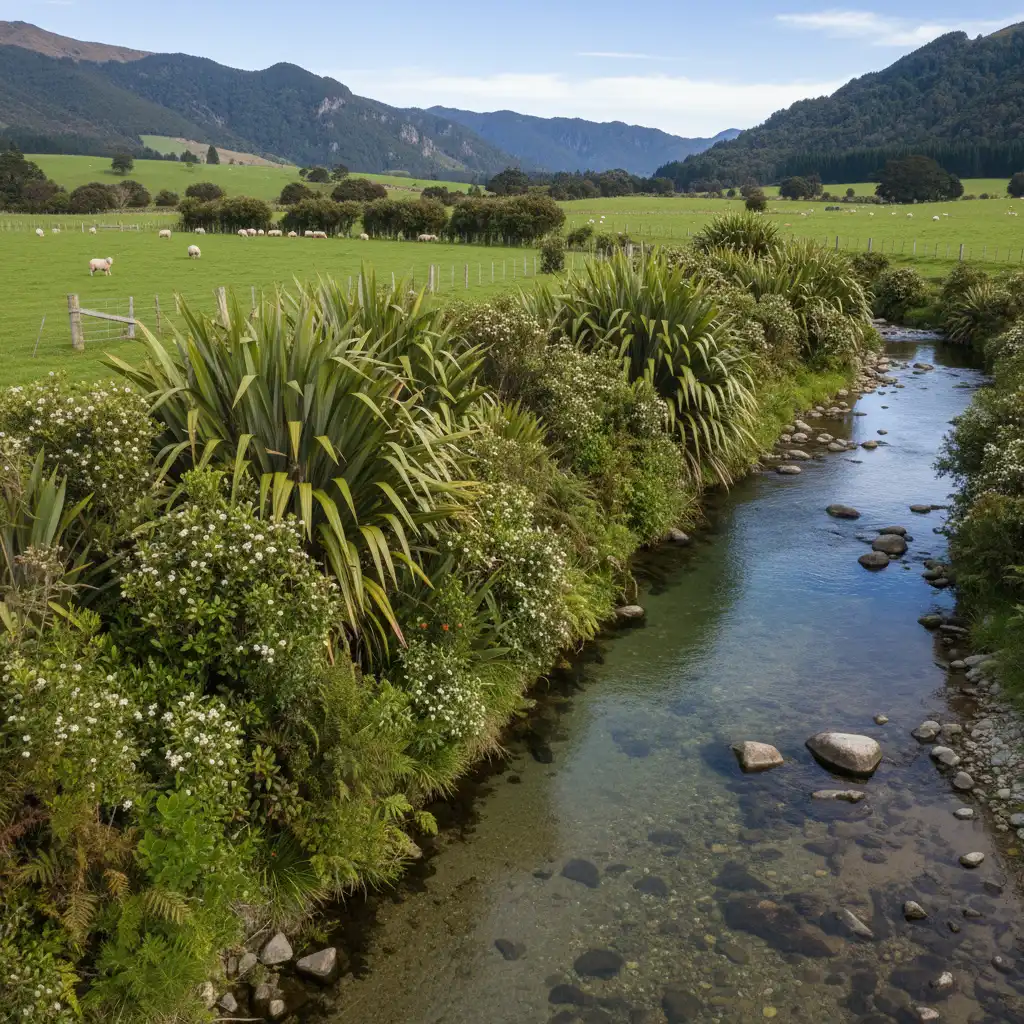
One of the most significant incentives is the recognition of on-farm sequestration. Unlike the NZ ETS, which has strict rules about what constitutes a ‘forest,’ the agricultural emissions pricing framework aims to recognize a broader range of vegetation. This includes riparian plantings, shelterbelts, and small blocks of indigenous scrub. By mapping these areas, farmers can offset their emissions liability. Early adopters who have already invested in native restoration will find themselves with a ‘credit’ that directly reduces their annual levy, essentially getting paid for the environmental work they have already performed.
Technology Grants and R&D Support
The government has allocated significant funding through the Climate Action Joint Venture to accelerate the commercialization of methane-reducing technologies. Farmers who participate in pilot programs for methane inhibitors (like 3-NOP or seaweed-based feeds) or who adopt low-emissions genetics early may receive subsidies or grants. These programs not only reduce the cost of adoption but also position the participating farms as leaders in the ‘low-carbon’ brand story that is becoming increasingly important for premium exporters like Fonterra and Silver Fern Farms.
Market Access and Premium Pricing
Beyond government incentives, the global marketplace is providing its own set of rewards. Major international retailers and food companies are setting ambitious Scope 3 emission targets. New Zealand farmers who can prove a low-emissions profile through early adoption of pricing and reporting frameworks are more likely to secure long-term contracts and potentially command a ‘green premium.’ In this context, agricultural emissions pricing nz is not just a tax; it is a certification of sustainability that protects market access in a climate-conscious world.
How does the Zero Carbon Act Influence Pricing?
The legal backbone of agricultural emissions pricing in NZ is the Climate Change Response (Zero Carbon) Amendment Act 2019. This landmark legislation set into law the target of reducing biogenic methane emissions by 10% below 2017 levels by 2030, and by 24-47% by 2050. It also established the Climate Change Commission, an independent body that provides expert advice to the government on emissions budgets and pricing levels.
The Zero Carbon Act ensures that agricultural pricing is not a temporary policy but a long-term structural shift. It provides the certainty that businesses need to make multi-decade investment decisions. For farmers, this means that the ‘do nothing’ approach is no longer viable. The Act mandates that if the sector cannot agree on an effective farm-level pricing mechanism, the government has the power to ‘drop’ agriculture into the standard NZ ETS, which would likely result in much higher costs and less flexibility for farmers. This ‘backstop’ serves as a powerful motivator for industry-led solutions like He Waka Eke Noa.
What Practical Mitigation Strategies can Farmers Use?
Reducing emissions does not necessarily mean reducing production. High-efficiency farming focuses on ’emissions intensity’—producing more food for every gram of methane emitted. Practical strategies include optimizing livestock growth rates so animals reach slaughter weight faster, thereby spending fewer days emitting methane. Improving pasture quality through the inclusion of species like plantain has also been shown to reduce nitrogen leaching and nitrous oxide emissions.

Furthermore, the use of precision fertilizer technology ensures that nitrogen is only applied when and where the plants can actually use it, minimizing the surplus that escapes as gas. As we move toward 2025, the integration of these practices with digital reporting tools will become the standard operating procedure for New Zealand’s primary producers.
Why is NZ Leading the World in Agricultural Pricing?
New Zealand is unique among developed nations because nearly half of its total greenhouse gas emissions come from agriculture. In most other countries, energy and transport are the dominant sectors. This puts New Zealand in a position where it cannot meet its international obligations under the Paris Agreement without addressing farm emissions. While this presents a significant challenge, it also offers a first-mover advantage. By developing the world’s first comprehensive agricultural emissions pricing system, New Zealand is creating a blueprint that other nations will inevitably follow. This expertise in ‘climate-smart’ agriculture is becoming a valuable export in its own right, as NZ agritech companies develop the sensors, software, and genetics needed for a low-carbon future.
When does agricultural emissions pricing start in NZ?
The formal pricing mechanism for agricultural emissions is scheduled to commence in 2025, following several years of industry consultation and the development of reporting frameworks.
How will methane be priced compared to nitrous oxide?
NZ uses a split-gas approach. Methane is priced as a short-lived gas with its own specific levy, while nitrous oxide is treated as a long-lived gas, often linked to the price of carbon in the NZ ETS with specific discounts.
Can farmers get credit for trees on their land?
Yes, the proposed framework includes provisions for recognizing sequestration from a wider range of on-farm vegetation than the standard ETS, including riparian strips and indigenous woodlots.
What is the difference between the ETS and agricultural pricing?
The ETS is a broad market for carbon trading, while the agricultural pricing system is a tailored levy designed specifically for the unique biological emissions of farming, offering more flexibility for the sector.
How does the Zero Carbon Act affect NZ farmers?
The Act sets legally binding targets for methane and nitrous oxide reductions, providing the legislative mandate for emissions pricing and ensuring long-term policy stability.
What tools are available to measure farm emissions?
Farmers can use approved calculators like OverseerFM, He Waka Eke Noa’s simplified tools, or processor-specific calculators provided by companies like Fonterra to estimate their footprint.
About The Author
