Carbon Credit Tax Implications NZ
Carbon credit tax in NZ is governed by the Inland Revenue Department (IRD), which treats New Zealand Units (NZUs) as revenue account property. This means that income derived from selling carbon credits is generally taxable, while the costs of acquiring units are deductible. GST applies at the standard 15% rate for domestic transactions between registered entities.
What are the IRD rules for NZU holdings?
The Inland Revenue Department (IRD) provides specific guidelines on how New Zealand Units (NZUs), the primary currency of the New Zealand Emissions Trading Scheme (NZ ETS), are treated for tax purposes. Under the Income Tax Act 2007, NZUs are classified as “revenue account property.” This classification is crucial because it dictates that any gain made on the sale of these units is considered taxable income, regardless of whether the holder is a professional trader or a long-term investor.
For most participants, the “cost” of an NZU is a primary factor in determining tax liability. If you are granted NZUs for free (for example, under the one-off allocation for pre-1990 forest land), the cost base is typically deemed to be zero. Conversely, if you purchase NZUs on the open market, the purchase price becomes your cost base. When these units are eventually sold or exchanged, the difference between the sale price and the cost base is your taxable profit.

It is also important to distinguish between the types of holders. The IRD looks at the intent behind the acquisition. However, because NZUs are specifically defined as revenue account property under Section EB 2, the traditional “capital vs. revenue” debate is largely bypassed for these specific assets. Whether you hold them to offset your own emissions or to speculate on price increases, the tax treatment remains focused on the revenue account.
Deductibility of NZU Acquisition Costs
When a business buys NZUs to meet its surrender obligations under the ETS, the cost of those units is generally deductible in the year the expenditure is incurred. If the units are held at the end of the financial year, they must be valued using one of the IRD-approved methods (cost, FIFO, or weighted average cost). This ensures that the tax system tracks the value of the “inventory” of carbon credits similar to how it tracks physical stock in a retail business.
How does GST work on carbon unit transactions?
GST on carbon unit transactions in New Zealand follows standard commercial logic but requires careful attention to the status of the parties involved. If you are registered for GST and sell NZUs, you must charge GST at the prevailing rate of 15% to the buyer. This is because the sale of an NZU is considered a supply of services for GST purposes.
For the buyer, if they are also GST-registered and using the units for their taxable activity, they can typically claim back the GST paid as an input tax credit. This makes the transaction GST-neutral for many commercial entities. However, if a non-registered individual or entity sells units, GST does not apply, but they may need to monitor their turnover to ensure they haven’t crossed the $60,000 annual threshold for mandatory GST registration.

GST Treatment of Surrendering Units
A common question is whether GST applies when units are surrendered to the Government to meet emissions obligations. The IRD’s stance is that the surrender of NZUs to the Crown is not a “supply” in the traditional sense, and therefore no GST is charged on the act of surrender. However, the initial purchase of those units would have attracted GST, which the business likely claimed back as a deduction earlier in the cycle.
Are carbon credit sales capital gains or income?
In the New Zealand tax landscape, the distinction between capital gains and income is often a point of contention. However, for carbon credits, the legislation is relatively clear. Because NZUs are categorized as revenue account property, the proceeds from their sale are treated as taxable income. New Zealand does not have a comprehensive capital gains tax, but specific rules (like those for NZUs or the bright-line test for property) serve to tax gains that might otherwise be considered capital in nature.
This means that even if a forest owner holds NZUs for twenty years before selling them, the entire profit upon sale is taxed at their applicable income tax rate. There is no “long-term hold” exemption for carbon credits in the NZ ETS. This can lead to significant tax spikes in years where large volumes of credits are sold, potentially pushing the taxpayer into a higher tax bracket.
Are there any exceptions?
The primary exceptions relate to the type of credit and the specific circumstances of the allocation. For example, some credits issued under international agreements or specific historical schemes may have different triggers, but for the vast majority of participants dealing in NZUs, the income tax rules are the standard. It is vital to consult with a tax professional to determine if any specific transitional rules apply to older holdings or units acquired through inheritance.

What is the best tax planning strategy for foresters?
Foresters face unique challenges because their income is often lumpy—long periods of growth with no income followed by a large harvest or significant NZU allocations. Effective tax planning for foresters involves managing the timing of NZU sales and understanding the “Stock Change” versus “Averaging” accounting methods under the ETS.
Under the Averaging method, foresters are granted units up to a certain point (the average carbon storage of a forest over multiple rotations) and do not have to surrender units upon harvest, provided they replant. From a tax perspective, this provides a more stable outlook, as there are fewer surrender events to account for. However, any NZUs sold still trigger an income tax liability.
Managing the Timing of NZU Sales
To avoid being pushed into the top 39% tax bracket (for individuals), foresters often stagger the sale of their NZUs over several financial years. Instead of selling a massive block of units in one year, selling smaller increments can keep the total annual income within lower tax thresholds. Additionally, using a company structure or a trust can provide more flexibility in how income is distributed and taxed, though these structures come with their own compliance costs.
Foresters should also be aware of the deductibility of forest management expenses. Costs such as planting, pruning, and ETS administration fees are generally deductible against other income, which can help offset the tax burden when NZUs are eventually sold.
Valuation Methods and Year-End Requirements
At the end of each financial year, holders of NZUs must value their remaining units for tax purposes. The IRD allows for three primary valuation methods:
- Cost: Valuing units at the price you paid for them.
- FIFO (First-In, First-Out): Assuming the first units you bought are the first ones you sold or surrendered.
- Weighted Average Cost: Averaging the cost of all units held.
Once a method is chosen, it must be applied consistently. If you were granted units for free, their cost is zero, and they will remain valued at zero on your balance sheet until sold, at which point the full sale price is profit. If you purchased units at $70 and the market drops to $50, you cannot necessarily claim a loss until the units are sold, unless you are using a market-value approach (which is generally restricted to certain types of traders).
Compliance and Record Keeping
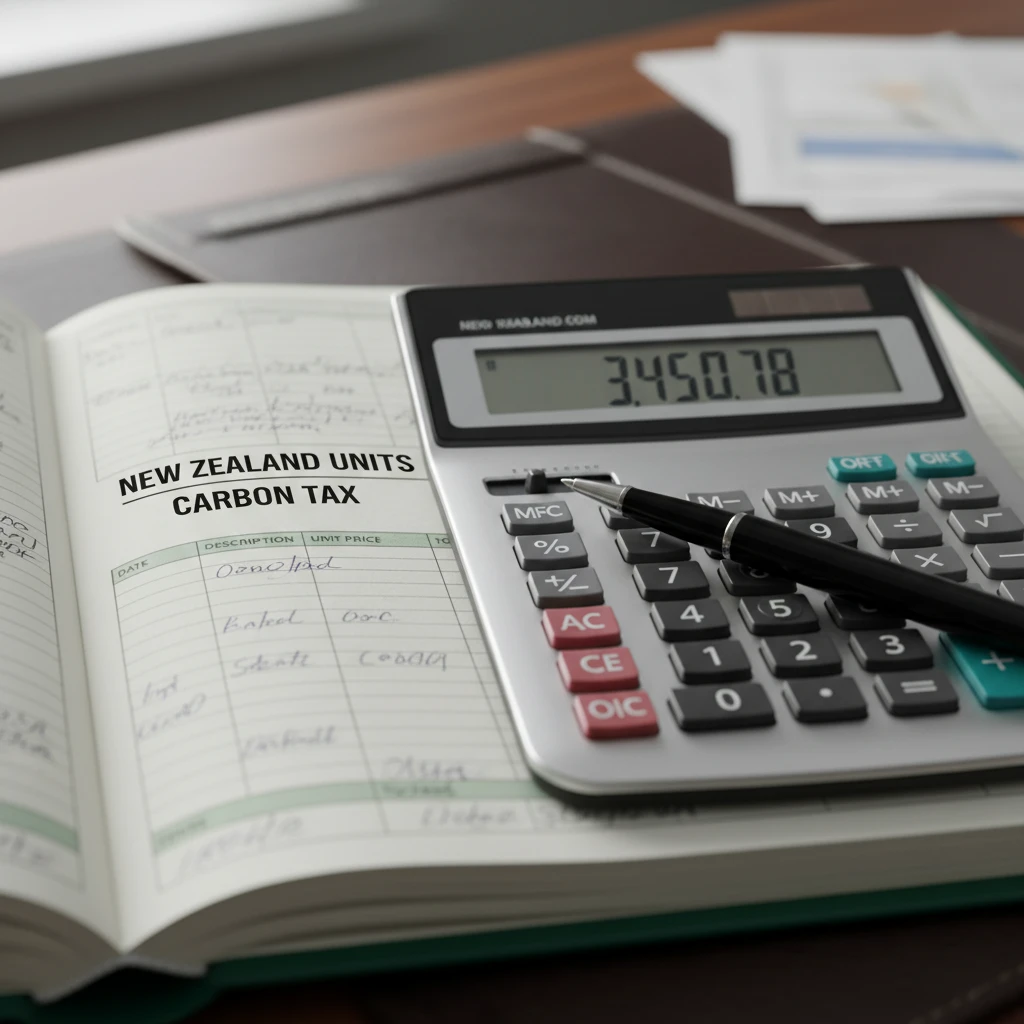
The IRD requires robust record-keeping for all ETS transactions. This includes the date of acquisition, the price paid, the date of any sales, the price received, and records of any units surrendered to the Environmental Protection Authority (EPA). Because the ETS registry (the New Zealand Emission Unit Register) tracks the movement of units, the IRD has a clear audit trail to verify the accuracy of your tax returns.
People Also Ask
Are NZUs taxable when they are issued?
In most cases, the mere issuance of NZUs by the government is not a taxable event. The tax liability is generally deferred until the units are sold or otherwise disposed of. However, the value of the units must be recorded at year-end according to your chosen valuation method.
Can I claim a tax deduction for the cost of buying NZUs?
Yes, if you buy NZUs to meet your obligations under the ETS or as part of a trading business, the cost is deductible. If you hold them at the end of the year, they are treated as inventory and their value is accounted for in your year-end financial statements.
Is GST applicable when I sell carbon credits in NZ?
Yes, if the seller is GST-registered, they must charge 15% GST on the sale of NZUs to a New Zealand-based buyer. If the buyer is also GST-registered, they can usually claim this back as an input credit.
How does IRD value NZUs at the end of the financial year?
The IRD allows taxpayers to use cost, FIFO, or weighted average cost. Most taxpayers choose the cost method. If units were received for free (e.g., forestry allocation), their cost is zero.
Does the bright-line test apply to carbon credits?
No, the bright-line test specifically applies to residential land. However, because NZUs are “revenue account property,” the gains are taxed similarly to how the bright-line test taxes property gains, but without the time-limit exemptions.
What happens if I surrender NZUs for emissions obligations?
When you surrender NZUs to the Crown to meet your legal obligations, it is treated as a disposal of the unit at its cost. There is generally no taxable gain or loss at the moment of surrender, but the cost of the unit (which you likely deducted when you bought it) is effectively used up.
About The Author
