Coastal Hazards and Managed Retreat
Managed retreat NZ policy refers to the strategic, planned relocation of communities, infrastructure, and assets away from areas at high risk of natural hazards, particularly coastal erosion and sea-level rise. It serves as a critical component of the National Adaptation Plan, utilizing legal frameworks and financial mechanisms to facilitate equitable transitions and reduce long-term climate vulnerability.
The Urgency of Managed Retreat in New Zealand
New Zealand’s geography is defined by its extensive coastline, a feature that provides economic vitality and lifestyle benefits but also exposes the nation to significant climate risks. As sea levels rise and extreme weather events become more frequent due to climate change, the concept of “holding the line” through hard engineering structures like sea walls is becoming increasingly untenable for many regions. This reality has thrust managed retreat NZ policy to the forefront of national discourse, necessitating a shift from reactive disaster management to proactive climate adaptation.
Managed retreat is not merely about moving houses; it is a complex socio-economic process involving the unmaking of established communities and the restoration of natural coastal systems. Under the umbrella of the Climate Change Response (Zero Carbon) Amendment Act, New Zealand is legally bound to plan for these eventualities. The National Adaptation Plan (NAP) identifies managed retreat as a key lever for reducing exposure to natural hazards, yet the practical implementation remains one of the most challenging aspects of modern governance.
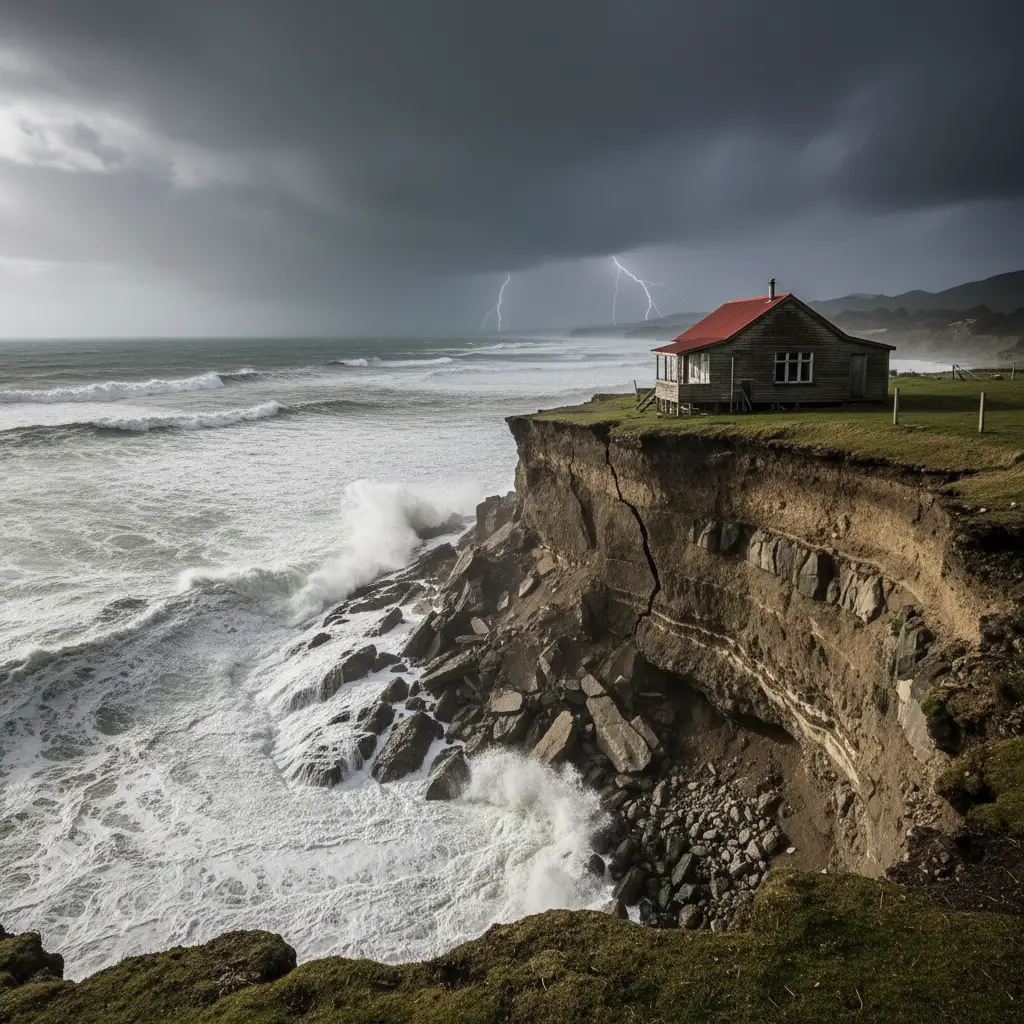
The policy landscape is currently evolving to address the “protection gap”—the difference between insured losses and the total economic impact of climate disasters. As insurers signal the eventual withdrawal of coverage for high-risk coastal zones, the government is tasked with developing a cohesive strategy that balances private property rights with public safety and fiscal responsibility.
Coastal Hazard Assessments: The Scientific Foundation
What constitutes a robust Coastal Hazard Assessment?
Effective managed retreat policy cannot exist without rigorous scientific data. Coastal Hazard Assessments form the evidentiary basis for designating high-risk zones. These assessments utilize complex modeling to predict how coastlines will evolve over the next 100 years, factoring in variables such as sediment supply, storm surge frequency, and various sea-level rise scenarios (RCP 4.5, RCP 8.5, etc.).
In New Zealand, local councils are responsible for commissioning these assessments, often guided by the Ministry for the Environment’s coastal hazards and climate change guidance. A robust assessment must move beyond static lines on a map to encompass:
- Inundation Modeling: Mapping areas prone to flooding during King Tides and 1-in-100-year storm events.
- Erosion Susceptibility: Analyzing geological stability and historical erosion rates to forecast land loss.
- Groundwater Rise: An often-overlooked hazard where rising sea levels push water tables up, causing liquefaction risks and infrastructure failure inland.

Dynamic Adaptive Policy Pathways (DAPP)
Because climate science involves uncertainties regarding the rate of change, New Zealand policy increasingly favors the Dynamic Adaptive Policy Pathways (DAPP) approach. Instead of making a single decision for the next century, DAPP creates a decision-making framework based on “signals and triggers.”
For example, a community might decide to maintain a sea wall (Accommodation) until sea-level rise reaches 0.3 meters (the trigger). Once that threshold is crossed, the policy automatically shifts to the next stage, which might be the cessation of new building permits or the initiation of voluntary buyouts (Retreat). This method allows for flexibility, ensuring that managed retreat is implemented neither too early (wasting assets) nor too late (endangering lives).
Legal and Financial Frameworks for Adaptation
How does current legislation support managed retreat?
The legislative environment for managed retreat NZ policy is in a state of significant transition. Historically, the Resource Management Act 1991 (RMA) governed land use, but it was often criticized for failing to provide clear directives on existing use rights in hazard zones. This legal ambiguity often led to litigation between councils attempting to restrict development and property owners defending their asset values.
The proposed legislative reforms aim to clarify these powers. The focus is on the proposed Climate Change Adaptation Bill (or its successors in the changing political landscape), which is intended to provide the specific legal toolbox for managed retreat. Key legal mechanisms include:
- Extinguishing Existing Use Rights: The ability for councils to legally require the removal of structures that are no longer safe, overriding the traditional presumption that an existing house can remain indefinitely.
- Hazard Zoning overlays: Strict planning rules that prohibit densification or new subdivision in identified risk corridors.
- Encumbrances on Title: Mandatory notation on property titles (LIM reports) ensuring future buyers are fully aware of the retreat obligations.

Who pays for managed retreat?
The financial framework is arguably the most contentious aspect of managed retreat policy. The central question remains: Is the cost of retreat a private loss, a local government responsibility, or a central government obligation?
Currently, there is no centralized “Climate Compensation Fund” in New Zealand. However, several financial models are being debated and trialed:
- Voluntary Buyouts (50/50 Split): As seen in the aftermath of Cyclone Gabrielle, models where central government and local councils share the cost of buying out Category 3 properties.
- Targeted Rates: Levying specific taxes on vulnerable communities to build a war chest for future adaptation works, though this is often unaffordable for small populations.
- Insurance Retreat: As private insurers withdraw coverage (or raise premiums to unaffordable levels), the market naturally forces retreat. This is the “unmanaged” financial driver that policy aims to mitigate to prevent social inequity.
The Treasury and the Earthquake Commission (EQC) are also exploring how natural disaster insurance can evolve to cover gradual climate processes, though currently, EQC cover is primarily for sudden events.
Community Engagement Models and Social License
Why is community-led engagement essential?
Top-down mandates for managed retreat often result in community resistance, legal battles, and social fracture. Successful managed retreat NZ policy relies heavily on securing a “social license” to operate. This requires shifting from a “decide and defend” model to a “co-design” model.
The psychological impact of retreat cannot be overstated. For many New Zealanders, their coastal home is their primary financial asset and their tūrangawaewae (place of standing). Asking them to abandon this requires high-trust engagement models.

Case Studies and Models
The Clifton to Tangoio Coastal Hazards Strategy 2120: This is often cited as a benchmark for engagement. It involved a Joint Committee of three councils and local iwi working with community panels. They utilized the DAPP framework to agree on triggers for retreat. The success of this model lay in the extensive time dedicated to education and the empowerment of community panels to recommend the preferred pathways.
The Matatā Experience: Conversely, the managed retreat at Matatā serves as a cautionary tale. Following debris flows, the process of removing residents was fraught with protracted legal disputes and feelings of disenfranchisement. It highlighted the need for clear national legislation rather than leaving local councils to navigate the complex human rights issues of displacement alone.
Effective engagement models now prioritize:
- Early Signaling: engaging decades before the physical retreat is necessary.
- Māori Partnership: Upholding Te Tiriti o Waitangi obligations, recognizing that Māori land is often disproportionately affected and cannot simply be “sold” and moved due to ancestral connections.
- Transitional Support: Offering psychological and logistical support, not just financial compensation.
The Future of New Zealand’s Coastline
As New Zealand operationalizes the Zero Carbon Act and the National Adaptation Plan, managed retreat will transition from a theoretical concept to a standard planning instrument. The policy trajectory indicates a future where coastal property ownership is viewed as a temporary lease against nature, rather than a permanent freehold right.
The success of these policies will ultimately depend on the integration of robust hazard science, equitable financial burden-sharing, and compassionate community engagement. By facing these hard truths now, New Zealand aims to build a resilient society that retreats not in defeat, but with strategic foresight.
People Also Ask
What is the difference between managed retreat and unmanaged retreat?
Managed retreat is a planned, strategic process coordinated by government and communities to relocate assets before disaster strikes, minimizing economic and social disruption. Unmanaged retreat occurs chaotically after a disaster or when insurance becomes unavailable, forcing residents to abandon properties without support or financial compensation, often leading to blight and financial ruin.
Does the NZ government pay for managed retreat?
Currently, there is no universal statutory obligation for the central government to pay full compensation for managed retreat caused by gradual climate change (like sea-level rise). Funding arrangements are often ad-hoc, as seen with Cyclone Gabrielle buyouts, involving cost-sharing between central government, local councils, and property owners. Future legislation aims to formalize these funding mechanisms.
How does the National Adaptation Plan affect coastal properties?
The National Adaptation Plan (NAP) requires local councils to assess climate risks and restrict development in high-risk areas. For coastal properties, this may lead to designations that prevent renovations, require relocatable building designs, or eventually mandate retreat. It signals to the market that certain areas have a finite lifespan for habitation.
Can I get insurance for a property in a managed retreat zone?
It is becoming increasingly difficult. Insurers price risk annually, and as the probability of coastal hazards increases, premiums may skyrocket or coverage may be withdrawn entirely (
About The Author
