Community & Residential Sustainability Action
Community climate action NZ refers to the collective efforts of local governments, iwi, neighbourhoods, and households across Aotearoa to reduce greenhouse gas emissions and build resilience against climate change. These initiatives encompass residential energy efficiency upgrades, regional transport strategies, and waste minimization projects, all designed to align with the national legislative goal of achieving net-zero carbon emissions by 2050.
The National Context: Aligning Community Effort with the Zero Carbon Act
New Zealand’s approach to climate change is unique, driven by a combination of legislative mandates and a cultural connection to the land. The primary driver for community climate action NZ is the Climate Change Response (Zero Carbon) Amendment Act 2019. This legislation provides a framework by which New Zealand can develop and implement clear, stable climate change policies that contribute to the global effort under the Paris Agreement.
For communities, the Act is not just a high-level policy document; it translates into tangible requirements for local councils and regional bodies. It established the Climate Change Commission, which provides independent advice to the government and monitors progress. Consequently, community action is no longer just about voluntary goodwill; it is a structural necessity to meet the Emissions Budgets set out by the government.
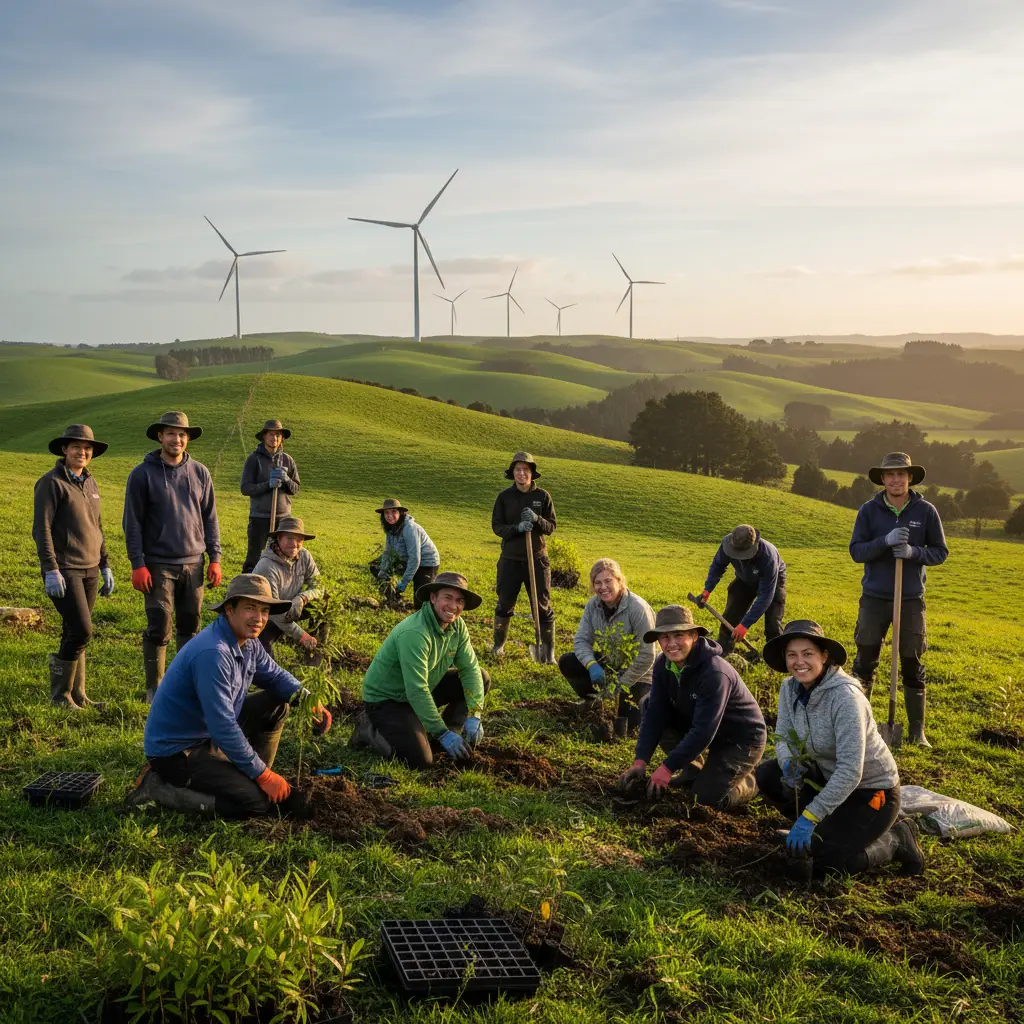
To understand the scope of action required, one must look at the inverted pyramid of responsibility. While central government sets the trajectory, the execution relies heavily on the “Team of Five Million.” This involves a transition away from fossil fuels in transport and process heat, alongside significant changes in land use and agriculture. However, the most immediate touchpoints for the average citizen are within the urban environment and the home.
Auckland Regional Climate Action: Te Tāruke-ā-Tāwhiri
As New Zealand’s largest economic and population hub, Auckland plays a pivotal role in the nation’s climate strategy. The region’s specific framework is known as Te Tāruke-ā-Tāwhiri: Auckland’s Climate Plan. This comprehensive strategy sets a goal to halve regional emissions by 2030 and reach net zero by 2050.
Transforming Transport and Urban Form
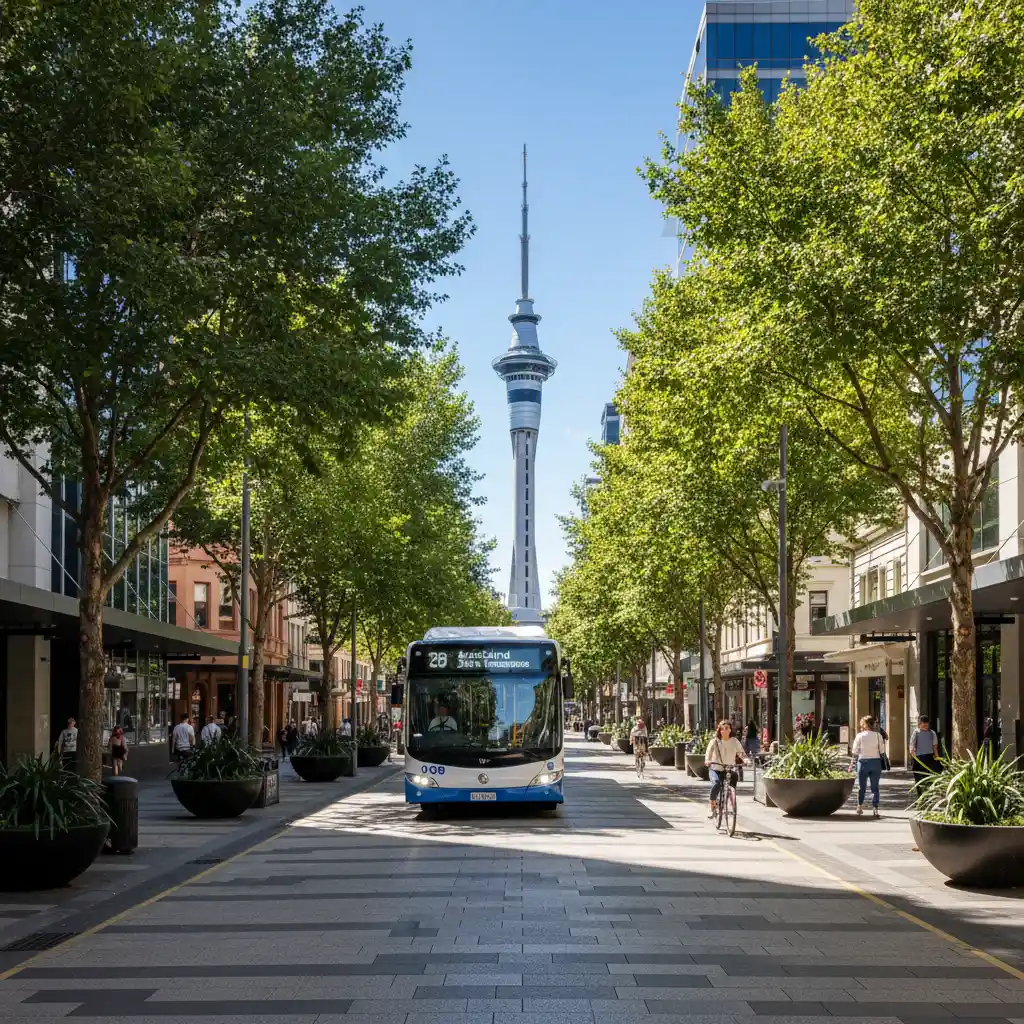
Transport accounts for the largest share of Auckland’s emissions (over 40%). Community climate action in this sector is visible through the rapid expansion of cycleways, the electrification of the bus fleet, and the push for higher-density housing around transit hubs. The strategy moves beyond simply encouraging electric vehicles; it focuses on “mode shift”—reducing the reliance on private cars entirely.
Local boards are instrumental here. For example, low-traffic neighbourhoods and “safe school streets” are grassroots initiatives supported by Auckland Transport to reclaim streets for people rather than cars. These projects not only reduce carbon output but also foster stronger community cohesion and safety.
The Built Environment
Auckland’s plan also targets the built environment. This involves retrofitting existing commercial and residential buildings to be more energy-efficient. The council creates incentives for “Green Star” rated developments, ensuring that new infrastructure does not lock the city into high-carbon dependencies for decades to come.
Residential Energy Efficiency: Decarbonizing Kiwi Homes
One of the most direct ways individuals participate in community climate action NZ is through improving residential energy efficiency. New Zealand’s housing stock has historically been poor—often described as cold, damp, and mouldy. This presents a dual opportunity: improving public health while reducing energy demand.
Insulation and Heating Solutions
The Energy Efficiency and Conservation Authority (EECA) runs the Warmer Kiwi Homes programme, which provides grants for insulation and efficient heaters to lower-income homeowners. From a climate perspective, better insulation means less energy is required to heat a home, reducing the peak load on the national grid. This is crucial because while NZ’s electricity is largely renewable (hydro), peak demand in winter is often met by burning coal at the Huntly Power Station.
Community groups and eco-advisers often facilitate these upgrades, helping residents navigate the funding landscape. The installation of heat pumps to replace open fires and inefficient electric heaters is a standard practice now, offering a coefficient of performance (COP) that creates significantly more heat energy than the electrical energy consumed.
Solar Uptake and Distributed Energy
Residential solar installation is accelerating. Community energy projects are emerging where neighbourhoods invest collectively in solar arrays or battery storage systems. This “distributed energy” model increases the resilience of the local grid and reduces transmission losses. In some regions, peer-to-peer energy trading is being trialled, allowing households with excess solar power to sell it to neighbours rather than back to the retailer.

Local Government Initiatives & Council Strategies
Beyond Auckland, local government initiatives across New Zealand are driving substantial change. Over 15 councils have declared a “Climate Emergency,” signalling a commitment to prioritize climate mitigation and adaptation in their Long Term Plans (LTPs).
Waste Minimization and Circular Economy
Methane emissions from landfills are a significant contributor to New Zealand’s greenhouse gas profile. Councils are combating this through aggressive waste minimization strategies. This includes:
- Kerbside Food Scraps Collections: Diverting organic waste from landfills to commercial composting facilities to reduce methane production.
- Resource Recovery Centres: Establishing community hubs where goods are repaired, upcycled, or dismantled for parts rather than dumped.
- Zero Waste Education: Funding community educators to teach composting and waste reduction in schools and marae.
Adaptation and Resilience Planning
Climate action is also about adaptation. Coastal communities, particularly in regions like Hawke’s Bay and Dunedin, are engaging in difficult conversations about “managed retreat” and coastal defence. Local councils are mapping flood hazards and changing zoning laws to prevent development in high-risk areas. This proactive stance protects future communities from the inevitable impacts of sea-level rise and extreme weather events.
Kaitiakitanga: Indigenous Leadership in Sustainability
No discussion of community climate action NZ is complete without acknowledging the leadership of Māori. The concept of Kaitiakitanga (guardianship and protection) aligns perfectly with sustainability principles. Iwi and hapū are often at the forefront of environmental restoration.
Many marae are transitioning to become eco-marae, utilizing solar power, rainwater harvesting, and regenerative planting to serve as resilience hubs for their communities during natural disasters. Furthermore, Māori agribusinesses are leading research into lower-emission farming practices, blending traditional knowledge (Mātauranga Māori) with modern science to reduce agricultural emissions.

Funding and Resources for Communities
For community groups looking to start their own initiatives, navigating the funding landscape is essential. Several key funds exist to support grassroots action:
- The Community Environment Fund: Administered by the Ministry for the Environment, supporting projects that empower New Zealanders to take environmental action.
- Waste Minimisation Fund: For projects that increase resource efficiency and reduce waste.
- Local Council Grants: Most councils, including Wellington City Council and Christchurch City Council, have specific community response funds for sustainability projects.
Accessing these funds usually requires a clear project plan that demonstrates measurable carbon reductions or community education outcomes. Collaboration between neighbourhood groups, schools, and local businesses often strengthens these applications.
People Also Ask
What is the Zero Carbon Act in New Zealand?
The Climate Change Response (Zero Carbon) Amendment Act 2019 is a landmark piece of legislation that commits New Zealand to zero carbon emissions by 2050 (excluding biogenic methane) and establishes an independent Climate Change Commission to advise the government and monitor progress.
How can New Zealand communities reduce their carbon footprint?
Communities can reduce their footprint by establishing community gardens to shorten food supply chains, organizing walking school buses to reduce car use, participating in local reforestation projects, and advocating for better public transport and cycling infrastructure from their local councils.
What funding is available for community climate projects in NZ?
Funding is available through the Ministry for the Environment’s Community Environment Fund, the Waste Minimisation Fund, regional council sustainability grants, and various philanthropic trusts like the Tindall Foundation that support environmental initiatives.
What is Te Tāruke-ā-Tāwhiri?
Te Tāruke-ā-Tāwhiri is Auckland’s Climate Plan. It is a regional strategy developed by Auckland Council in partnership with mana whenua to reduce the region’s greenhouse gas emissions by 50% by 2030 and achieve net-zero emissions by 2050 while adapting to the impacts of climate change.
How does residential energy efficiency help climate action?
Improving energy efficiency through insulation, double glazing, and efficient heating reduces the total amount of electricity and gas required to run a home. This lowers the peak demand on the national grid, reducing the need to burn fossil fuels for electricity generation during peak winter periods.
What role do local councils play in NZ climate action?
Local councils are responsible for urban planning, waste management, and public transport infrastructure. They implement the practical changes required to meet national targets, such as zoning for high-density housing, managing landfills to capture methane, and developing cycleway networks.