Embodied Carbon in NZ Construction
Embodied carbon in NZ refers to the total greenhouse gas emissions generated during the extraction, manufacture, transport, and assembly of building materials, as well as their eventual disposal. Unlike operational carbon, which comes from energy use, embodied carbon is locked into the structure from the moment construction is completed.
What are the standard LCA (Life Cycle Assessment) methodologies used in New Zealand?
Life Cycle Assessment (LCA) is the scientific foundation for measuring embodied carbon in the New Zealand construction sector. The methodology follows international standards, primarily ISO 14040/44 and EN 15978, which provide a framework for assessing environmental impacts across all stages of a building’s life. In New Zealand, the industry typically focuses on ‘cradle-to-gate’ or ‘cradle-to-grave’ assessments.
The stages of an LCA are categorized as follows: Module A (Production and Construction), Module B (Use), Module C (End of Life), and Module D (Benefits and loads beyond the system boundary). For NZ developers, the primary focus is often on Modules A1-A3, which represent the ‘upfront carbon’—the emissions released before the building is even occupied. This is critical because these emissions happen immediately, whereas operational savings accumulate over decades.

The Building Research Association of New Zealand (BRANZ) has localized these international standards to create a consistent methodology for the NZ context. This ensures that when two different engineers calculate the carbon footprint of a project in Wellington or Christchurch, they are using comparable assumptions regarding material transport distances, local energy grid intensities, and waste management practices.
Why do the different life cycle stages matter for NZ compliance?
Understanding the distinction between stages is vital for meeting the Ministry of Business, Innovation and Employment (MBIE) requirements. Upfront carbon (A1-A5) is the most urgent priority for the Building for Climate Change (BfCC) program. By focusing on these early stages, the industry can make immediate reductions in the national emissions profile. However, a holistic LCA must also consider the ‘Module C’ end-of-life stage, particularly as NZ moves toward a circular economy where materials like structural steel and mass timber are salvaged rather than landfilled.
What are the NZ-specific carbon emission factors for building materials?
New Zealand’s geographical isolation and unique energy mix mean that international carbon data often does not apply. NZ-specific emission factors are calculated based on the local electricity grid, which has a high proportion of renewable energy (hydro, geothermal, and wind). This makes the carbon intensity of locally manufactured materials, such as some concrete and timber products, lower than their imported counterparts from regions relying heavily on coal or gas.
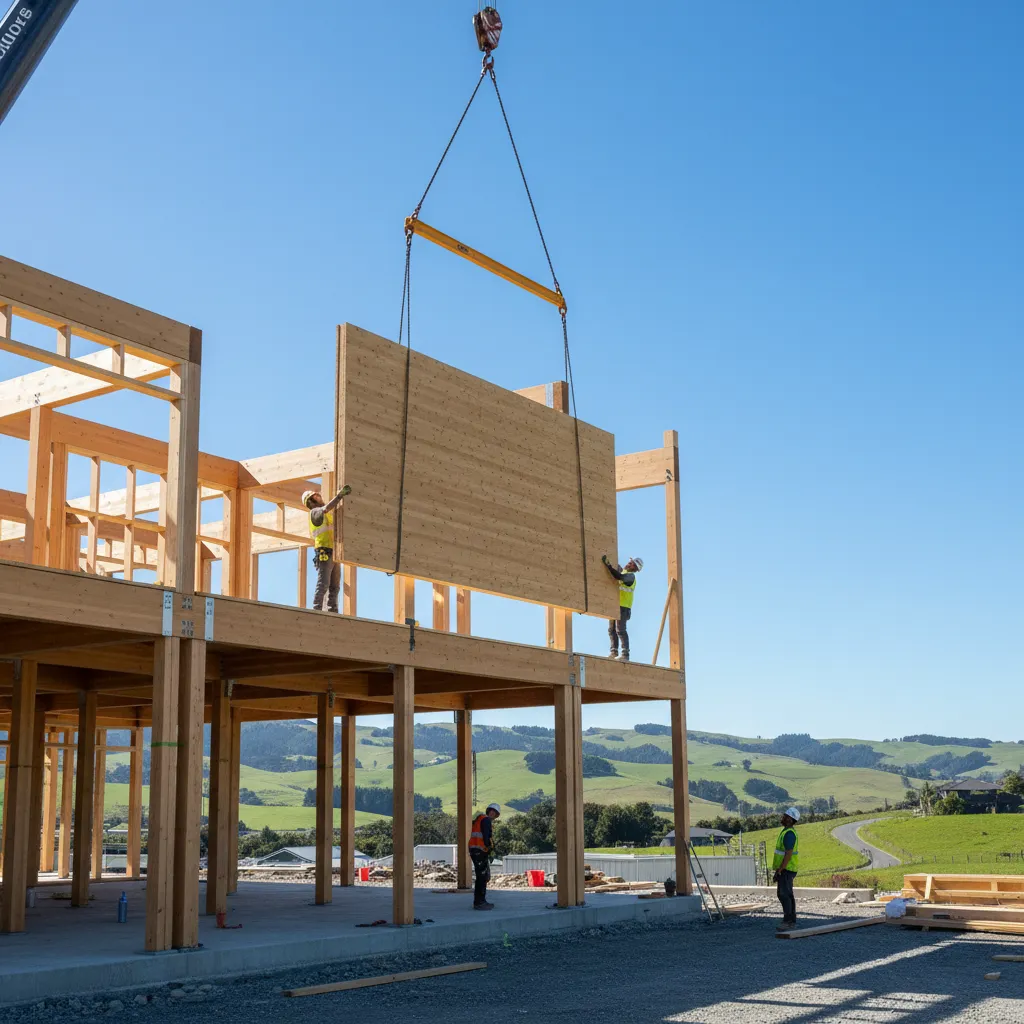
For instance, New Zealand-grown Radiata Pine is a carbon-sequestering powerhouse. During its growth phase, the timber absorbs CO2, which remains stored within the building structure. When processed using NZ’s renewable-heavy grid, the net embodied carbon of timber is significantly lower than that of virgin steel or traditional concrete. However, the industry must account for the high carbon costs of importing specialized materials like high-performance glazing or specific chemical admixtures, where the ‘Module A4’ transport emissions can be substantial.
The role of Environmental Product Declarations (EPDs)
Environmental Product Declarations (EPDs) are the ‘nutrition labels’ for building materials in NZ. They provide verified, transparent data about the environmental impact of a product. In the NZ market, EPDs are becoming the gold standard for procurement. Developers are increasingly demanding EPDs from suppliers of concrete, steel, and insulation to ensure their LCA calculations are accurate. Without a local EPD, designers must often use ‘conservative’ or ‘generic’ data points, which usually overestimate the carbon impact and can make it harder to meet strict carbon budgets.
How can developers reduce upfront embodied carbon?
Reducing embodied carbon requires a ‘design-first’ approach. The most effective way to reduce carbon is to build less—by optimizing the building’s footprint or refurbishing existing structures rather than demolishing them. When new construction is necessary, material efficiency becomes the primary lever for reduction. This involves using high-strength materials to reduce the total volume needed or opting for ‘low-carbon’ alternatives.
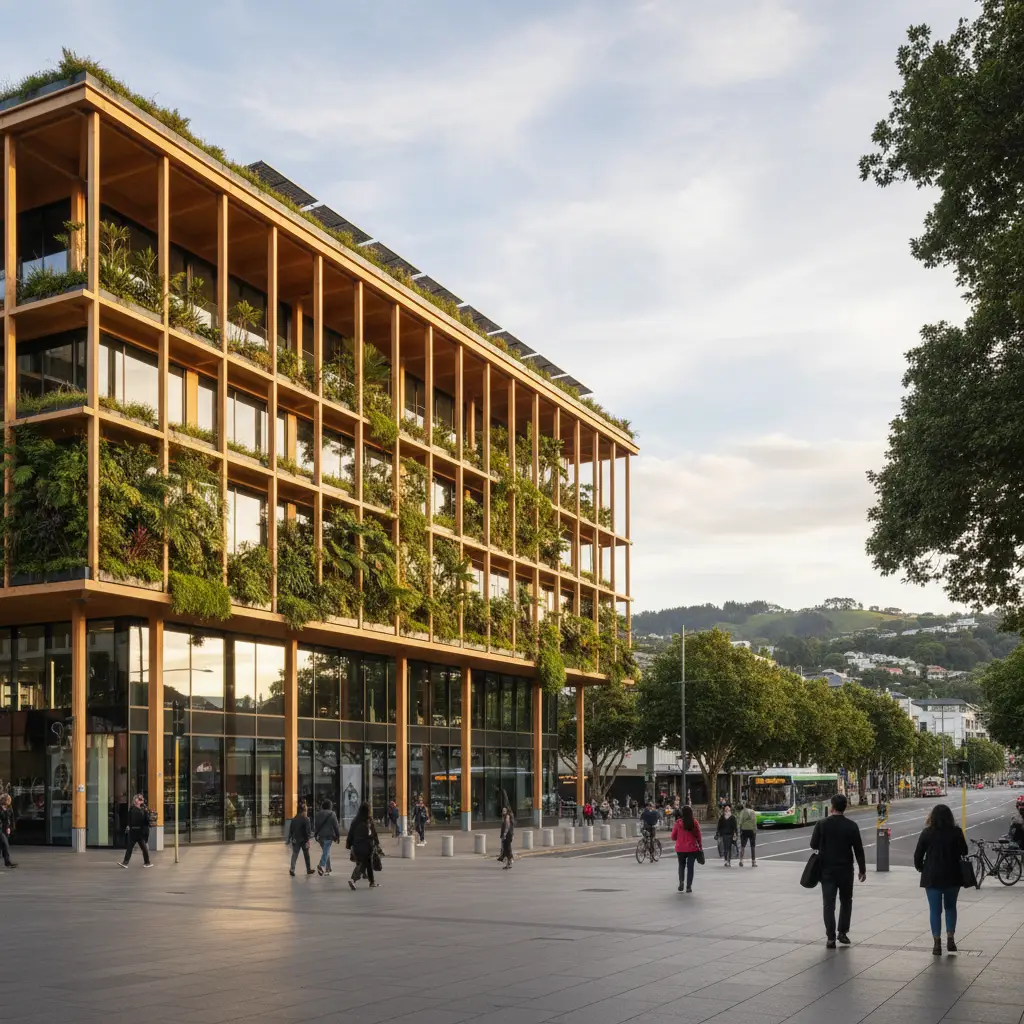
Material substitution is a major trend in the NZ market. This includes replacing traditional Portland cement with supplementary cementitious materials (SCMs) like fly ash or volcanic ash (pozzolans), which significantly reduces the carbon intensity of concrete. Additionally, the shift toward mass timber (CLT and Glulam) instead of steel frames can turn a building from a carbon source into a carbon sink.
Can structural optimization lower carbon footprints?
Yes, structural optimization is one of the most cost-effective strategies. By working closely with structural engineers during the concept phase, developers can minimize ‘over-design.’ Often, buildings are designed with higher safety margins or thicker slabs than necessary. Using sophisticated modeling software, engineers can shave off unnecessary material, which directly correlates to a lower carbon footprint and lower material costs. In NZ, this also involves designing for ‘deconstruction’—ensuring that at the end of the building’s life, components can be easily separated and reused.
What are the best reporting tools for NZ developers?
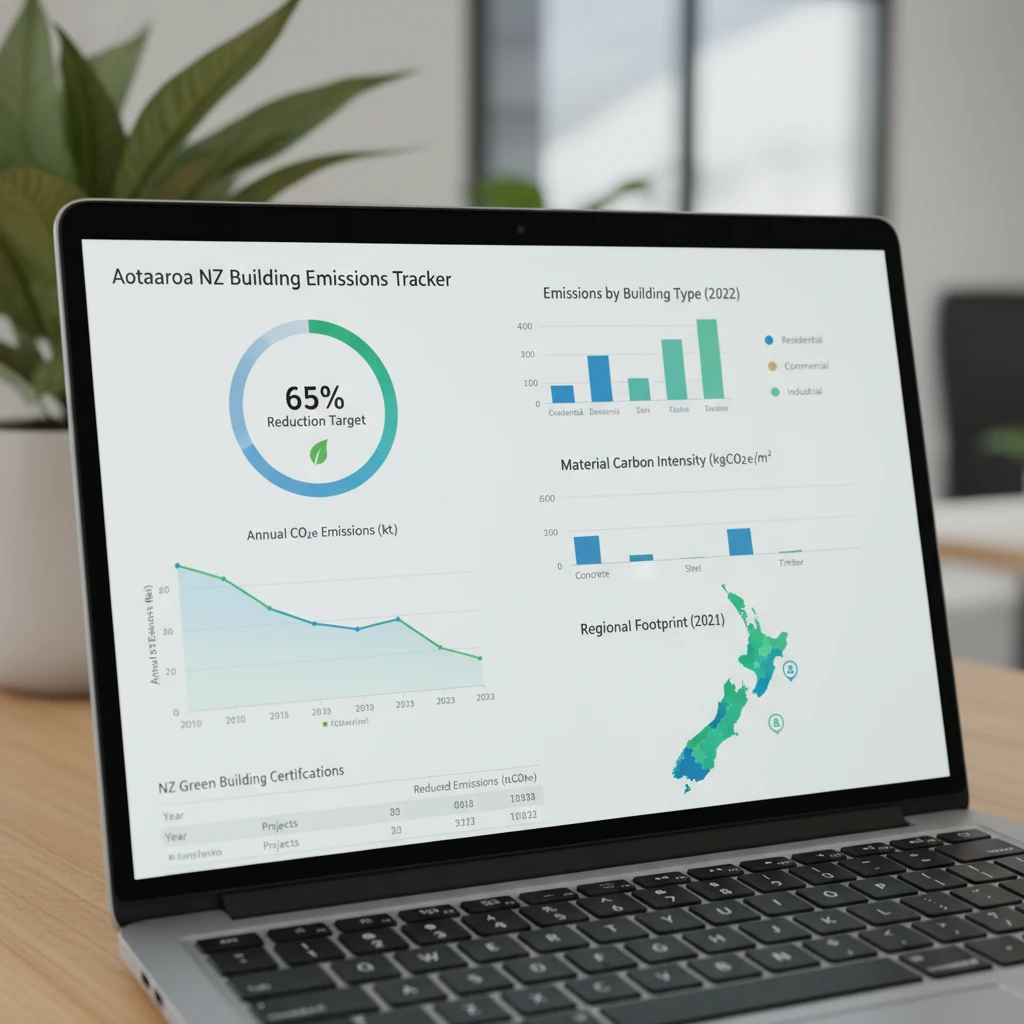
As reporting becomes mandatory under the MBIE’s Building for Climate Change framework, the choice of tools is critical. The New Zealand industry has several options ranging from free, government-backed tools to sophisticated commercial software. The primary goal of these tools is to simplify the complex calculations of an LCA and provide a standardized output that can be used for building consent or Green Star certification.
LCAQuick, developed by BRANZ, is the most widely used tool in New Zealand. It is an Excel-based tool that integrates with BIM (Building Information Modeling) software like Revit. It allows designers to import material quantities and automatically applies NZ-specific emission factors. For earlier stage ‘optioneering,’ tools like the ‘Carbon Challenge’ calculators provide quick insights into how different design choices affect the total carbon budget.
Integrating carbon reporting with Green Star NZ
The New Zealand Green Building Council (NZGBC) has integrated embodied carbon into its Green Star rating system. Projects can earn significant points by demonstrating a reduction in embodied carbon compared to a ‘reference building.’ This has pushed the industry toward more rigorous reporting. Developers are now using tools like EC3 (Embodied Carbon in Construction Calculator) alongside local data to source the lowest-carbon materials available in the NZ supply chain.
Compliance and the Future of NZ Construction
The regulatory landscape in New Zealand is shifting rapidly. The MBIE’s Building for Climate Change program is the primary driver, with plans to introduce mandatory reporting of whole-of-life embodied carbon for all new buildings. Initially, this will likely involve just disclosure, but the long-term roadmap includes the introduction of ‘carbon caps’—maximum allowable carbon footprints per square meter.
This shift represents a fundamental change in the NZ construction economy. Carbon is becoming a new currency. Developers who invest in low-carbon expertise and supply chains now will be better positioned to navigate the coming regulations. Furthermore, as the NZ Emissions Trading Scheme (ETS) evolves, the cost of high-carbon materials is expected to rise, making low-carbon alternatives not just environmentally responsible, but economically superior.
In conclusion, addressing embodied carbon in NZ is no longer a niche interest for ‘green’ builders; it is a core business requirement. By mastering LCA methodologies, utilizing NZ-specific data, and adopting advanced reporting tools, the NZ construction industry can lead the way in the global transition to a low-carbon built environment.
People Also Ask
Is embodied carbon reporting mandatory in New Zealand?
As of 2024, mandatory reporting is being phased in through the MBIE Building for Climate Change program. While not yet required for all small residential builds, it is increasingly becoming a requirement for large-scale government projects and those seeking Green Star certification.
How do I calculate the embodied carbon of a NZ house?
The most common method is using the BRANZ LCAQuick tool. You need a list of material quantities (Schedule of Quantities) which are then multiplied by NZ-specific emission factors to get the total CO2 equivalent (CO2e).
What is the ‘Building for Climate Change’ program?
It is a multi-year initiative by the NZ government (MBIE) aimed at reducing greenhouse gas emissions from the construction and operation of buildings to help NZ meet its 2050 net-zero goals.
Does using NZ timber really lower a building’s carbon footprint?
Yes, significantly. NZ-grown timber sequesters carbon during growth, and because it is processed using a highly renewable electricity grid, its ‘upfront’ carbon is often negative or very low compared to steel or concrete.
What is the difference between operational and embodied carbon?
Operational carbon is the emissions from energy used to run the building (heating, lighting). Embodied carbon is the emissions from making the building itself (materials, transport, construction).
How much does a Life Cycle Assessment (LCA) cost in NZ?
Costs vary depending on project scale. For a standard commercial build, a professional LCA can range from $5,000 to $20,000, though costs are decreasing as tools like LCAQuick become more integrated into standard design workflows.
About The Author
