EU Carbon Border Adjustment (CBAM) Impact
The EU Carbon Border Adjustment Mechanism (CBAM) impacts New Zealand exporters by imposing a carbon price on carbon-intensive goods entering the European Union. Initially targeting steel, aluminum, and fertilizers, it mandates that NZ businesses quantify embedded emissions and eventually purchase CBAM certificates, bridging the gap between NZ ETS costs and higher EU carbon prices.
For New Zealand’s export economy, the introduction of the European Union’s Carbon Border Adjustment Mechanism (CBAM) represents a paradigm shift in international trade policy. No longer is environmental compliance merely a domestic regulatory hurdle; it is now a tangible tariff barrier for accessing the lucrative European Single Market. As the world’s first major carbon border tax, CBAM aims to prevent “carbon leakage”—the practice of companies moving production to countries with laxer climate policies. For New Zealand, a nation that prides itself on a clean, green image yet relies heavily on trade, understanding the nuances of the EU CBAM impact NZ businesses face is critical for long-term survival.
Understanding the Mechanism: What is CBAM?
The Carbon Border Adjustment Mechanism is a pillar of the European Union’s “Fit for 55” package, which aims to reduce net greenhouse gas emissions by at least 55% by 2030. In essence, CBAM puts a fair price on the carbon emitted during the production of carbon-intensive goods that are entering the EU, and encourages cleaner industrial production in non-EU countries.
For New Zealand exporters, this means that if you sell goods covered by CBAM to the EU, you must pay the difference between the carbon price paid in New Zealand (under the NZ ETS) and the price of carbon allowances in the EU ETS. If the carbon price in New Zealand is lower than in Europe—which historically has been the case—the importer must purchase CBAM certificates to make up the difference.
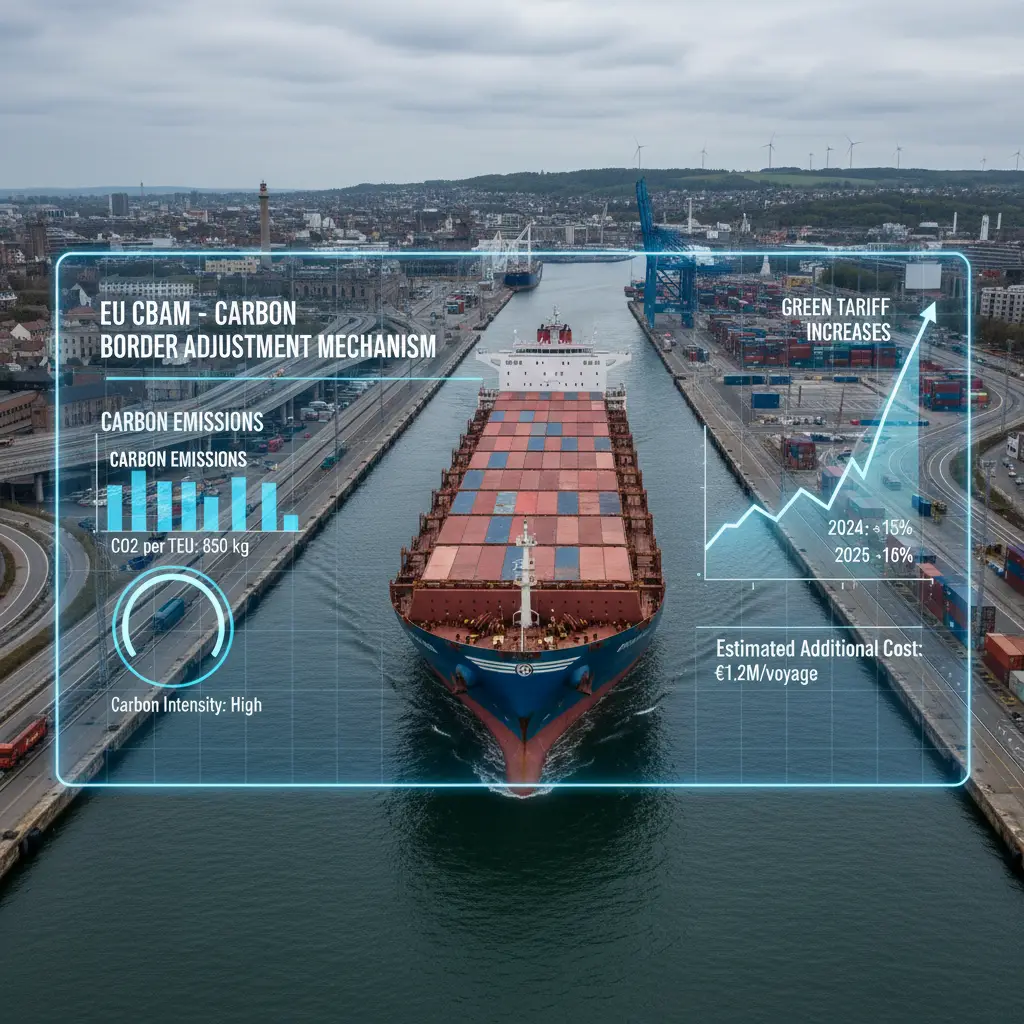
How CBAM Affects NZ Steel and Aluminum
The initial phase of CBAM, which began its transitional period in October 2023, targets six specific sectors deemed at high risk of carbon leakage: iron and steel, aluminum, cement, fertilizers, hydrogen, and electricity. For New Zealand, the immediate impact is most acutely felt in the aluminum and steel sectors.
The Aluminum Sector
New Zealand’s aluminum production, primarily centered around the Tiwai Point smelter, has a distinct advantage: it is powered almost exclusively by hydroelectricity. This results in a significantly lower carbon footprint compared to aluminum produced in China or the Middle East using coal or gas.
However, the EU CBAM impact NZ exporters face isn’t just about the source of energy; it is about the documentation of direct and indirect emissions. While NZ aluminum is “cleaner,” exporters must rigorously prove the specific embedded emissions per tonne. If the documentation does not meet EU standards, default values (which are punitive and based on the worst-performing 10% of EU installations) will be applied, negating New Zealand’s renewable energy advantage.
The Steel Sector
The impact on steel is more complex. NZ Steel’s Glenbrook mill utilizes iron sand and coal, a process that is carbon-intensive. While New Zealand has its own Emissions Trading Scheme (NZ ETS), the price of a New Zealand Unit (NZU) has frequently traded below the price of an EU Allowance (EUA).
Under the definitive period starting in 2026, steel exporters will need to pay the delta. For example, if the carbon cost per tonne of steel is €50 in New Zealand but the EU carbon price equates to €90, the exporter faces a €40 surcharge per tonne at the border. This erodes price competitiveness against European steelmakers who receive free allocations under the EU ETS, although these free allocations are set to be phased out gradually.
Reporting Requirements for EU Exports
Compliance is currently the biggest hurdle. We are currently in the transitional phase (1 October 2023 – 31 December 2025). During this period, importers do not pay financial adjustments, but they are subject to strict quarterly reporting obligations.

Data Granularity and the “Authorized Declarant”
To navigate the EU CBAM impact NZ businesses must provide data on:
- Total quantity of goods: Expressed in MWh for electricity or tonnes for other goods.
- Actual embedded emissions: Both direct emissions (released during production) and indirect emissions (from the generation of electricity used in production).
- Carbon price paid: Evidence of the carbon price already paid in New Zealand, including any rebates or free allocations received.
From 2026 onwards, only an “authorized CBAM declarant” can import these goods into the EU. This requires NZ exporters to work closely with their EU-based logistics partners or subsidiaries to ensure that the data flow is seamless. Failure to report during the transitional phase can result in penalties ranging from €10 to €50 per tonne of unreported emissions.
The Looming Threat: Potential Expansion to Agriculture
While the current scope is limited to heavy industry, the most significant risk regarding the EU CBAM impact NZ economy lies in the potential inclusion of agriculture. New Zealand is a global powerhouse in dairy, meat, and wool exports, with Europe being a key high-value market.
The 2026 and 2030 Reviews
The European Commission is legally obliged to review the scope of CBAM. By 2026, an assessment will be made regarding the inclusion of organic chemicals and polymers. However, the review slated for 2030 is expected to look at all sectors covered by the EU ETS, which could eventually extend to agriculture if the EU includes its own agricultural sector in emissions pricing.
Currently, agriculture is excluded from the EU ETS. However, political pressure is mounting in Europe. European farmers argue that they face strict environmental regulations that foreign competitors do not. If the EU moves to price agricultural emissions, they will almost certainly use CBAM to protect their farmers from “cheaper” imports.
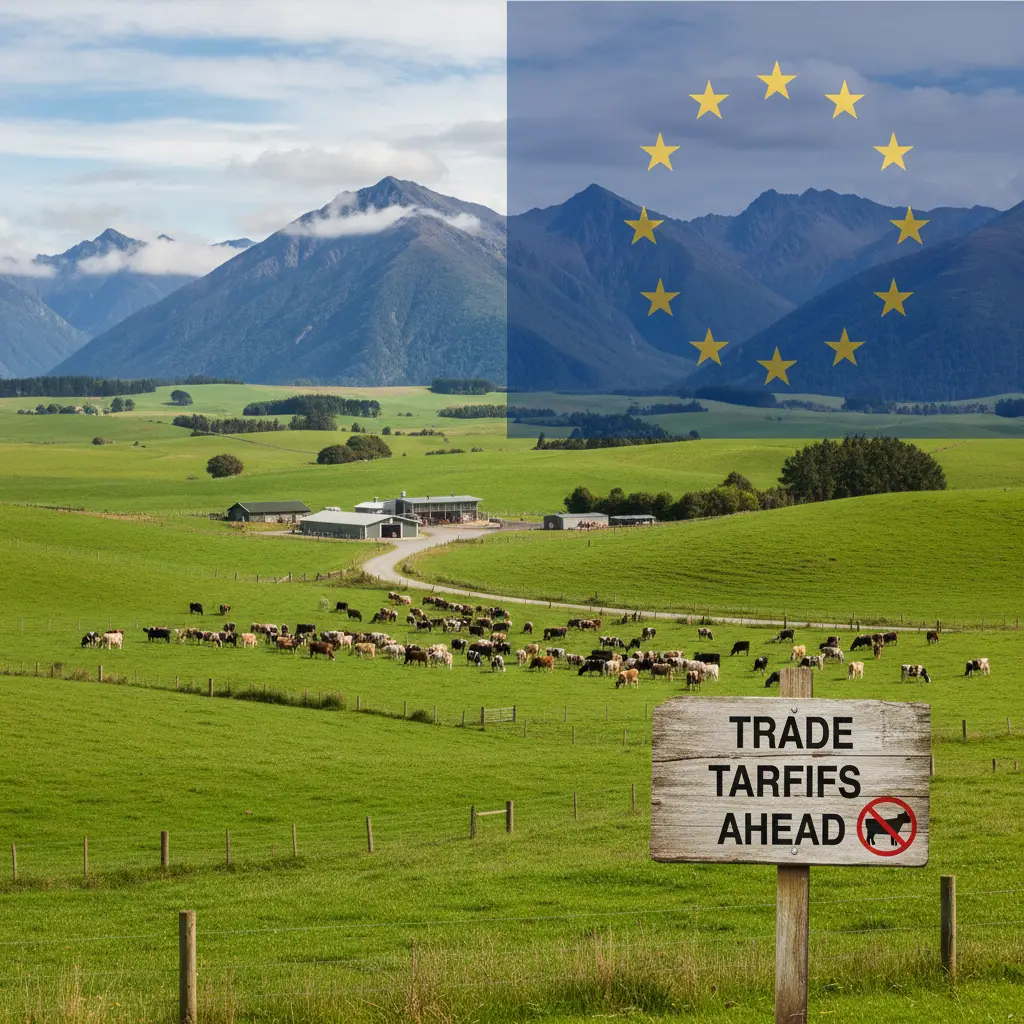
For New Zealand, this is a double-edged sword. NZ farmers are among the most carbon-efficient in the world in terms of emissions per kilogram of milk solids or meat. However, because biological emissions (methane) are hard to abate, any tariff based on absolute emissions could still be costly. The current He Waka Eke Noa (or its successor) pricing mechanism will be crucial here; if NZ farmers are paying a price for emissions, that cost can be deducted from the CBAM liability.
Economic Implications for the NZ Carbon Economy
The introduction of CBAM effectively forces a convergence of global carbon pricing. For the New Zealand carbon economy, this creates several distinct economic pressures and opportunities.
The ETS Price Differential
The core economic mechanism of CBAM is the crediting of domestic carbon prices. If New Zealand’s carbon price (via the NZ ETS) rises to match the EU ETS price, the revenue stays in New Zealand (collected by the NZ government) rather than being paid to Brussels as a tax. This creates a strategic incentive for the NZ government to ensure the NZ ETS price is robust. A weak NZU price essentially subsidizes the EU budget.
Administrative Burden vs. Market Access
Small to medium enterprises (SMEs) in New Zealand may find the administrative burden disproportionately high. Calculating embedded emissions requires sophisticated lifecycle assessment (LCA) tools. We may see a consolidation where only larger NZ firms with the resources to manage complex compliance data continue to export to the EU, while smaller players pivot to Asian markets where such mechanisms are not yet in place.
Strategies to Mitigate Carbon Tariffs
New Zealand businesses cannot afford to be reactive. To minimize the EU CBAM impact NZ companies must adopt proactive strategies immediately.

1. Accelerate Decarbonization
The most effective hedge against CBAM is to lower the embedded emissions of your product. Switching to renewable energy sources for industrial heat (electrification or biomass) directly reduces the ‘indirect emissions’ count. For aluminum and steel, investing in new technologies like hydrogen reduction or electric arc furnaces is no longer just an environmental decision—it is a financial necessity for market access.
2. Supply Chain Auditing and Data Fidelity
Do not rely on default values. Default values set by the EU are punitive. NZ exporters must invest in rigorous carbon accounting software to capture actual data. This means auditing suppliers to ensure you know the carbon intensity of your inputs. If you export aluminum products, you need the exact emissions data from the smelter, not a generic industry average.
3. Leverage NZ’s “Green” Brand
New Zealand exporters should aggressively market the low-carbon nature of their goods. Since CBAM requires the declaration of emissions, this data can be repurposed for marketing. If your product attracts a lower CBAM tariff than a competitor’s product from China or India, that is a competitive advantage that should be highlighted in price negotiations with EU buyers.
4. Diversification of Markets
While the EU is a premium market, the regulatory friction is increasing. Businesses should assess their exposure. If the cost of compliance plus the CBAM tariff erodes margins significantly, diversifying exports to markets like the UK (which has its own CBAM coming but may align closely with NZ), Australia, or Southeast Asia may be a prudent risk management strategy.
Frequently Asked Questions
When does the EU CBAM fully come into force for NZ exporters?
The transitional phase is currently active, requiring reporting only. The definitive phase, where financial payments (tariffs) begin, starts on January 1, 2026. From this date, NZ exporters must purchase CBAM certificates for embedded emissions.
Does the NZ ETS carbon price offset the EU CBAM tax?
Yes. The EU CBAM regulation allows for the deduction of carbon prices effectively paid in the country of production. If you have paid for carbon units under the NZ ETS, this cost is deducted from the CBAM certificate liability. You only pay the difference.
Will NZ dairy and meat be affected by CBAM?
Not immediately. The current scope covers steel, aluminum, cement, fertilizers, electricity, and hydrogen. However, the EU will review the scope in 2026 and 2030, and there is significant political pressure to include agriculture in the future.
What happens if I don’t report emissions during the transitional period?
Failure to report or reporting incorrect data during the transitional period (Oct 2023 – Dec 2025) can result in penalties imposed by EU Member States, ranging from €10 to €50 per tonne of unreported emissions.
How are indirect emissions treated under CBAM?
Indirect emissions (emissions from the generation of electricity used in production) are included for cement and fertilizers. For steel, aluminum, and hydrogen, indirect emissions are currently monitored but not financially charged, though this is expected to change in the definitive period reviews.
Who is responsible for submitting the CBAM declaration?
The responsibility lies with the “reporting declarant,” which is usually the EU-based importer or an indirect customs representative. However, the NZ exporter is responsible for providing accurate, verified data to that declarant.
About The Author
