Local Government Climate Mandates
Local government climate mandates in NZ are statutory obligations derived primarily from the Local Government Act 2002 and the Climate Change Response (Zero Carbon) Amendment Act 2019. These mandates require councils to integrate climate adaptation and mitigation strategies into Long-Term Plans (LTPs), disclose climate-related financial risks, and ensure infrastructure resilience against rising sea levels and extreme weather events.
The Legislative Landscape of NZ Climate Policy
The framework for local government climate mandates NZ is not found in a single document but is woven through a complex matrix of legislation. For New Zealand councils, the shift from voluntary sustainability initiatives to mandatory compliance is driven by the central government’s commitment to international agreements, specifically the Paris Agreement, and domestic laws aimed at achieving a net-zero carbon economy by 2050.
At the core of this framework is the Climate Change Response (Zero Carbon) Amendment Act 2019. While this Act primarily sets targets for the national government, it creates a cascading effect on local bodies. The Act established the Climate Change Commission, which provides advice and sets emissions budgets. Local councils are the primary delivery agents for the adaptation measures required to meet these budgets and manage the physical risks associated with climate change.
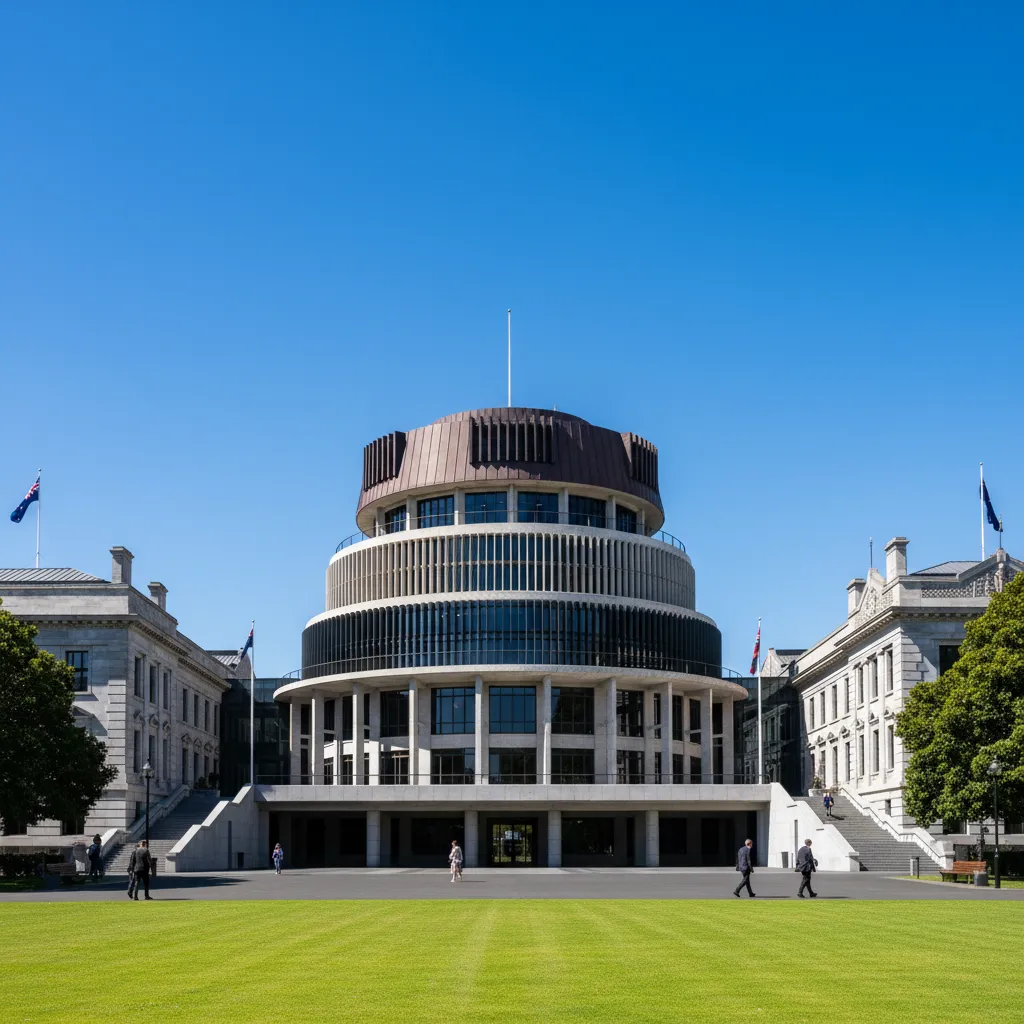
Furthermore, the Local Government Act 2002 (LGA) remains the primary statute. Section 10(1)(b) of the LGA explicitly requires councils to perform their duties in a way that is “cost-effective for households and businesses.” In recent years, this has been legally interpreted to include the cost of inaction regarding climate change. If a council fails to plan for climate adaptation, they are failing their fiduciary duty to the community, exposing ratepayers to massive future liabilities.
The National Adaptation Plan (NAP)
The National Adaptation Plan creates specific work programmes that local government must implement. Unlike the Emissions Reduction Plan (ERP), which focuses on mitigation (reducing greenhouse gases), the NAP focuses on resilience. For local government, this translates into strict mandates regarding land use planning. Councils must now enforce stricter zoning laws in coastal areas and flood plains to prevent development in high-risk zones, often referred to as “avoiding lock-in” of vulnerable assets.
Council Climate Emergency Declarations: Symbolism vs. Statute
Between 2019 and 2020, a wave of New Zealand councils, including Auckland Council, Wellington City Council, and Christchurch City Council, declared climate emergencies. A common question arises: Are these declarations legally binding mandates?
Technically, a “Climate Emergency Declaration” is a non-statutory instrument. It does not, by itself, grant the council new legal powers or funding mechanisms. However, it serves a critical function in the legal ecosystem of local government:
- Strategic Alignment: The declaration acts as a guiding directive for the Chief Executive and council officers. It mandates that all subsequent council papers and decisions must be viewed through a “climate lens.”
- Audit Scrutiny: The Office of the Auditor-General (OAG) monitors these declarations. If a council declares an emergency but fails to allocate funding in their Long-Term Plan to address it, the OAG may flag the LTP for inconsistency or lack of prudence.
- Community Mandate: It provides the political capital necessary to make unpopular decisions, such as removing car parks for cycleways or increasing rates to fund sea walls, by citing the declared emergency as the justification.
Therefore, while the declaration itself isn’t a mandate from central government, it acts as a self-imposed mandate that triggers other statutory obligations under the LGA regarding decision-making consistency.
Long-Term Plan (LTP) Requirements and Strategic Assets
The Long-Term Plan (LTP) is the primary vehicle through which local government climate mandates NZ are operationalized. Every three years, councils must produce an LTP looking forward at least 10 years. Recent amendments and expectations from the Auditor-General have transformed the LTP from a budget document into a climate strategy document.
The key mandate here is the requirement to disclose Significant Forecasting Assumptions. Councils must assume a specific climate scenario (often based on IPCC projections, such as RCP 4.5 or RCP 8.5) when planning their finances. They cannot simply assume the weather patterns of the last 50 years will continue.

Financial Strategy and Climate Risk
Under the LGA, councils must demonstrate “financial prudence.” Climate change complicates this mandate significantly. Councils are now required to model the financial impact of climate events on their balance sheets. This includes:
- Asset Valuation: Writing down the value of assets (like coastal roads or pipes) that may become uninsurable or unusable before the end of their economic life due to sea-level rise.
- Insurance Retreat: Planning for the reality that private insurers are withdrawing cover for certain deep-lying hazards. The council becomes the “insurer of last resort,” a liability that must be accounted for in the Financial Strategy.
- Operational Expenditure (OPEX): Budgeting for increased frequency of storm response and cleanup costs.
Infrastructure Strategy and 30-Year Planning
Section 101B of the Local Government Act 2002 mandates that councils prepare an Infrastructure Strategy for a period of at least 30 consecutive financial years. This is distinct from the 10-year LTP and is the primary area where climate mandates bite the hardest.
The Infrastructure Strategy must identify:
- Significant infrastructure issues over the 30-year period.
- The principal options for managing those issues.
- The implications of those options.
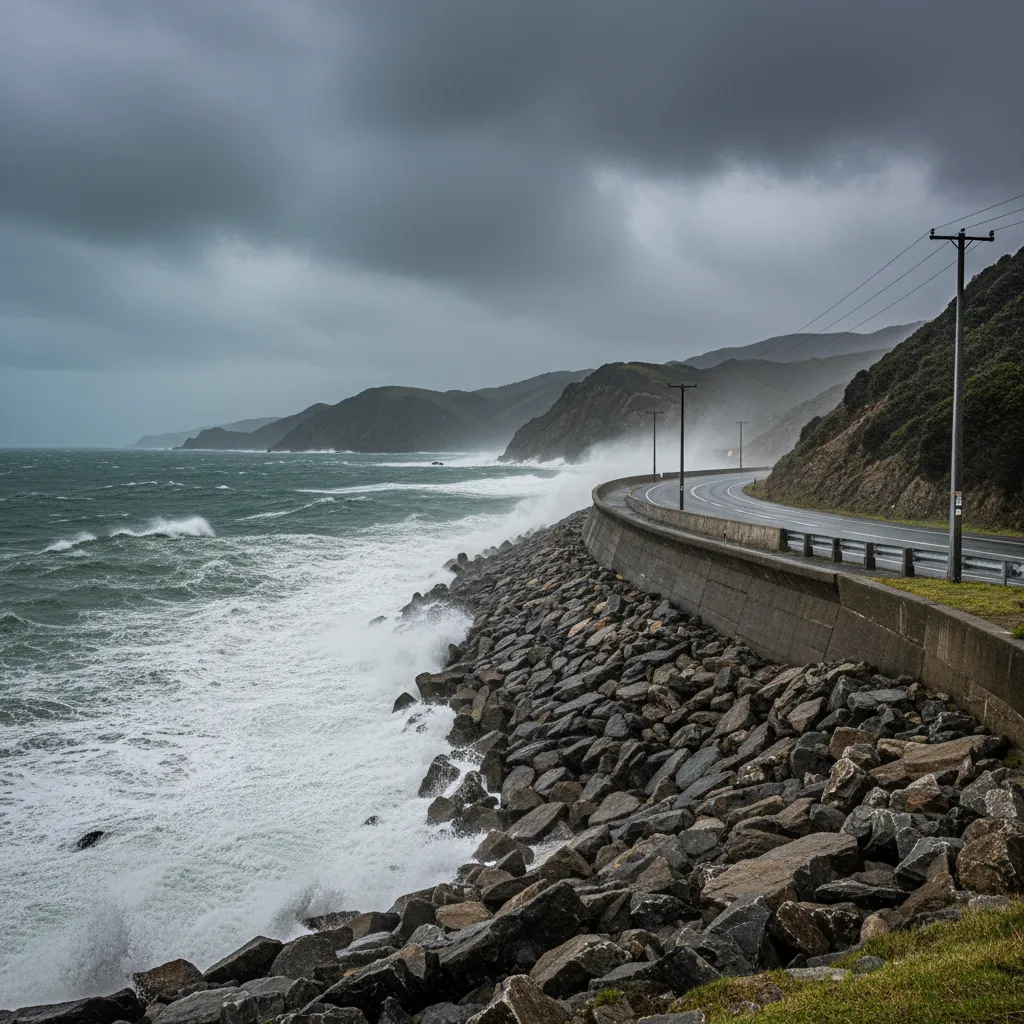
Climate change is now universally categorized as a “significant infrastructure issue.” This mandate compels councils to move beyond “maintaining” assets to “adapting” them. This involves difficult conversations about managed retreat—the process of abandoning infrastructure and relocating communities away from high-risk areas. While central government legislation on managed retreat is still evolving (following the repeal of the Natural and Built Environment Act), the mandate to identify the need for it in the 30-year strategy remains enforceable.
Mandatory Climate Reporting and Financial Disclosures
A significant evolution in local government climate mandates NZ is the introduction of mandatory climate-related financial disclosures. The Financial Sector (Climate-related Disclosures and Other Matters) Amendment Act 2021 introduced a regime requiring large financial institutions to report on climate risk.
While this initially targets banks and insurers, the impact on local government is twofold:
- Council Controlled Organizations (CCOs): Large CCOs (like Auckland International Airport or major port companies) may fall directly under these reporting requirements or will be expected to align voluntarily to maintain credit ratings.
- Borrowing Costs: The Local Government Funding Agency (LGFA), which provides the bulk of debt funding to NZ councils, is increasingly scrutinized on the “green” credentials of its portfolio. To access cheaper “green bonds” or “sustainability-linked loans,” councils are mandated to provide rigorous data on their emissions and climate risks.
The External Reporting Board (XRB) has issued standards (NZ CS 1) based on the TCFD (Task Force on Climate-related Financial Disclosures) framework. Progressive councils are already adopting these standards voluntarily in their Annual Reports to ensure they remain investable entities.
Regional Collaboration Frameworks
Climate change ignores administrative boundaries. Floodwaters do not stop at the district line. Consequently, there is an implicit mandate for regional collaboration. This is often formalized through Joint Committees or Regional Leadership Groups.
For example, the Wellington Regional Leadership Committee or the Canterbury Mayoral Forum. These bodies are tasked with creating spatial plans that integrate transport, housing, and climate resilience. The mandate here often stems from the Regional Policy Statement (RPS) under the Resource Management Act (RMA).
The Power of the Regional Policy Statement
Regional Councils (e.g., Environment Canterbury, Greater Wellington) issue Regional Policy Statements. Territorial Authorities (City and District Councils) must give effect to these statements. If a Regional Council inserts a mandate into their RPS requiring that no new subdivisions be built below a certain sea-level rise benchmark, the local District Council is legally mandated to enforce this through their District Plan. This is one of the most direct regulatory mechanisms for climate enforcement in New Zealand.

The Future of Local Government Mandates
The landscape of local government climate mandates NZ is in a state of flux. With changes in central government, specific acts may be repealed or replaced, but the underlying trajectory is immutable. The physical reality of climate change ensures that the mandate to adapt will only become stricter.
We can expect to see:
- Standardized Risk Assessments: Moving away from councils choosing their own climate models to a nationally mandated standard to ensure comparability.
- Harder Liability Lines: Clearer statutory protection for councils that deny resource consent based on climate risk, protecting them from litigation by developers.
- Carbon Budgeting: The potential for local carbon budgets to become as binding as financial budgets, with statutory penalties for overspending emissions.
For local government officials and stakeholders, the path forward requires navigating a dual responsibility: complying with the rigid letter of the law regarding financial prudence, while proactively addressing the fluid and escalating mandates of climate adaptation.
People Also Ask
Is the Zero Carbon Act binding on local councils?
While the Zero Carbon Act primarily sets targets for the national government, it is binding on councils indirectly. Councils must align their Long-Term Plans and infrastructure strategies with the national emissions budgets and adaptation plans derived from the Act to meet their obligations under the Local Government Act.
Do NZ councils have to declare a climate emergency?
No, there is no legal requirement for New Zealand councils to declare a climate emergency. However, many choose to do so to signal strategic intent, align their decision-making processes, and justify climate-related expenditure to ratepayers.
What is the role of the Local Government Act in climate change?
The Local Government Act 2002 mandates that councils act in the interests of their communities, now and in the future. This implies a legal duty to consider the long-term impacts of climate change on infrastructure, financial sustainability, and community well-being.
How does the RMA affect climate change planning?
The Resource Management Act (RMA) requires councils to consider the effects of climate change, particularly regarding natural hazards. It mandates that councils control land use to avoid or mitigate risks such as flooding and sea-level rise, often restricting development in vulnerable areas.
What are the reporting requirements for climate risk in NZ?
While mandatory climate-related financial disclosures (CRFD) currently apply to large financial institutions and listed companies, local councils are increasingly expected to adopt similar standards (like TCFD) in their annual reports to satisfy auditors and lenders like the LGFA.
What is managed retreat in the context of NZ local government?
Managed retreat is the strategic relocation of people, assets, and activities away from areas at high risk of climate hazards (like coastal erosion). It is a complex mandate involving planning changes, property acquisition, and legal challenges that councils are currently navigating.
About The Author
