Passive House Standards in NZ
Passive House NZ refers to a rigorous voluntary building standard for energy efficiency and comfort, specifically adapted to New Zealand’s diverse climate. It focuses on five core principles—high-quality insulation, airtight construction, high-performance glazing, thermal bridge-free design, and mechanical ventilation with heat recovery—to reduce heating and cooling energy by up to 90% while ensuring superior indoor air quality.
What are the Core Principles of Passive House Design?
The Passive House (Passivhaus) standard is not a brand name but a construction concept that can be applied by anyone, anywhere. In the context of New Zealand, where many traditional homes suffer from dampness and thermal inefficiency, these principles provide a roadmap to high-performance living. The standard is performance-based, meaning it focuses on actual outcomes rather than just the materials used.
1. High-Quality Thermal Insulation
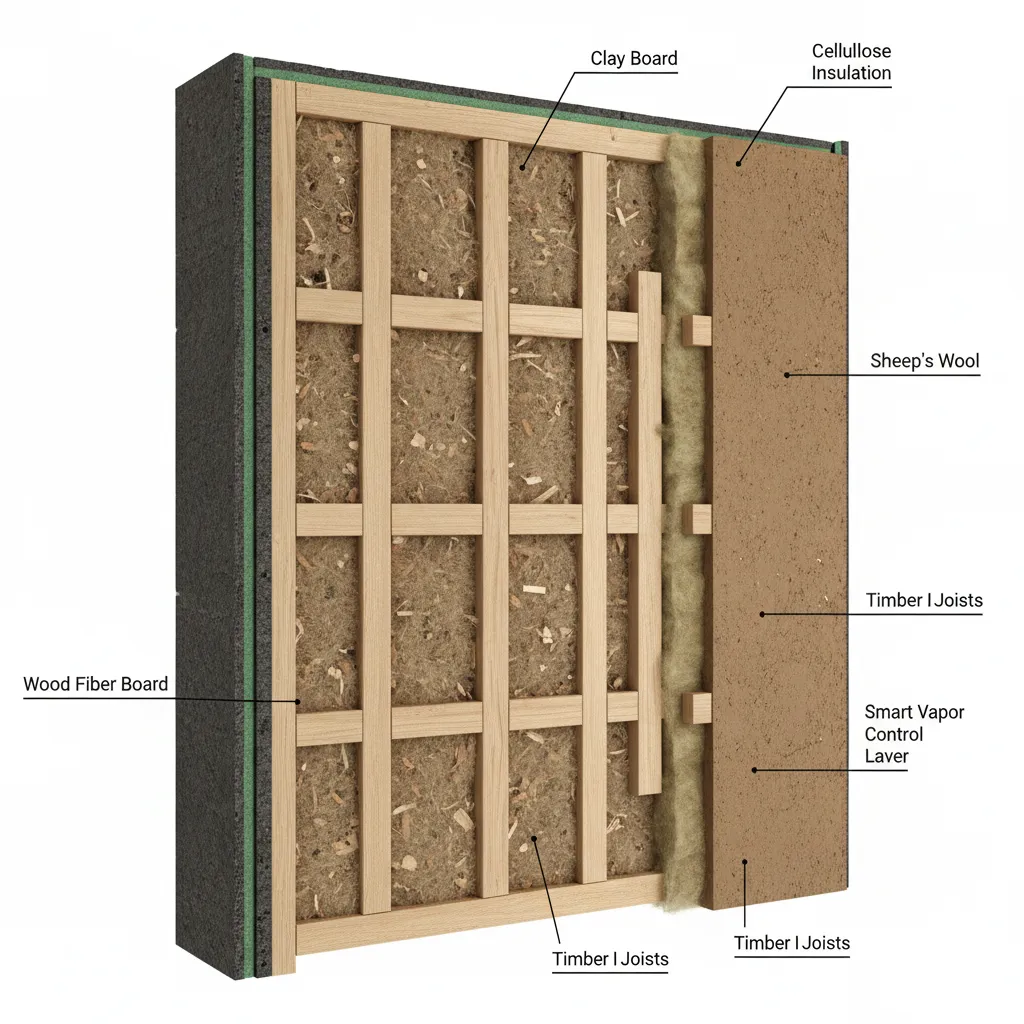
In a Passive House, insulation is treated as a continuous blanket that wraps the entire building envelope. This includes the floor slab, walls, and roof. In New Zealand’s cooler regions like Otago or Southland, R-values (the measure of thermal resistance) must be significantly higher than the minimum requirements of the NZ Building Code. This prevents heat from escaping in winter and entering in summer.
2. High-Performance Glazing
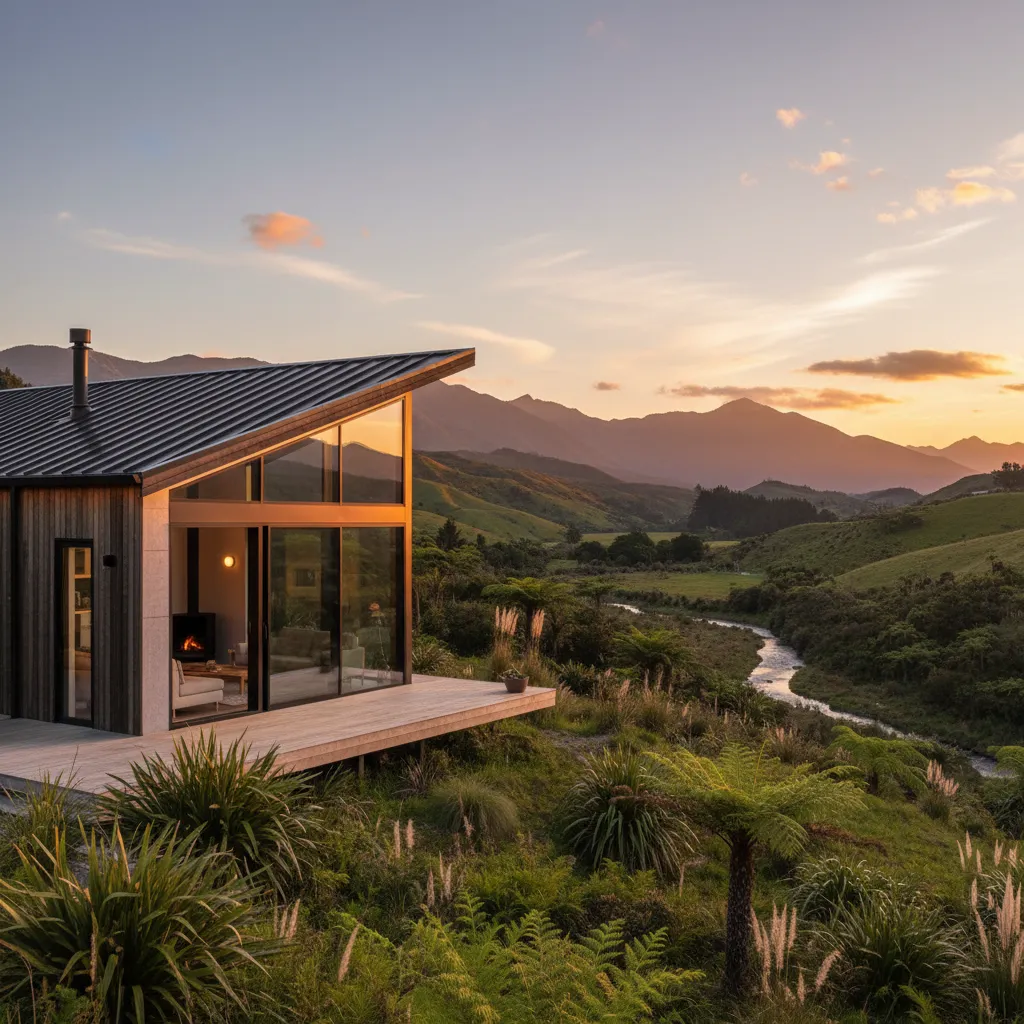
Windows are often the weakest link in a building’s thermal envelope. Passive House NZ standards typically require triple-glazed windows with low-emissivity coatings and argon gas fill. The frames themselves must be thermally broken—often using timber or high-grade uPVC—to prevent the transfer of cold from the outside to the inside. Proper orientation is also critical to manage solar gain.
3. Mechanical Ventilation with Heat Recovery (MVHR)
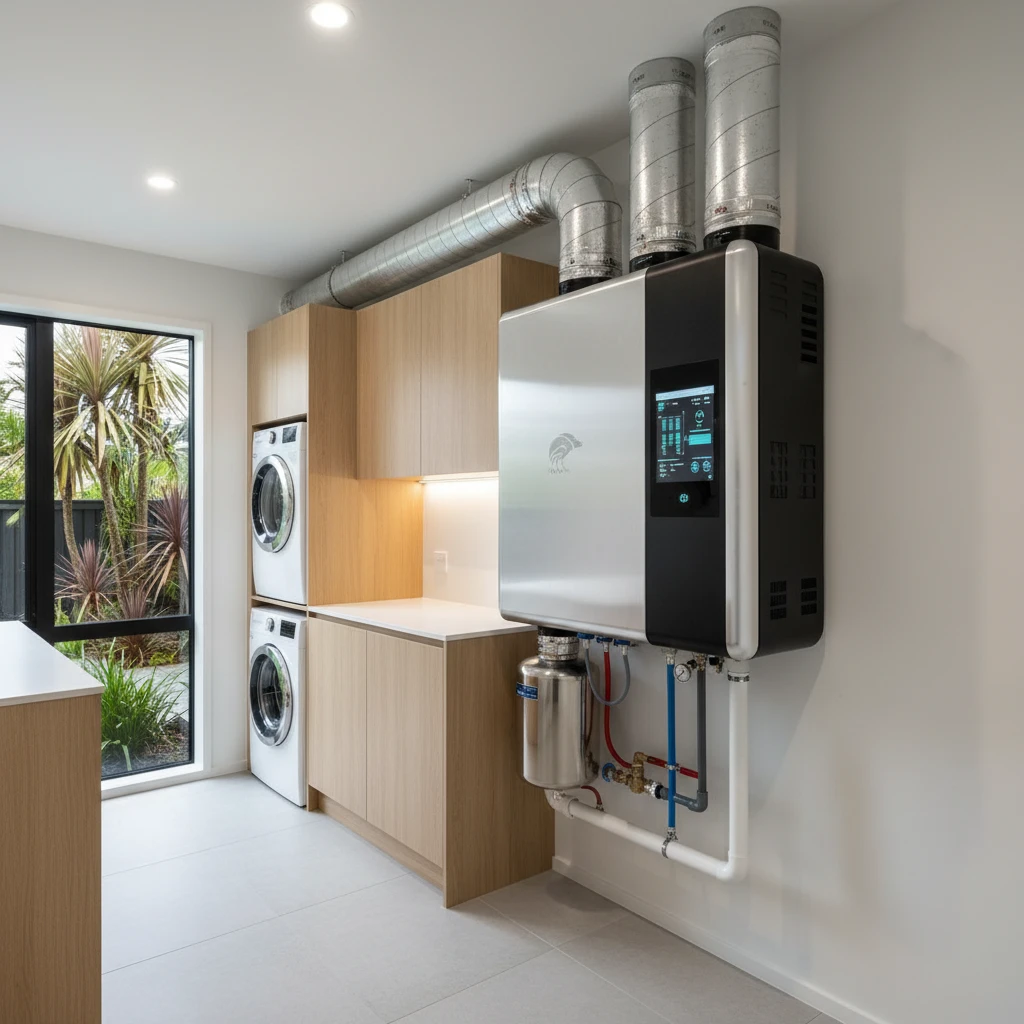
Because Passive Houses are airtight, they require a constant supply of fresh air. An MVHR system extracts stale, moist air from kitchens and bathrooms and brings in fresh, filtered air from outside. The ‘heat recovery’ part is the magic: a heat exchanger transfers the warmth from the outgoing air to the incoming air without the two streams mixing. This ensures the home stays warm and the air stays fresh without needing to open windows in the middle of winter.
4. Airtightness
Traditional NZ homes are often ‘leaky,’ allowing uncontrolled air to flow through gaps in the structure. Passive Houses target an airtightness level of 0.6 air changes per hour (ACH) at 50 Pascals of pressure. This is achieved through a dedicated airtightness layer, often a specialized membrane or taped structural panels, which prevents draughts and protects the building structure from moisture damage.
5. Thermal Bridge-Free Construction
A thermal bridge is a ‘highway’ for heat to travel through the building envelope, such as a timber stud or a concrete slab edge. Passive House design uses clever engineering to eliminate these bridges, ensuring that the insulation layer remains uninterrupted. This prevents cold spots where condensation and mold could otherwise form.
How Do You Adapt Passive House to NZ’s Climate Zones?
New Zealand’s climate is remarkably varied, ranging from the sub-tropical North to the alpine South. A Passive House designed for Auckland will look very different from one designed for Queenstown. The Passive House Planning Package (PHPP) is the modeling software used to tailor the design to specific local weather data.
Managing Humidity in the North
In regions like Northland and Auckland, the primary challenge is often humidity and summer overheating rather than extreme winter cold. Passive House design in these areas focuses heavily on external shading and the dehumidification capabilities of the MVHR system. The goal is to maintain a stable indoor environment regardless of the ‘sticky’ weather outside.
Extreme Cold in the South Island
For homes in Canterbury, Otago, and Southland, the focus shifts to maximizing solar gain and thickening the insulation envelope. Passive House standards ensure that even when it is -10°C outside, the internal surface temperature of the walls and windows remains high enough to prevent ‘cold radiation,’ which causes discomfort in traditional builds.
What is the Certification Process and Cost in NZ?
Achieving Passive House certification in New Zealand is a rigorous process that involves collaboration between the architect, the builder, and a certified Passive House Designer or Consultant. The certification is handled by independent bodies like the Passive House Institute New Zealand (PHINZ) or international certifiers.
The Certification Steps
The process begins with the Design Stage, where the PHPP software is used to model the building’s energy balance. This includes calculating heat loss, solar gain, and internal heat loads. Once the design is verified, the Construction Stage begins, during which the builder must meticulously document materials and take photos of the airtightness layer and insulation installation. A Blower Door Test is mandatory to prove the building meets the 0.6 ACH airtightness requirement.
Is There a ‘Passive House Premium’?
While costs vary, building to a full Passive House standard in New Zealand typically incurs a 10% to 15% price premium over a standard Building Code home. This is due to the higher cost of imported components (like MVHR units and triple-glazed windows) and the additional labor for airtightness detailing. However, this ‘premium’ should be viewed as an investment. The reduction in energy bills—often up to 90%—and the elimination of healthcare costs related to cold, damp housing provide a significant return on investment over time.
Health and Comfort Benefits of Passive Living
The health statistics for New Zealand’s housing stock are often alarming, with high rates of asthma and respiratory illnesses linked to cold, damp homes. Passive House technology addresses these issues at their root. By maintaining a constant temperature of 20-25°C and relative humidity between 30-60%, these homes eliminate the conditions required for mold and dust mites to thrive.
Superior Indoor Air Quality
The MVHR system uses high-grade filters (F7 or similar) that remove pollen, dust, and particulate matter (such as smoke from neighbors’ wood burners) before the air enters the living space. This makes Passive Houses an ideal choice for allergy and asthma sufferers. Because the air is constantly refreshed, CO2 levels remain low, which has been shown to improve sleep quality and cognitive function.
Acoustic Comfort
A side benefit of the thick insulation and high-performance glazing required for Passive House standards is exceptional soundproofing. Passive Houses are incredibly quiet, making them ideal for urban environments or locations near busy roads and airports. The ‘sealed’ nature of the building keeps the noise out, creating a peaceful sanctuary.
Passive House and the NZ Carbon Economy
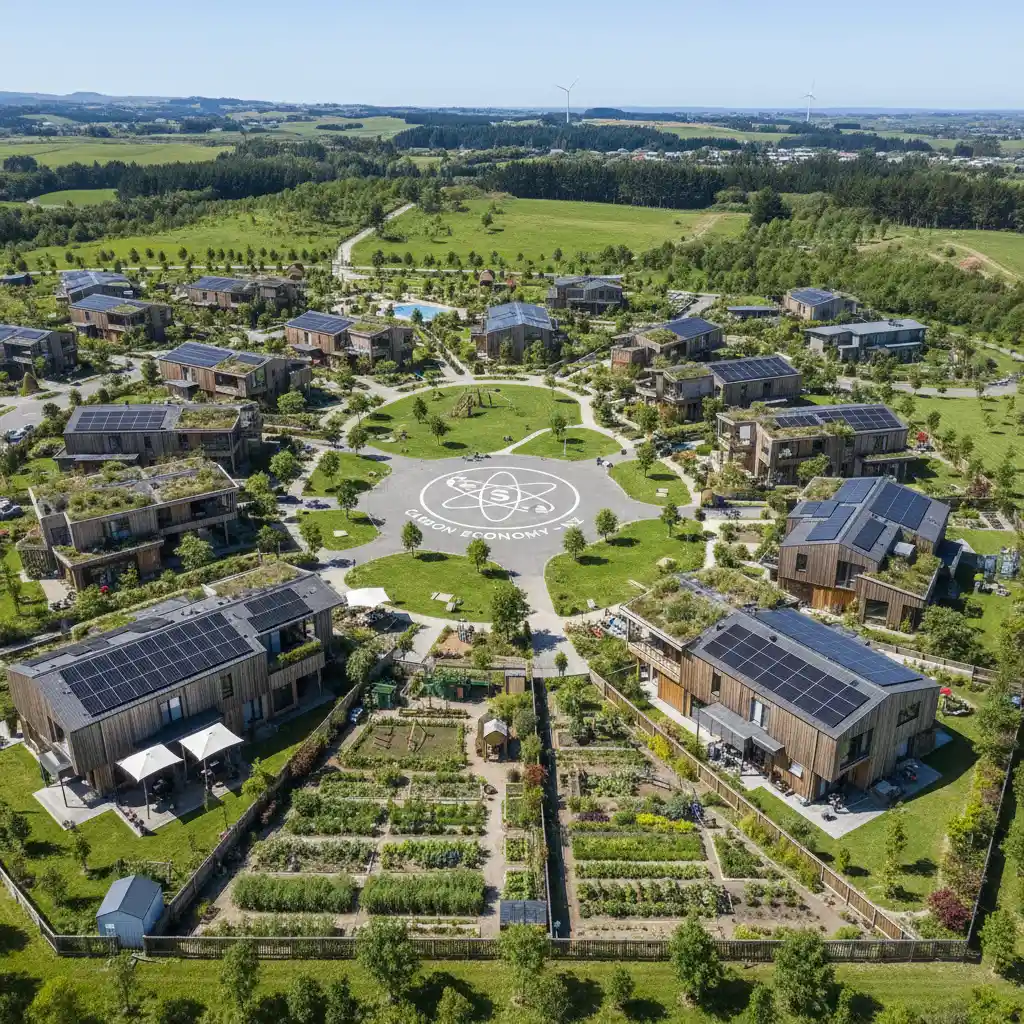
As New Zealand moves toward its goal of net-zero carbon by 2050, the building sector is under increasing scrutiny. Buildings are responsible for a large portion of both operational and embodied carbon. Passive House design directly addresses the operational carbon by drastically reducing the energy needed for heating and cooling.
Embodied Carbon Considerations
While the Passive House standard focuses on energy performance, many NZ designers are pairing it with low-carbon material choices, such as mass timber (CLT), sheep’s wool insulation, and recycled materials. By building a structure that is designed to last 100+ years without requiring major thermal upgrades, the long-term carbon footprint of the building is significantly lower than that of a standard home that may need retrofitting within 30 years.
Future-Proofing Assets
In a changing climate, a Passive House is a resilient asset. During power outages, a Passive House will maintain its internal temperature for days, whereas a standard home will lose heat rapidly. As carbon taxes and energy prices rise, the low operational costs of a Passive House make it a much more attractive long-term financial prospect.
People Also Ask
How much more does a Passive House cost in NZ?
Building a Passive House in New Zealand typically costs between 10% and 15% more than a house built to the minimum NZ Building Code. This covers high-performance windows, MVHR systems, and specialized airtightness layers, though long-term energy savings often offset this initial cost.
Is the NZ Building Code the same as Passive House?
No. While the NZ Building Code (H1 Energy Efficiency) has recently seen improvements, it still falls significantly short of Passive House standards. A Passive House requires roughly 75-90% less energy for heating and cooling than a standard code-compliant home.
Do Passive Houses need heating in NZ?
Passive Houses require very little active heating. Even in the coldest parts of the South Island, a small 1kW heater (like a hair dryer) is often enough to heat the entire home. In many cases, the heat generated by occupants and appliances is sufficient.
Can I open windows in a Passive House?
Yes, you can open windows whenever you like. However, you won’t feel the *need* to open them for fresh air, as the MVHR system provides continuous fresh, filtered air 24/7. In winter, keeping windows closed helps maintain the thermal efficiency.
Who certifies Passive Houses in New Zealand?
Certification is typically overseen by the Passive House Institute (PHI) in Germany, often facilitated through local accredited certifiers or the Passive House Institute New Zealand (PHINZ) community.
What are the 5 principles of a Passive House?
The five core principles are: 1. Continuous thermal insulation, 2. High-performance glazing (triple glazing), 3. Mechanical Ventilation with Heat Recovery (MVHR), 4. Airtightness, and 5. Thermal bridge-free construction.
About The Author
