Retrofitting Commercial Buildings
Retrofitting commercial buildings involves upgrading existing structures to improve energy efficiency, reduce carbon emissions, and enhance occupant comfort. In the New Zealand context, this includes enhancing thermal envelopes through insulation and glazing, electrifying HVAC systems, and integrating smart technologies to comply with the Building for Climate Change programme and achieve net-zero targets.
Why Retrofitting is Essential for NZ Commercial Assets
The New Zealand commercial property landscape is undergoing a fundamental shift. With the government’s commitment to the Carbon Neutral Government Programme and the broader goal of a net-zero economy by 2050, the built environment has become a primary focus for decarbonisation. Retrofitting commercial buildings is no longer just an aesthetic or luxury choice; it is a strategic necessity for asset protection and regulatory compliance.
Existing buildings account for a significant portion of New Zealand’s energy consumption and carbon footprint. Unlike new builds, which are subject to increasingly stringent H1 energy efficiency standards, older commercial stock often suffers from poor thermal performance and outdated, fossil-fuel-reliant heating systems. Retrofitting allows owners to bridge the gap between legacy performance and modern expectations without the massive embodied carbon cost associated with demolition and reconstruction.
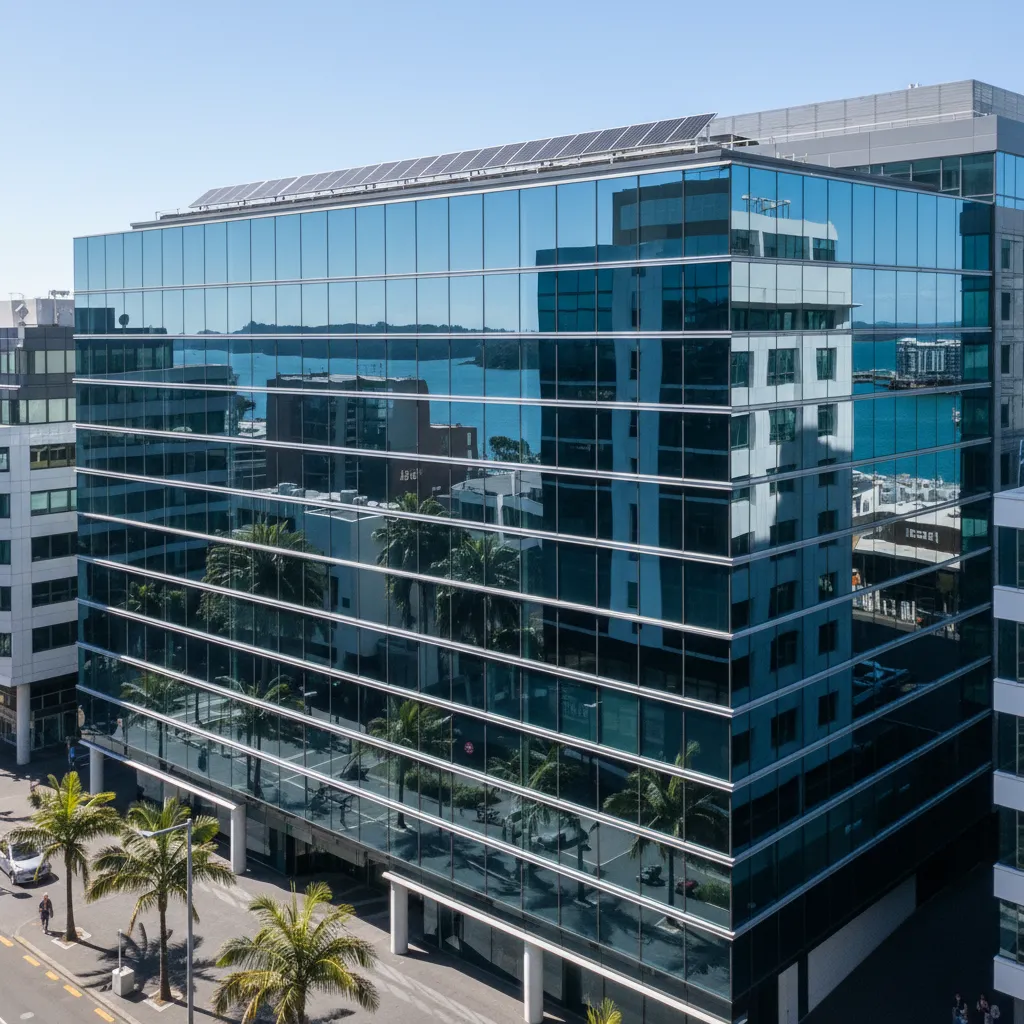
Furthermore, the introduction of mandatory energy performance certificates (similar to NABERSNZ ratings) is placing pressure on landlords to disclose building efficiency. High-performing buildings command higher rents, attract premium tenants with their own ESG (Environmental, Social, and Governance) targets, and experience lower vacancy rates. In a market where ‘brown discounts’ are becoming a reality for inefficient buildings, retrofitting is the primary tool for value preservation.
Upgrading Insulation and Glazing for Thermal Performance
The building envelope is the first line of defense against energy loss. In many of New Zealand’s older commercial buildings, particularly those constructed between the 1960s and 1990s, the thermal envelope is significantly under-insulated. This leads to high operational costs as HVAC systems struggle to maintain stable internal temperatures against the external climate.
High-Performance Glazing Solutions
Windows are typically the weakest link in a building’s thermal performance. Retrofitting commercial buildings often begins with upgrading single-pane or standard double-glazing to high-performance Low-E (low-emissivity) glass. Low-E coatings reflect heat back into the room during winter and block solar gain during summer, drastically reducing the load on mechanical cooling and heating.
In high-rise contexts, such as those found in Wellington’s CBD, secondary glazing is often a viable alternative to full window replacement, especially for heritage-listed buildings. This involves installing a second internal pane that creates an insulating air gap, providing thermal benefits and significant acoustic insulation against city noise.
Advanced Insulation Materials
Improving wall and roof insulation is critical. For many commercial structures, internal retrofitting of insulation is the most practical path. Using high-R-value materials like PIR (polyisocyanurate) boards or spray foam can provide superior thermal resistance with minimal thickness, preserving valuable internal floor area. Roof retrofits are equally vital, as a significant portion of heat loss occurs through the top of the building. Upgrading to a ‘warm roof’ system—where insulation is placed above the structural deck—can eliminate thermal bridging and protect the building structure from temperature fluctuations.
Electrification of Building Services: Moving Beyond Gas
A cornerstone of the New Zealand climate compliance strategy is the electrification of building services. Traditionally, many large-scale commercial buildings in Auckland and Wellington have relied on natural gas boilers for space heating and hot water. As the electricity grid in NZ becomes increasingly renewable, shifting from gas to electricity is the most effective way to eliminate operational carbon emissions.
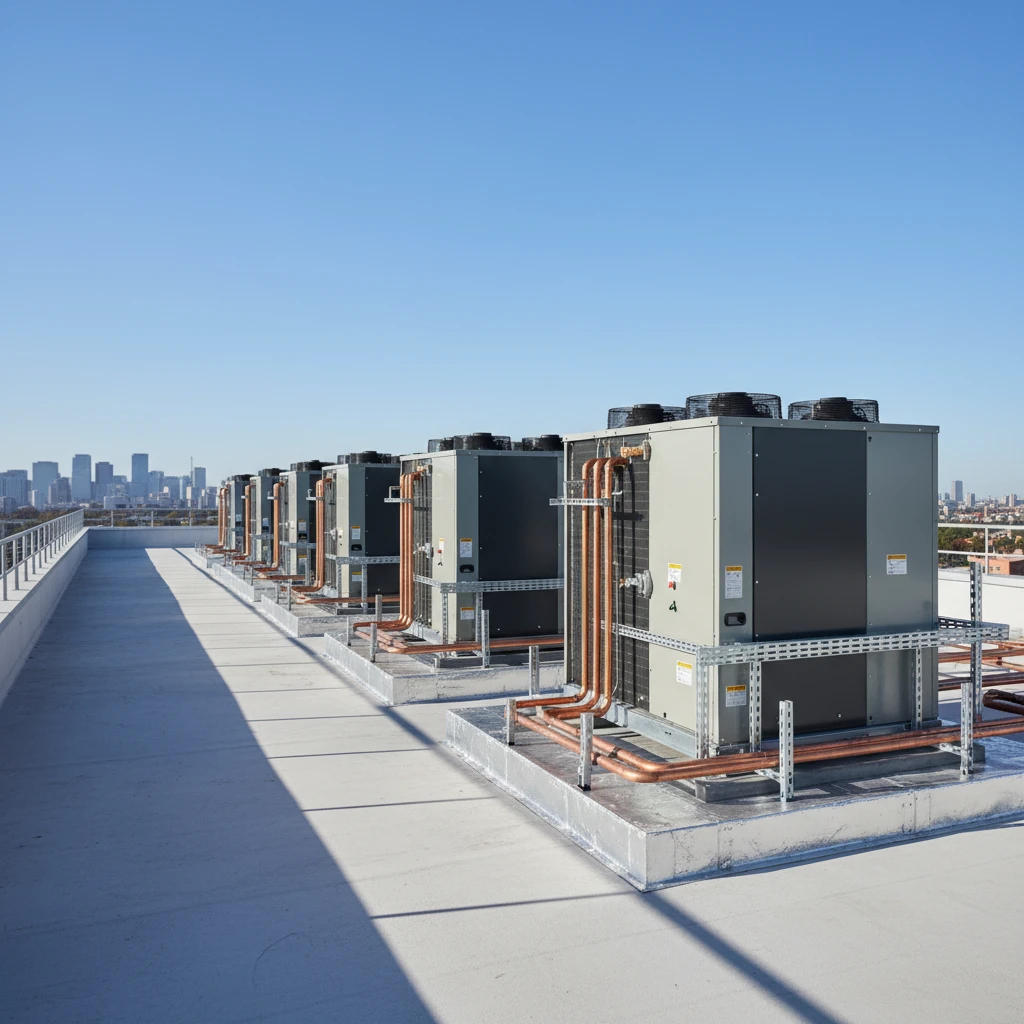
Transitioning to Commercial Heat Pumps
The replacement of gas boilers with high-efficiency air-source or water-source heat pumps is a primary retrofitting objective. Modern commercial heat pumps can achieve Coefficients of Performance (COP) of 3.0 to 4.5, meaning they produce three to four times more heat energy than the electrical energy they consume. This transition not only reduces carbon but can also lower long-term energy costs, especially as carbon taxes on fossil fuels continue to rise via the Emissions Trading Scheme (ETS).
Smart Building Management Systems (BMS)
Electrification is most effective when paired with intelligent controls. A modern BMS allows for granular control over lighting, heating, and ventilation. By using occupancy sensors and CO2 monitors, the building can dynamically adjust its energy use based on real-time demand. This prevents the common waste of heating or cooling empty floors and ensures that ventilation is only used when necessary to maintain air quality, further driving down the energy intensity of the building.
Case Studies: Success Stories in Auckland and Wellington
Real-world examples demonstrate the feasibility and benefits of retrofitting commercial buildings in the New Zealand market. These projects serve as blueprints for asset managers looking to navigate the carbon economy.
The 80 Strand Retrofit (Auckland)
Located in Parnell, this project involved the comprehensive refurbishment of a 1980s office building. The retrofit focused on stripping the building back to its concrete frame and installing a new high-performance curtain wall system. By upgrading the envelope and installing modern HVAC and LED lighting, the building achieved a significantly higher NABERSNZ rating, transforming it from a secondary asset into a premium, highly desirable workspace with a drastically reduced carbon footprint.
Wellington’s Heritage Retrofits
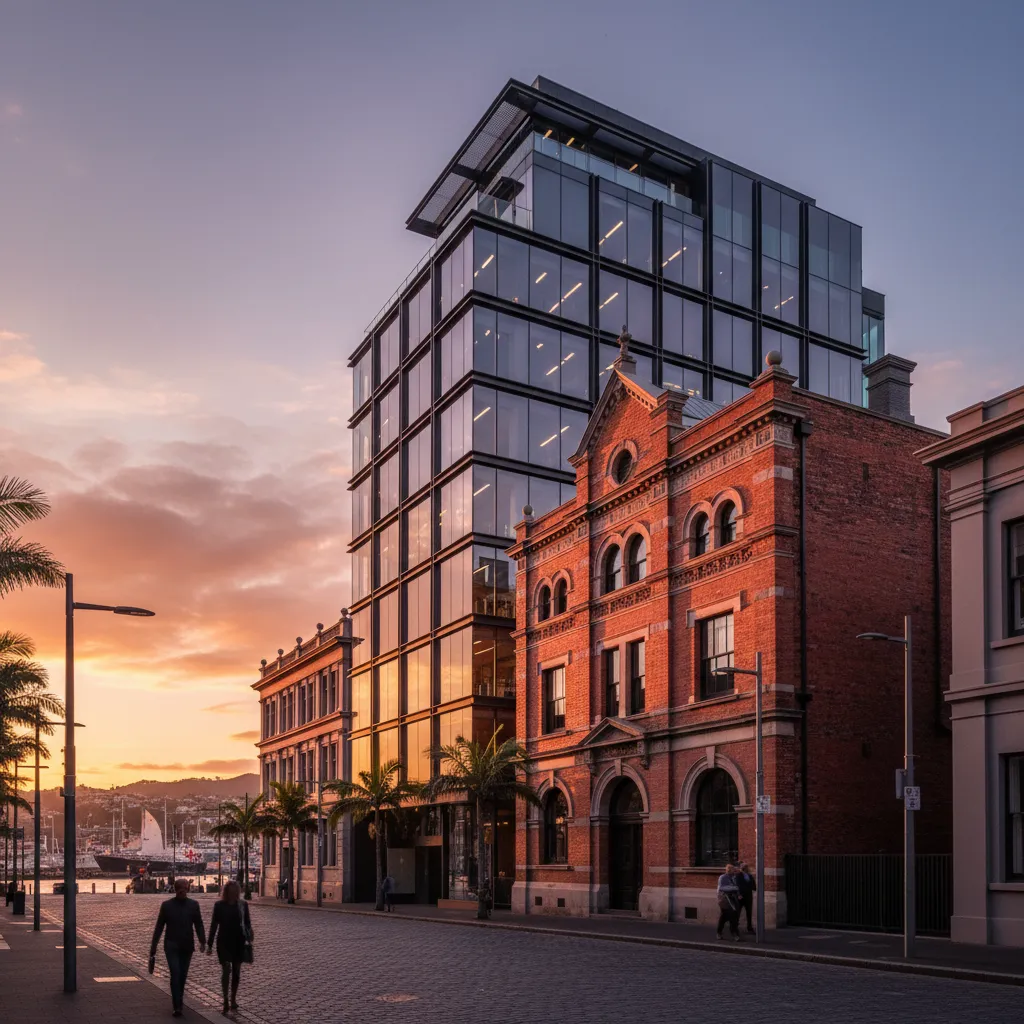
Wellington faces the unique challenge of balancing seismic strengthening with energy retrofitting. Several projects in the capital have successfully integrated base-isolation or steel bracing with thermal upgrades. By combining these essential structural works with glazing upgrades and the removal of legacy gas systems, owners have been able to future-proof their assets against both earthquake risks and climate regulations simultaneously.
Financing Options for Green Retrofits
The capital expenditure required for deep retrofits can be significant. However, the New Zealand financial sector has evolved to provide various mechanisms to support these transitions. Understanding these options is key to making the business case for a retrofit.
Green Loans and Sustainability-Linked Loans
Major NZ banks, including ANZ, BNZ, and Westpac, now offer dedicated green financing products. These loans often feature lower interest rates for projects that meet specific sustainability criteria, such as achieving a 5-star NABERSNZ rating or a specific percentage reduction in energy use. Sustainability-linked loans (SLLs) take this further by tying the interest rate to the building’s ongoing performance, providing a continuous incentive for efficiency.
EECA Grants and Government Support
The Energy Efficiency and Conservation Authority (EECA) provides various forms of support for commercial retrofits. Through the ‘Energy Transition Accelerator’ and technology demonstration grants, EECA helps businesses identify the most impactful carbon reduction opportunities and provides co-funding for the implementation of innovative energy-saving technologies. This is particularly relevant for large-scale electrification projects where the initial cost of heat pump technology may be higher than traditional alternatives.
Future-Proofing and Climate Compliance
The regulatory environment in New Zealand is moving toward mandatory disclosure and stricter limits on operational emissions. The Ministry of Business, Innovation and Employment (MBIE) is actively developing the ‘Building for Climate Change’ framework, which will likely introduce mandatory reporting on both embodied and operational carbon for existing buildings.
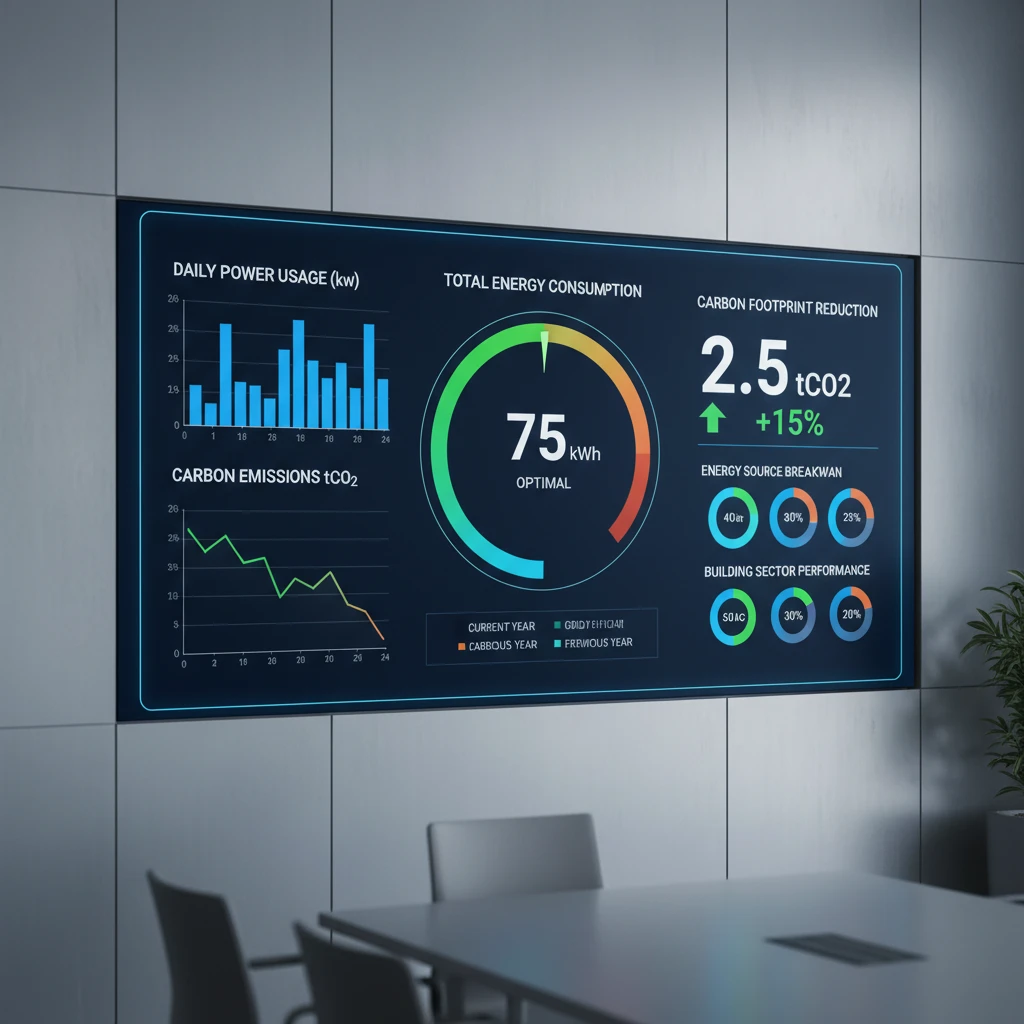
By retrofitting now, building owners can avoid the rush and potential supply chain bottlenecks that will occur as these regulations become law. Furthermore, as New Zealand moves toward a more transparent carbon economy, the ability to demonstrate a low-carbon asset will be critical for securing insurance, bank financing, and high-value tenants. Retrofitting is not just about saving energy; it is about ensuring the long-term viability and liquidity of commercial property in a rapidly changing world.
In conclusion, retrofitting commercial buildings in New Zealand represents a massive opportunity. It addresses the dual challenges of climate change and economic performance. Through strategic investments in insulation, glazing, and electrification, supported by innovative financing, the New Zealand commercial property sector can lead the way in the transition to a high-performance, low-carbon future.
People Also Ask
What is the most cost-effective way to retrofit a commercial building?
The most cost-effective approach usually starts with a ‘fabric first’ strategy—improving insulation and sealing air leaks—followed by upgrading to LED lighting and optimizing existing Building Management Systems (BMS) before moving to larger capital items like HVAC replacement.
How does NABERSNZ affect commercial building value?
A high NABERSNZ rating (4 stars or above) typically correlates with higher capital value, lower cap rates, and better tenant retention, as it provides independent verification of the building’s operational efficiency and lower running costs.
Can I retrofit a heritage commercial building for energy efficiency?
Yes, heritage buildings can be retrofitted using sensitive methods such as secondary glazing, internal wall insulation, and discreet heat pump installations that preserve the building’s historical character while significantly improving thermal performance.
What are the tax benefits of retrofitting commercial buildings in NZ?
While specific tax credits vary, many energy-efficient upgrades can be depreciated, and the reduction in operational expenses directly improves the building’s Net Operating Income (NOI), which is a key driver of valuation.
How long does a typical commercial energy retrofit take?
A minor retrofit (lighting and BMS tuning) can take a few months, while a deep retrofit involving glazing replacement and HVAC electrification can take 12 to 24 months, often requiring phased implementation to minimize tenant disruption.
What is the Building for Climate Change programme?
It is a government initiative led by MBIE aimed at reducing emissions from the building and construction sector. It focuses on improving energy efficiency and reducing both embodied and operational carbon across New Zealand’s building stock.
About The Author
