Science Based Targets Initiative (SBTi) NZ
The Science Based Targets initiative (SBTi) is a global partnership that defines and promotes best practices in emissions reductions and net-zero targets in line with climate science. For New Zealand businesses, it provides a validated framework to set greenhouse gas reduction goals consistent with keeping global warming to 1.5°C, ensuring corporate sustainability aligns with the Paris Agreement.
Understanding the SBTi Framework in the New Zealand Context
As the global economy transitions toward a low-carbon future, New Zealand businesses face increasing pressure from regulators, investors, and consumers to demonstrate authentic climate action. The Science Based Targets initiative (SBTi) has emerged as the gold standard for corporate climate action. It is a collaboration between the Carbon Disclosure Project (CDP), the United Nations Global Compact (UNGC), the World Resources Institute (WRI), and the World Wide Fund for Nature (WWF).
For Kiwi enterprises, the SBTi acts as a rigorous auditor of climate ambition. Unlike self-declared goals which can be accused of “greenwashing,” SBTi-validated targets are mathematically calculated to ensure a company’s fair share of emissions reductions is being met to halt climate change. This is particularly relevant given the New Zealand government’s commitment to the Zero Carbon Act and the implementation of mandatory Climate-Related Disclosures (CRD) managed by the External Reporting Board (XRB).
The framework operates on the principle of “ambition loops.” By setting science-based targets, companies signal to the government that they are ready for ambitious climate policies, which in turn gives the government confidence to set bolder regulations. In New Zealand, where the economy is heavily reliant on agriculture and trade, aligning with international standards like the SBTi is crucial for maintaining competitive advantages in global supply chains.

Strategic Benefits for NZ Companies Joining SBTi
Adopting science-based targets is no longer just an exercise in corporate social responsibility (CSR); it is a strategic imperative for long-term viability. For New Zealand companies, the benefits of joining the SBTi extend far beyond environmental stewardship.
1. Future-Proofing Against Regulation
New Zealand’s regulatory environment is tightening. The Financial Sector (Climate-related Disclosures and Other Matters) Amendment Act requires large financial institutions and listed companies to disclose climate risks. By aligning with SBTi, companies are effectively pre-validating their strategy against the highest standards, making compliance with local XRB standards significantly easier.
2. Access to Capital and Investment
Global investors are increasingly screening portfolios for climate risk. New Zealand firms looking for foreign direct investment or capital from green bonds must demonstrate credible decarbonization pathways. SBTi validation serves as a stamp of approval for ESG-focused investors, signaling that the company has a robust plan to manage transition risks.
3. Supply Chain Resilience and Competitiveness
Many New Zealand exporters are part of the supply chains of massive global multinationals (like Tesco, Walmart, or Nestlé) that have their own Scope 3 targets. These multinationals are requiring their suppliers to set science-based targets. By proactively adopting SBTi, NZ exporters protect their contracts and position themselves as preferred low-carbon partners.

The Step-by-Step Validation Process
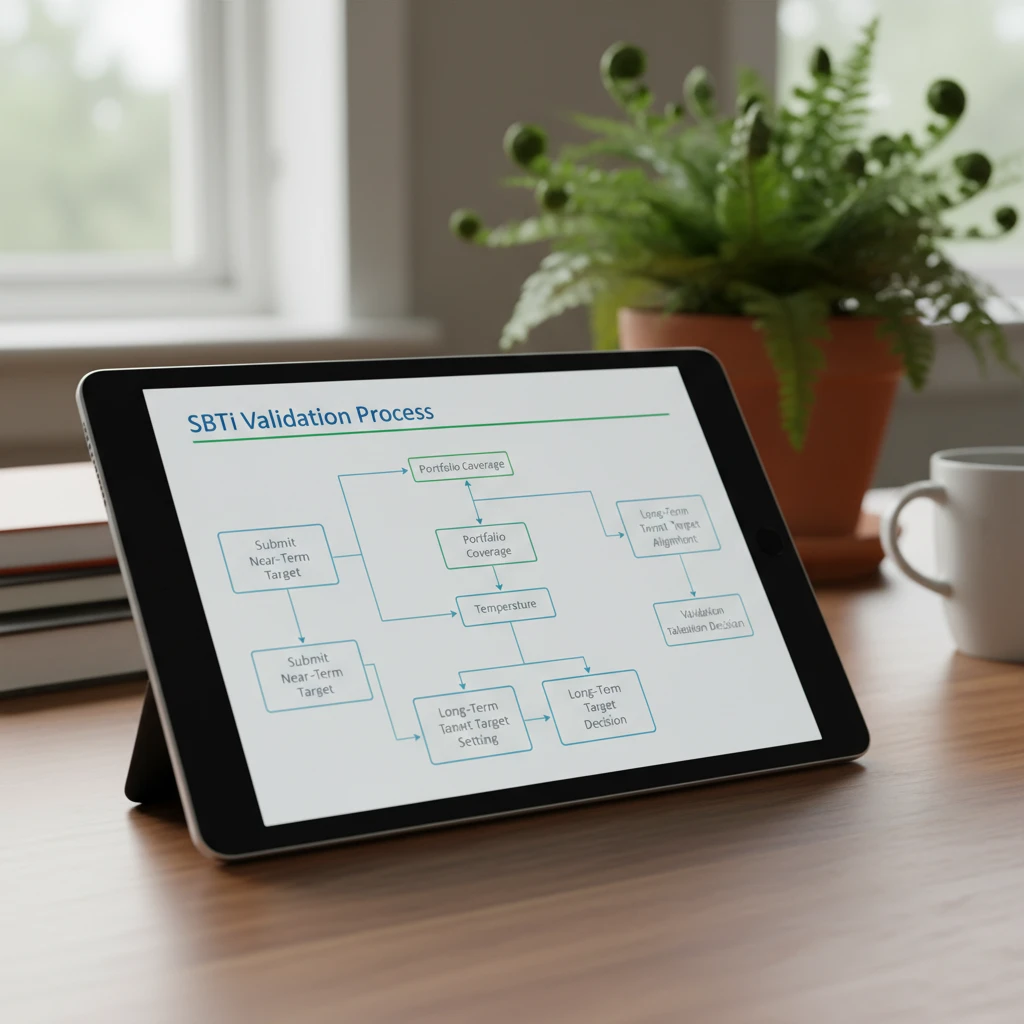
Navigating the SBTi validation process requires meticulous planning and data gathering. For New Zealand organizations, the process generally follows a five-step path, though there is a streamlined route available for Small and Medium-Sized Enterprises (SMEs).
Step 1: Commit
The first step is submitting a letter of intent to the SBTi. This publicly signals your commitment to setting a science-based target. Once this letter is signed, your company is listed as “Committed” on the SBTi website. You then have 24 months to develop and submit your targets. For many NZ businesses, this 24-month window is critical for gathering baseline data.
Step 2: Develop
This is the most labor-intensive phase. Companies must calculate their emissions inventory across all three scopes (detailed below). You must select a target year (usually 5 to 10 years into the future) and a base year. The targets must meet specific criteria; for example, they must cover at least 95% of company-wide Scope 1 and 2 emissions.
Step 3: Submit
Once the targets are modeled, you submit them to the SBTi for official validation. This involves completing detailed forms and providing evidence of your calculations. There is a fee associated with this validation service, which varies depending on the size of the company and the type of validation service selected.
Step 4: Communicate
Upon approval, the SBTi publishes your targets. This is the moment to announce your success to stakeholders, employees, and the market. Effective communication is vital to leveraging the reputational benefits of the certification.
Step 5: Disclose
Validation is not the end of the road. Companies must report on their emissions and progress against their targets annually. In New Zealand, this often aligns with annual integrated reporting or sustainability reports.
Navigating Scope 1, 2, and 3 Emissions
A major hurdle for New Zealand businesses in the SBTi guide is understanding and calculating the different scopes of emissions. The SBTi requires comprehensive coverage.
Scope 1: Direct Emissions
These are emissions from sources that the company owns or controls directly. For a NZ logistics firm, this includes the fuel burned in their truck fleet. For a manufacturer, it includes natural gas burned in on-site boilers.
Scope 2: Indirect Emissions from Energy
These are emissions associated with the purchase of electricity, steam, heat, or cooling. New Zealand benefits from a highly renewable electricity grid (hydro, geothermal, wind), which often makes Scope 2 reductions easier to achieve compared to other jurisdictions. However, companies must still account for this, often using market-based approaches if they purchase Renewable Energy Certificates (RECs).
Scope 3: Value Chain Emissions
This is often the most challenging area. Scope 3 encompasses all other indirect emissions that occur in a company’s value chain. This includes purchased goods and services, business travel, employee commuting, and the use of sold products. Under SBTi criteria, if Scope 3 emissions represent more than 40% of the total inventory (which is true for most sectors), a specific Scope 3 target is required. For NZ agriculture and retail sectors, Scope 3 often accounts for over 80% of their total carbon footprint.
Case Studies: NZ Firms with Approved Targets
Several leading New Zealand organizations have successfully navigated the SBTi process, setting a precedent for others to follow.
Fisher & Paykel Healthcare
Fisher & Paykel Healthcare has set ambitious targets to reduce Scope 1 and 2 emissions. Their commitment involves transitioning away from natural gas and electrifying their transport fleet. Their journey highlights the importance of energy efficiency in manufacturing and the role of innovation in product design to lower downstream emissions.
Synlait Milk
Operating in the challenging agricultural sector, Synlait has engaged with the SBTi to address on-farm emissions. This is particularly notable because biological emissions (methane from cows) are difficult to abate. Their targets involve working closely with farmer suppliers to implementing best practices in land management, demonstrating how Scope 3 targets drive industry-wide change.
The Warehouse Group
As a major retailer, The Warehouse Group deals with a massive supply chain. Their science-based targets focus heavily on engaging suppliers to reduce the carbon intensity of the products sold. This illustrates the “ripple effect” of the SBTi, where large NZ retailers influence manufacturing practices across Asia and the Pacific.

Common Challenges and Solutions
While the benefits are clear, the path to SBTi validation is fraught with challenges for New Zealand entities.
Data Availability and Quality
Challenge: Many NZ firms lack historical data, particularly for Scope 3 emissions. Suppliers may not track their own carbon footprint.
Solution: Utilize spend-based methods for initial Scope 3 screening and transition to activity-based data over time. Engage with industry bodies like the Sustainable Business Council (SBC) to share best practices and data sets.
Cost of Implementation
Challenge: Decarbonization requires capital expenditure (CapEx) for new machinery, EVs, or building retrofits.
Solution: View these costs through the lens of Total Cost of Ownership (TCO). Electric vehicles and energy-efficient systems often have lower operating costs (OpEx) that pay back the initial investment. Furthermore, utilize green finance options available through major NZ banks offering lower interest rates for sustainability-linked loans.
The FLAG Guidance (Forest, Land, and Agriculture)
Challenge: For NZ’s primary industries, standard SBTi methods didn’t historically account well for biological emissions and removals.
Solution: The SBTi has introduced specific FLAG guidance. New Zealand land-based sectors must now set specific targets for land-based emissions and removals, separating them from fossil fuel emissions. This is critical for NZ forestry and farming entities.
People Also Ask
Is SBTi validation mandatory for New Zealand companies?
No, SBTi validation is currently voluntary. However, the mandatory Climate-Related Disclosures (CRD) regime in New Zealand requires large entities to disclose their transition plans, and having SBTi-validated targets is the most robust way to demonstrate the credibility of those plans.
How much does the SBTi validation cost?
As of the latest pricing structure, the standard validation service for large companies costs approximately USD $9,500 upwards depending on the complexity. There is a reduced fee for SMEs (approx USD $1,000) to make the process more accessible.
What is the difference between Net-Zero and Science-Based Targets?
Science-based targets are near-term goals (usually 5-10 years) to reduce emissions at a pace consistent with 1.5°C warming. Net-Zero is a long-term state (usually by 2050) where emissions are reduced by at least 90%, with the residual 10% neutralized by carbon removals. The SBTi has a specific Net-Zero Standard that combines both.
Can New Zealand SMEs join the SBTi?
Yes, the SBTi offers a streamlined route for Small and Medium-Sized Enterprises (fewer than 500 employees). This route allows SMEs to bypass the initial commitment stage and the intensive target validation process, enabling them to immediately set pre-defined science-based targets.
What is the FLAG guidance and why does it matter for NZ?
FLAG stands for Forest, Land, and Agriculture. It is a sector-specific guidance requiring companies with significant land-intensive operations (like farming and forestry) to set specific targets for land-related emissions and removals. This is vital for New Zealand’s primary export sector.
How long does the validation process take?
Once targets are submitted, the validation process typically takes 30 to 60 business days. However, the preparation time before submission—gathering data and modeling targets—can take companies anywhere from 6 to 24 months.
About The Author
