SME Carbon Footprint Guide
An SME carbon footprint in NZ refers to the total greenhouse gas emissions generated by a small-to-medium enterprise’s operations, measured in carbon dioxide equivalents (CO2e). Under New Zealand’s Zero Carbon Act, businesses calculate these emissions across Scope 1, 2, and 3 categories to identify reduction opportunities, ensure regulatory compliance, and meet growing consumer demand for sustainability.
The New Zealand Regulatory Context: The Zero Carbon Act
For New Zealand small and medium enterprises (SMEs), the landscape of business operation has fundamentally shifted with the introduction of the Climate Change Response (Zero Carbon) Amendment Act 2019. This landmark legislation sets a framework for New Zealand to develop and implement clear climate change policies that contribute to the global effort under the Paris Agreement. While the immediate reporting mandates often fall on large financial institutions and listed companies, the ripple effect on SMEs is profound. As larger entities are required to report on their Scope 3 emissions—which include their supply chains—SMEs are increasingly being asked to provide carbon data to remain preferred suppliers.

Understanding Scope 1, 2, and 3 Emissions
To accurately measure an SME carbon footprint in NZ, business owners must understand the three categories of emissions defined by the Greenhouse Gas Protocol. Scope 1 covers direct emissions from owned or controlled sources, such as company vehicles or on-site gas boilers. Scope 2 covers indirect emissions from the generation of purchased electricity, steam, heating, and cooling consumed by the reporting company. Scope 3 includes all other indirect emissions that occur in a company’s value chain, including both upstream and downstream emissions. For most Kiwi SMEs, Scope 3—which includes business travel, waste disposal, and purchased goods—often represents the largest portion of their total footprint.
Why NZ SMEs Must Measure Their Carbon Footprint Now
Beyond the moral imperative to protect Aotearoa’s natural environment, there are compelling commercial reasons to track your carbon footprint. Firstly, efficiency and cost reduction go hand-in-hand with carbon management. When you identify areas of high carbon intensity, you are usually identifying areas of high resource waste. Reducing energy consumption or streamlining logistics directly impacts the bottom line. Secondly, access to capital is becoming increasingly tied to environmental performance. NZ banks are starting to offer ‘green loans’ with preferential interest rates for businesses that can demonstrate a commitment to sustainability.
Meeting Kiwi Consumer Expectations
New Zealanders are notoriously environmentally conscious. Recent surveys indicate that a significant majority of Kiwi consumers prefer to purchase from brands that have clear environmental goals. By measuring and reporting your SME carbon footprint in NZ, you provide the transparency that modern consumers demand. This builds brand loyalty and differentiates your business in a crowded marketplace where ‘green’ is no longer just a buzzword but a core requirement for many buyers.
Simple Measurement Tools for Kiwi Businesses
Measuring carbon emissions used to require expensive consultants, but today, several accessible tools are designed specifically for the New Zealand market. These tools help SMEs transition from guesswork to data-driven decision-making.
The Climate Action Toolbox (Business.govt.nz)
One of the most effective starting points for any Kiwi SME is the Climate Action Toolbox, a free resource developed through a partnership between the Sustainable Business Network, BNZ, EECA, and several government agencies. This tool is specifically tailored for the NZ context, allowing businesses to enter data related to their energy use, transport, and waste. It then provides a tailored action plan with practical steps to reduce emissions. It is an excellent ‘entry-level’ tool that doesn’t require deep technical knowledge.

Toitū Envirocare and CarbonClick
For businesses looking for more formal certification, Toitū Envirocare offers the ‘Toitū carbonreduce’ and ‘Toitū net carbonzero’ programmes. While these involve a cost, they provide a globally recognized seal of approval that carries significant weight in B2B tenders. Alternatively, for e-commerce businesses, CarbonClick offers a simple integration that allows customers to offset the carbon impact of their purchases at the checkout, while providing the business with insights into their total shipping emissions.
Cost-Effective Reduction Tips for NZ Operations
Reducing your SME carbon footprint in NZ doesn’t always require massive capital expenditure. Many of the most effective changes are behavioral or involve optimizing existing systems.
Energy Efficiency and Renewables
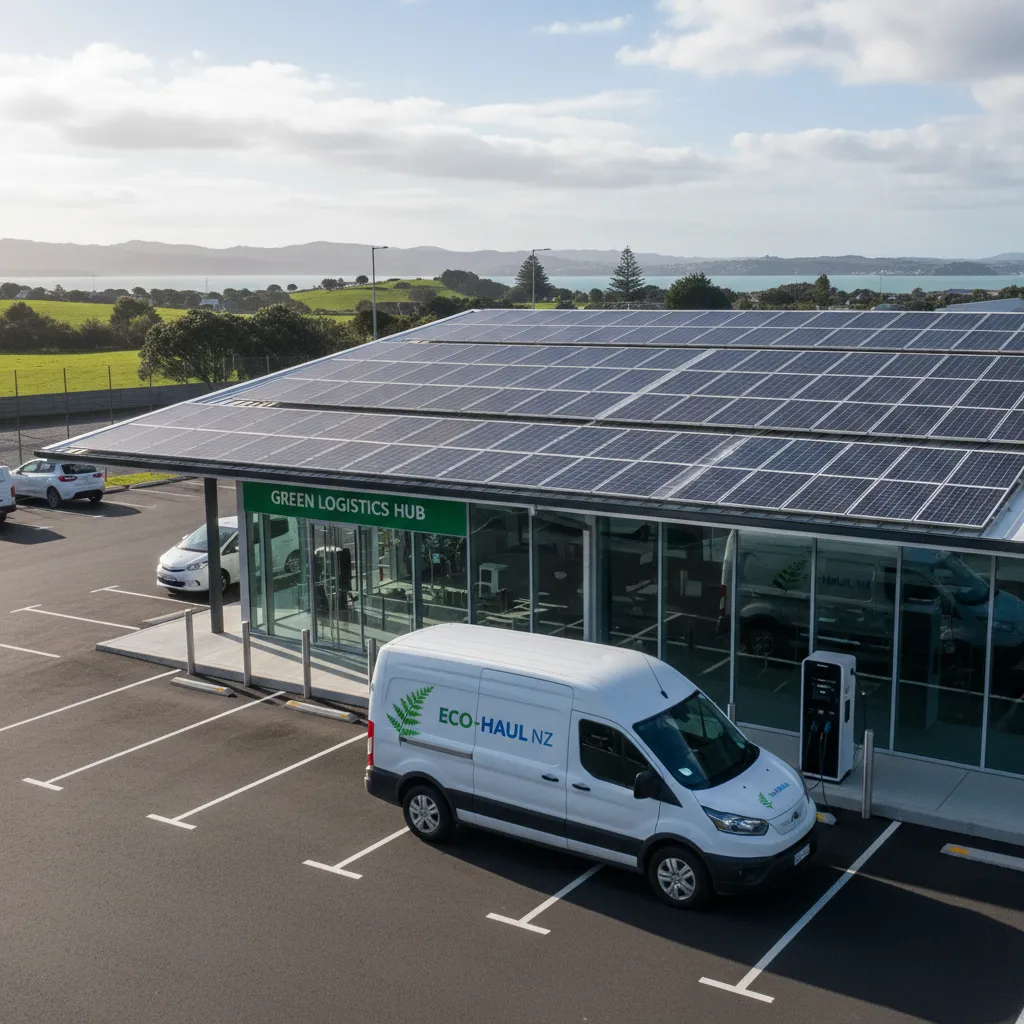
New Zealand’s electricity grid is already highly renewable, but reducing total consumption is still vital. Simple steps include switching to LED lighting, installing sensors in infrequently used areas, and ensuring that heating and cooling systems are regularly serviced to maintain efficiency. For businesses with their own premises, exploring solar PV installations can provide a long-term hedge against rising electricity costs while significantly lowering Scope 2 emissions.
Optimizing Transport and Logistics
Given New Zealand’s geography, transport is often a major contributor to an SME’s footprint. Transitioning the company fleet to electric vehicles (EVs) or plug-in hybrids is becoming increasingly viable as the second-hand EV market grows and charging infrastructure expands. Additionally, optimizing delivery routes and encouraging staff to utilize public transport or active transport (like cycling) through the government’s ‘Fringe Benefit Tax’ exemptions for e-bikes can yield immediate results.
Waste Minimization and Circular Economy
Sending waste to the landfill generates methane, a potent greenhouse gas. Implementing a robust recycling and composting system in the office or workshop is a low-cost way to reduce Scope 3 emissions. Furthermore, SMEs should look at their procurement policies. Can you source materials from suppliers who take back packaging? Can your product be designed for repair rather than replacement? Adopting circular economy principles not only reduces carbon but also fosters innovation.
Marketing Your Green Credentials Without Greenwashing
Once you have measured your footprint and begun the reduction journey, it is natural to want to share this progress with your customers. However, in New Zealand, the Commerce Commission is increasingly vigilant about ‘greenwashing’—making false or misleading environmental claims.
The Power of Radical Transparency
Instead of claiming to be ‘100% Green’ or ‘Eco-Friendly’—terms that are often too vague to be meaningful—focus on specific data. Share your total CO2e tonnage from the previous year and your target for the current year. Explain the specific actions you are taking, such as ‘We have reduced our plastic packaging by 40%.’ Transparency builds trust more effectively than vague superlatives. If you are using a tool like the Climate Action Toolbox, you can share your progress reports directly with your audience.

Leveraging Third-Party Certifications
Using recognized logos like Toitū or B Corp provides an external layer of verification that protects your brand from greenwashing accusations. These certifications require rigorous auditing, which ensures that your claims are backed by evidence. When marketing these credentials, ensure you link back to a dedicated sustainability page on your website where customers can read the full details of your carbon reduction journey.
Future-Proofing Your SME Against Climate Risk
The transition to a low-carbon economy is inevitable. By measuring your SME carbon footprint in NZ now, you are essentially ‘future-proofing’ your business. You are preparing for potential future carbon taxes, staying ahead of regulatory changes, and ensuring you remain a viable partner for larger corporations who are cleaning up their supply chains. Moreover, a business that is resilient to climate-related disruptions—whether they be physical risks like extreme weather or transition risks like policy changes—is a business that will thrive in the decades to come.
The Role of Supply Chain Collaboration
No business is an island. To truly minimize your footprint, you must engage with your suppliers. Start by asking them for their own carbon data. This not only helps you calculate your Scope 3 emissions more accurately but also sends a signal to the market that carbon performance is a key procurement metric. Over time, this collaborative approach elevates the entire New Zealand business ecosystem, making the country more competitive on the global stage as a provider of low-carbon goods and services.
Is it expensive for a New Zealand SME to measure its carbon footprint?
It doesn’t have to be. Free tools like the Climate Action Toolbox provide a comprehensive starting point. Costs only scale if you seek formal third-party certifications or hire specialized consultants for complex supply chain audits.
Does the Zero Carbon Act legally require SMEs to report emissions?
Currently, the mandatory climate-related disclosure (CRD) framework applies mainly to large financial entities and listed issuers. However, many SMEs are indirectly required to report by their larger corporate clients who need the data for their own Scope 3 reporting.
What are the most common sources of emissions for NZ small businesses?
For many NZ SMEs, the primary sources are electricity use, transport (company vehicles and staff commuting), business travel, and waste sent to landfills. For those in manufacturing, raw material procurement is also a major factor.
Can I offset my emissions instead of reducing them?
Offsetting should be the last resort. The priority should always be measurement and reduction. Offsetting can help reach ‘net zero’ for emissions that are currently unavoidable, but it does not replace the need for operational efficiency.
How often should an SME calculate its carbon footprint?
It is best practice to calculate your footprint annually. This allows you to track progress against your reduction targets and adjust your strategies based on real-world data from the previous year.
Where can I find help to start my carbon reduction journey in NZ?
The Sustainable Business Network (SBN) and the Energy Efficiency and Conservation Authority (EECA) offer excellent resources, workshops, and toolkits specifically designed for New Zealand businesses of all sizes.
About The Author
