SME Carbon Footprint Guide
An SME carbon footprint NZ refers to the total greenhouse gas emissions produced directly and indirectly by a small-to-medium enterprise within New Zealand. Measuring this footprint involves calculating Scope 1, 2, and 3 emissions to align with the Zero Carbon Act, helping businesses identify climate risks and operational efficiencies while contributing to the nation’s 2050 net-zero goal.
Why New Zealand SMEs Must Act Now: The Zero Carbon Act
For small and medium enterprises (SMEs) in New Zealand, the landscape of business is shifting rapidly under the weight of climate policy. The Climate Change Response (Zero Carbon) Amendment Act 2019 set a legally binding target for New Zealand to reduce its net emissions of all greenhouse gases (except biogenic methane) to zero by 2050. While the initial focus of mandatory reporting has been on large financial institutions and listed companies, the ripple effect is reaching the SME sector with significant force.
As larger corporations begin their mandatory climate-related disclosures, they are scrutinizing their supply chains. If you are an SME providing services or goods to a large entity, your carbon footprint is part of their “Scope 3” emissions. Consequently, being able to demonstrate a low-carbon operation is no longer just a “nice to have”—it is becoming a prerequisite for procurement and contract retention in the New Zealand market.
Simple Carbon Measurement Tools for NZ Small Businesses
What is the easiest way to measure an SME carbon footprint in NZ? The first step for any business is understanding where its emissions come from. For most Kiwi SMEs, emissions are concentrated in electricity use, transport, and waste. Fortunately, several tools are designed specifically for the local context.
Toitū Envirocare
Toitū is perhaps the most recognized name in New Zealand carbon certification. They offer a range of tools specifically tailored for SMEs, including the ‘Toitū carbonreduce’ program. While there is a cost associated with certification, their calculators are robust and aligned with international standards (ISO 14064-1), providing a high level of credibility for businesses looking to prove their green status to stakeholders.
Sustainable Business Network (SBN) Tools
The Sustainable Business Network provides a “Climate Action Toolbox” which is free and incredibly user-friendly. It is designed specifically for SMEs who may not have a dedicated sustainability officer. The toolbox guides you through a series of questions about your business type, fleet, and energy use, providing a baseline estimate and actionable steps to reduce that footprint.
Ekos Carbon Calculators
Ekos is a social enterprise that helps businesses measure and offset their emissions through indigenous forest carbon sinks in New Zealand and the Pacific. Their tools are excellent for SMEs looking to achieve “Carbon Friendly” or “Zero Carbon” certifications while supporting local biodiversity projects.
Cost-Effective Reduction Tips for Kiwi SMEs
How can an SME reduce its carbon footprint without breaking the bank? Reducing emissions often goes hand-in-hand with reducing operational costs. In New Zealand, where electricity is largely renewable but transport is carbon-heavy, the strategies for reduction are unique.
Energy Efficiency and Electrification
Switching to LED lighting and ensuring that HVAC systems are serviced regularly can reduce electricity bills by up to 20%. For businesses involved in manufacturing or food service, moving away from fossil-fuel-based heating (like gas boilers) to high-efficiency electric heat pumps is a major win. EECA (Energy Efficiency and Conservation Authority) often provides co-funding or audits for SMEs to identify these opportunities.
Decarbonizing the Fleet
Transport is a significant contributor to the SME carbon footprint in NZ. While the initial investment in Electric Vehicles (EVs) can be higher, the total cost of ownership is often lower due to reduced maintenance and fuel costs. If a full fleet transition isn’t feasible, implementing a “no-idling” policy or using GPS routing software to minimize travel distances can yield immediate emission reductions.
Waste Minimisation and Circularity
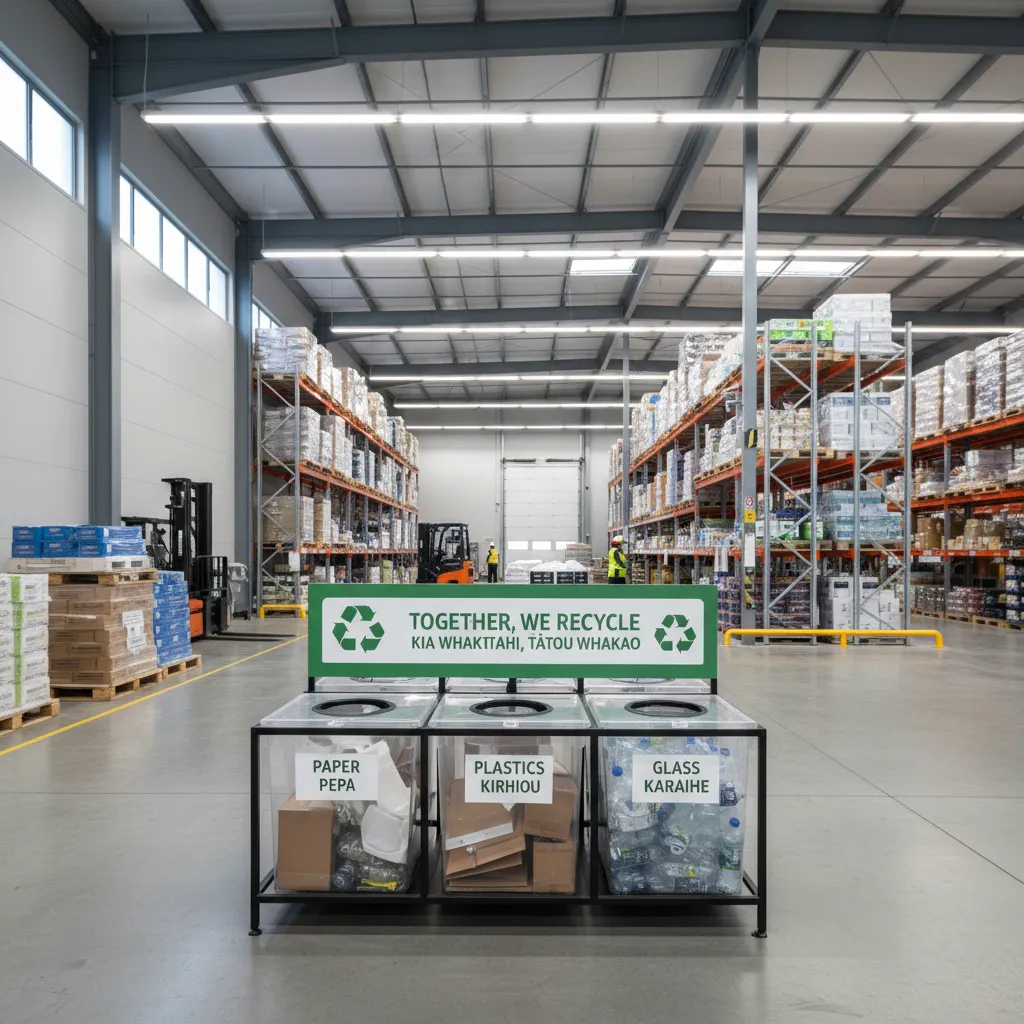
Emissions from waste sent to landfills (which produce methane) are a hidden part of the carbon footprint. By implementing a robust recycling and composting system, SMEs can significantly lower their impact. Furthermore, adopting circular economy principles—such as refurbishing equipment rather than buying new—reduces the “embodied carbon” associated with your business operations.
Marketing Your Green Credentials Authentically
Once you have measured and reduced your footprint, how do you communicate this to your customers? Marketing your sustainability journey is essential for brand loyalty, but it must be done with extreme caution to avoid “greenwashing.”.
Transparency Over Perfection
New Zealand consumers are increasingly cynical about vague claims like “eco-friendly” or “green.” The Commerce Commission’s guidelines on environmental claims are strict. Instead of claiming to be “the greenest company in NZ,” share your data. State clearly: “We have reduced our carbon emissions by 15% over the last two years.” Transparency builds trust more effectively than marketing jargon.
Leveraging Third-Party Certifications
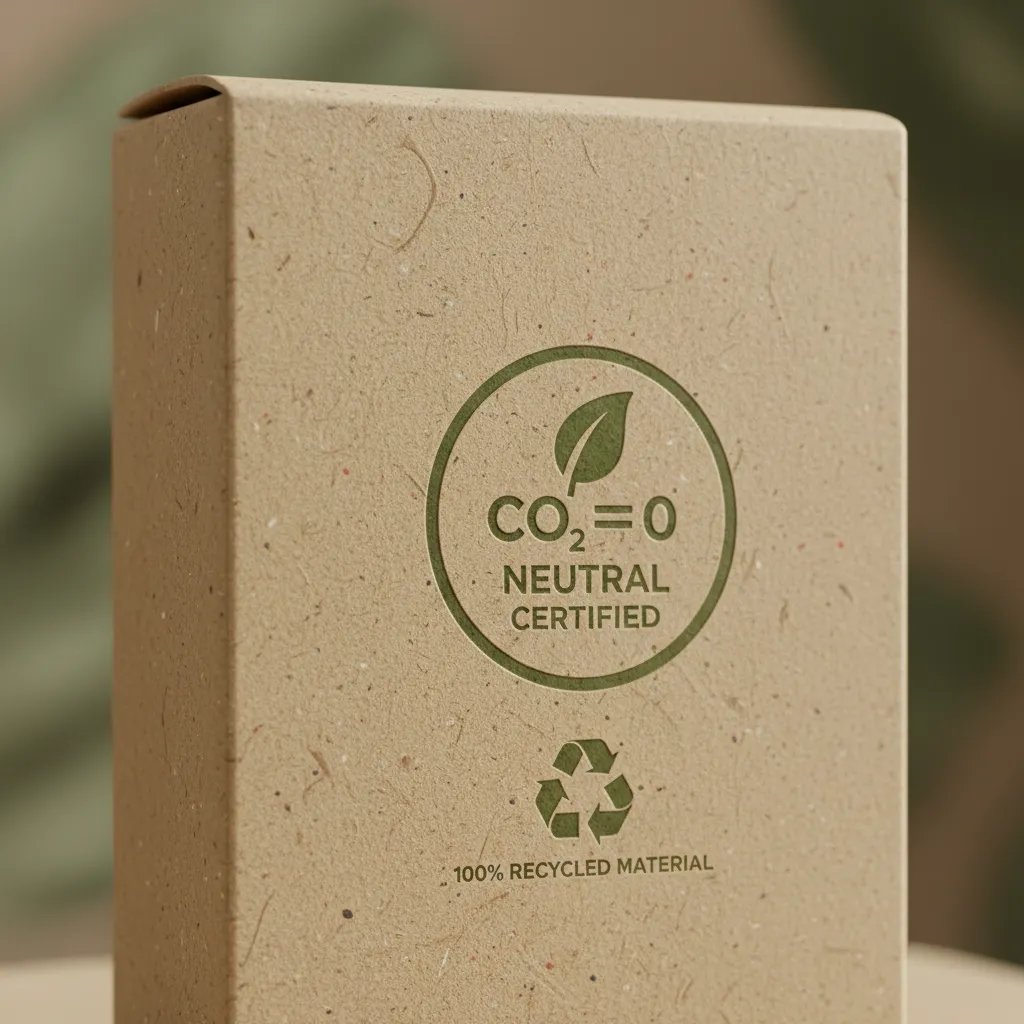
Utilizing logos from Toitū, Ekos, or B Corp provides instant third-party validation. These certifications act as a shorthand for consumers, telling them that your claims have been audited and verified. When featuring these on your website or packaging, ensure you link back to your public disclosure statement or sustainability report.
Storytelling and Local Impact
Kiwi customers love local stories. If your carbon reduction strategy involves supporting a local permanent forest sink or a community garden, tell that story. Use your social media channels to show the behind-the-scenes reality of your sustainability journey—including the challenges you face. This humanizes your brand and makes your green credentials feel authentic rather than corporate.
The Financial Case for SME Decarbonization
Is it worth the investment? Beyond the ethical considerations, the financial case for addressing your SME carbon footprint in NZ is compelling. Firstly, energy and waste reduction directly impact the bottom line. Secondly, as carbon prices rise under the Emissions Trading Scheme (ETS), the cost of high-carbon activities (like air travel and fossil fuel use) will continue to climb.
Furthermore, access to capital is becoming linked to climate performance. Many New Zealand banks, such as ANZ, BNZ, and Westpac, are beginning to offer “sustainable loans” or discounted interest rates for businesses that can prove they are meeting specific environmental targets. By acting now, SMEs can future-proof their operations against regulatory changes and secure a competitive advantage in an increasingly carbon-conscious marketplace.
People Also Ask
Is it mandatory for NZ SMEs to report carbon emissions?
Currently, it is not mandatory for most SMEs under the Zero Carbon Act. However, if you are a supplier to large listed companies or government agencies, they may require your emissions data to fulfill their own mandatory reporting requirements.
What is the difference between Scope 1, 2, and 3 emissions?
Scope 1 covers direct emissions from owned sources (e.g., company vehicles). Scope 2 covers indirect emissions from purchased energy (e.g., electricity). Scope 3 includes all other indirect emissions in the value chain (e.g., business travel, waste, and supply chain).
How much does it cost to get carbon certified in New Zealand?
Costs vary depending on the provider and the size of your business. Basic measurement tools can be free, while formal certification through organizations like Toitū or Ekos can range from a few thousand dollars to significantly more for complex operations.
Can I offset my carbon footprint instead of reducing it?
While offsetting is a valid part of a “Net Zero” strategy, it should only be used for emissions that cannot be eliminated. The primary focus should always be on reduction first, as offsetting does not remove the underlying operational risks associated with carbon.
What is greenwashing and how can my SME avoid it?
Greenwashing is making false or misleading claims about the environmental benefits of a product or service. To avoid it, ensure your claims are specific, evidence-based, and verified by a third party where possible, following the NZ Commerce Commission guidelines.
Are there government grants for NZ SMEs to reduce carbon?
Yes, the Energy Efficiency and Conservation Authority (EECA) offers various programs, including the GIDI (Government Investment in Decarbonising Industry) fund and technology demonstration grants that SMEs can sometimes access or benefit from through industry partnerships.
About The Author
