Sustainable Urban Development NZ
Sustainable urban development NZ refers to the strategic planning and construction of urban environments that balance economic growth with environmental protection and social equity. It prioritizes carbon-neutral infrastructure, compact residential growth near transport hubs, and climate-resilient water management systems to meet New Zealand’s 2050 net-zero emissions targets and satisfy evolving regulatory frameworks.
What is Transit-Oriented Development (TOD) in NZ?
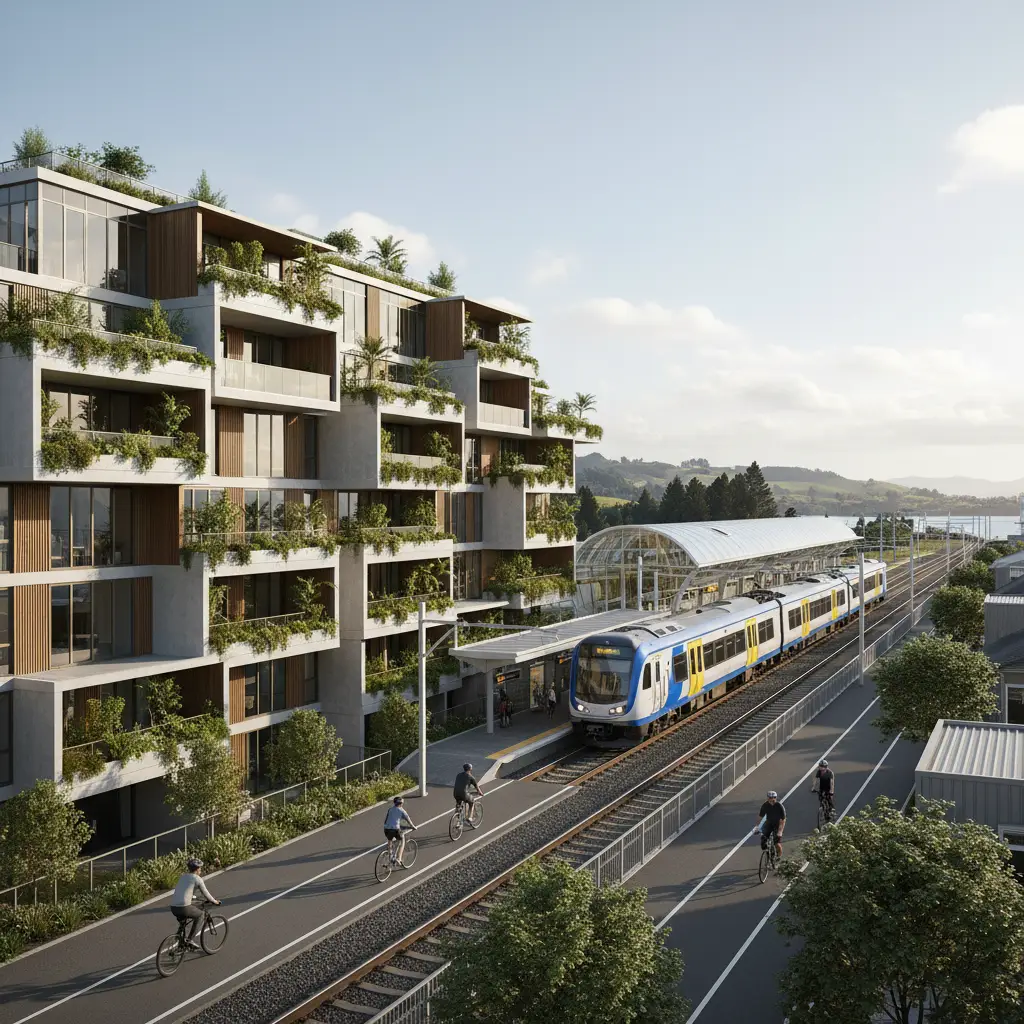
Transit-oriented development (TOD) is a cornerstone of sustainable urban development NZ, focusing on creating high-density, mixed-use communities centered around high-quality public transport nodes. In New Zealand, this strategy is primarily driven by the National Policy Statement on Urban Development (NPS-UD) 2020, which mandates councils to enable greater height and density in areas within walking distance of rapid transit stops. By concentrating growth in these corridors, NZ aims to reduce its heavy reliance on private vehicles, which currently account for a significant portion of the country’s carbon emissions. Projects like Auckland’s City Rail Link (CRL) are transformative, acting as catalysts for urban regeneration. When housing is situated near rail or busway stations, residents are more likely to utilize public transport, reducing traffic congestion and the need for expansive, carbon-heavy roading infrastructure. Furthermore, TOD encourages active modes of transport, such as walking and cycling, by integrating safe, dedicated pathways into the urban fabric. This shift not only supports New Zealand’s climate compliance goals but also fosters more vibrant, socially connected neighborhoods. The removal of mandatory minimum car parking requirements in many urban zones further incentivizes developers to prioritize living space and public amenities over asphalt, aligning with the broader vision of a compact, efficient urban form that preserves the rural-urban boundary and protects productive land.
How does Green Space and Biodiversity Enhance NZ Cities?
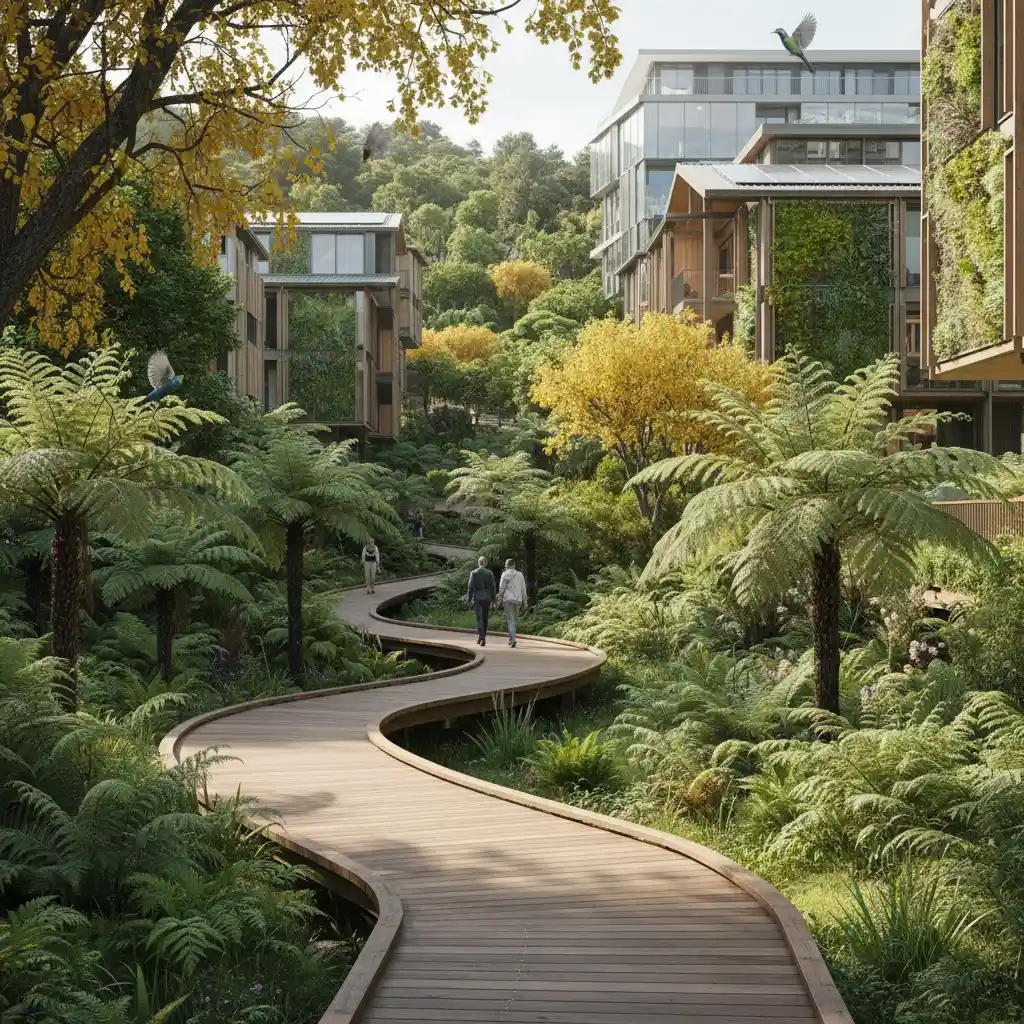
Integrating green space and biodiversity into the urban landscape is essential for maintaining ecological health and human well-being within densifying cities. Sustainable urban development NZ emphasizes the concept of ‘Urban Ngahere’ (urban forests) to combat the ‘urban heat island’ effect and provide habitats for native species. As cities like Wellington and Christchurch increase in density, the preservation and expansion of public parks, community gardens, and ‘pocket parks’ become critical. These green lungs serve as carbon sinks, sequestering atmospheric CO2 and contributing to the carbon economy’s goals. Beyond carbon sequestration, urban biodiversity initiatives focus on planting native flora—such as kōwhai, pōhutukawa, and harakeke—to support local bird populations like tūī and kererū. This approach often incorporates Te Ao Māori principles, recognizing the ancestral connection between the land (whenua) and the people (tangata). By restoring ecological corridors through urban areas, planners can ensure that native wildlife can move safely across the landscape, even in highly developed environments. Moreover, green spaces provide essential recreational areas that support mental health and social cohesion, proving that sustainable development is as much about people as it is about the planet. Developers are increasingly using ‘green roofs’ and ‘living walls’ to integrate nature into the built environment where ground space is limited, ensuring that even the most intensive developments contribute to the city’s overall biodiversity net gain.
What is Water Sensitive Urban Design (WSUD)?
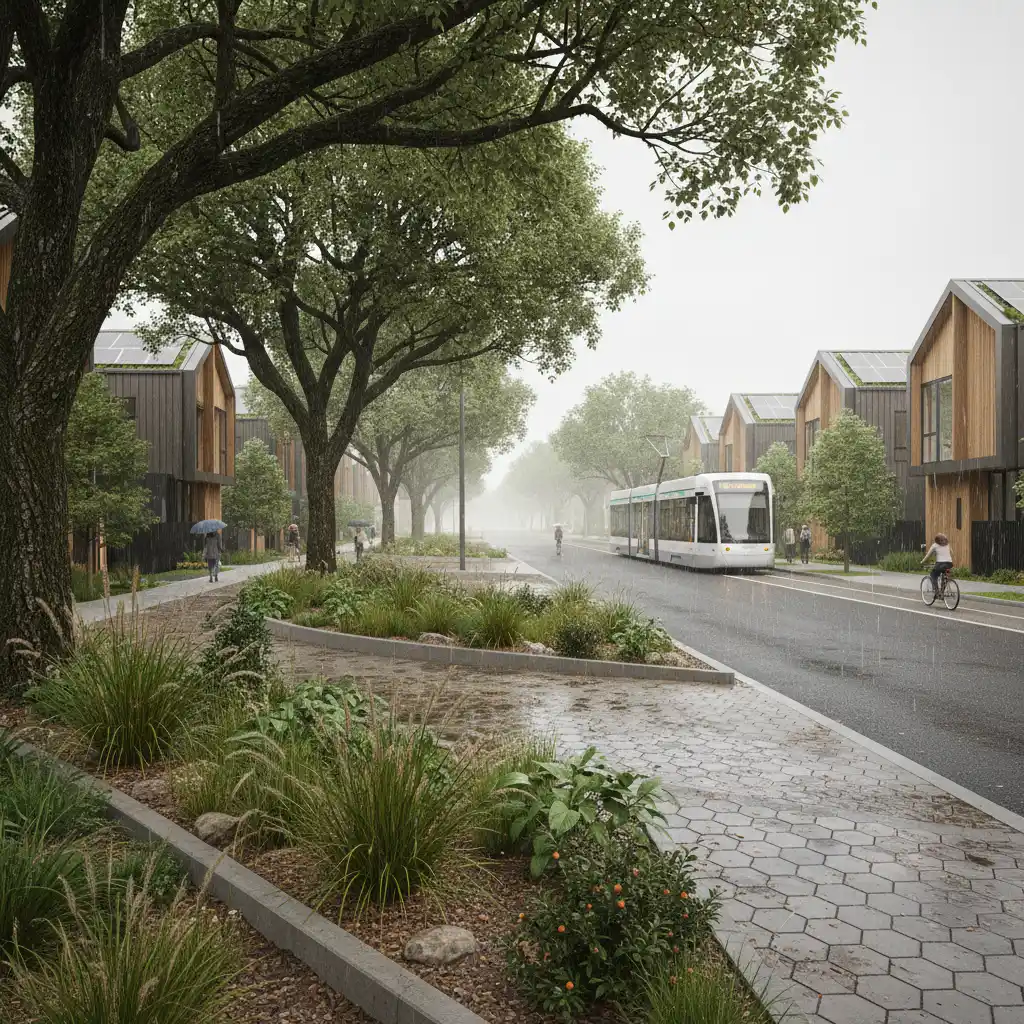
Water Sensitive Urban Design (WSUD) is an integrated approach to managing the urban water cycle, including stormwater, groundwater, and wastewater, to mimic natural hydrological processes. In the context of sustainable urban development NZ, WSUD is becoming a mandatory consideration for developers and councils alike, especially under the ‘Three Waters’ reform discussions and the need for resilient infrastructure. Traditional ‘grey’ infrastructure—pipes and concrete channels—is often overwhelmed by extreme weather events, leading to flooding and the contamination of waterways. WSUD replaces or augments these systems with ‘nature-based solutions’ such as rain gardens, bioswales, and permeable paving. These features allow rainwater to soak into the ground, filtering pollutants naturally before the water reaches the sea or local rivers. In cities like Christchurch, which has seen significant post-earthquake innovation, WSUD elements are integrated into streetscapes to manage runoff while enhancing the aesthetic appeal of the neighborhood. This approach aligns with the principle of Te Mana o te Wai, which prioritizes the health and well-being of water bodies. By reducing the volume and velocity of stormwater runoff, WSUD protects urban infrastructure from erosion and damage, making it a vital component of New Zealand’s climate adaptation strategy. Furthermore, capturing and reusing rainwater for non-potable uses, such as irrigation or toilet flushing, reduces the demand on municipal water supplies, contributing to a more circular and sustainable urban economy.
How to Future-Proof NZ Cities Against Climate Change?
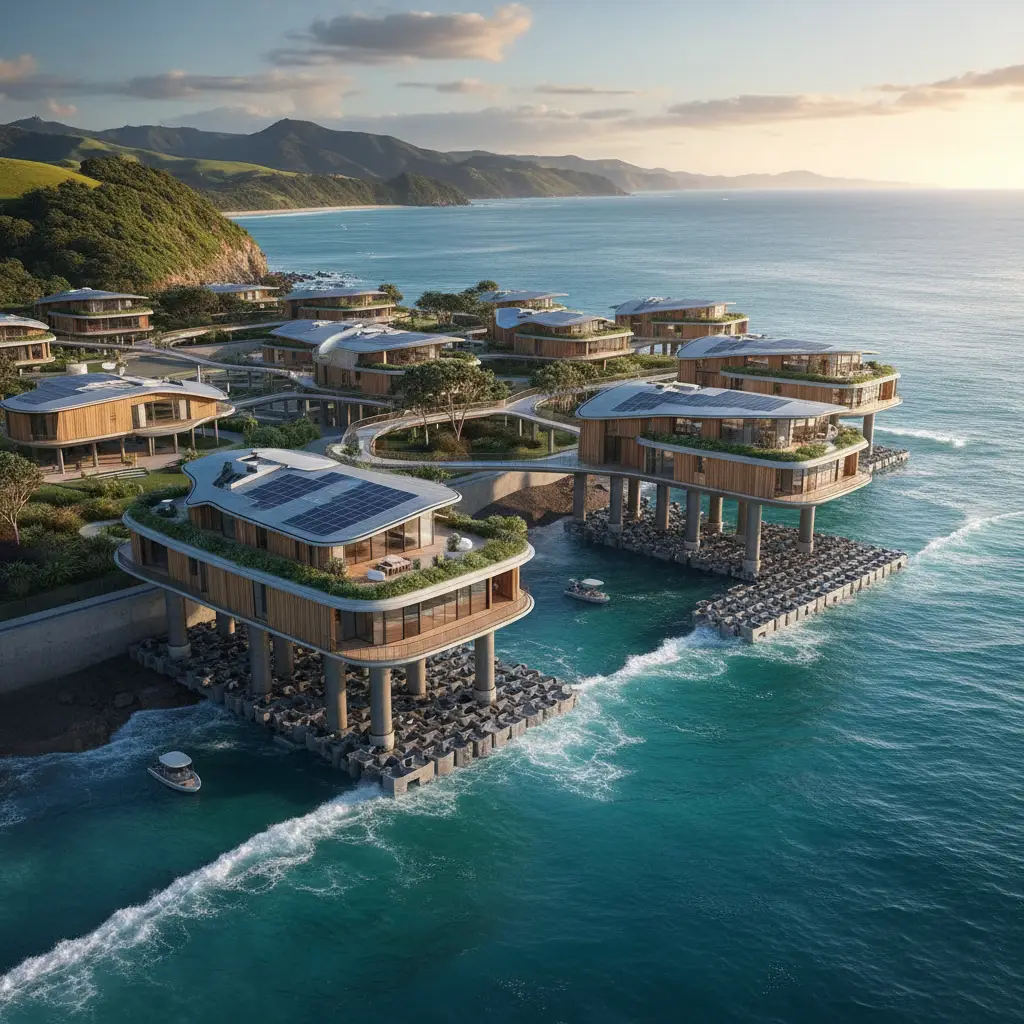
Future-proofing New Zealand’s cities requires a multi-faceted approach that anticipates the long-term impacts of climate change, including sea-level rise, increased frequency of extreme weather, and rising temperatures. Sustainable urban development NZ must move beyond current building codes to embrace higher performance standards, such as the Passive House standard or the New Zealand Green Building Council’s (NZGBC) Homestar and Green Star ratings. These frameworks emphasize superior insulation, airtightness, and energy efficiency, ensuring that buildings remain comfortable and low-cost to operate in a changing climate. Furthermore, coastal cities like Napier, Nelson, and Dunedin are facing the reality of ‘managed retreat’ and the need for adaptive coastal defenses. Planning for future-proofing involves restricting development in high-risk zones and designing infrastructure that can withstand or adapt to inundation. This also includes the ‘decarbonization’ of the construction sector, which is a major contributor to embodied carbon. Using sustainable materials like cross-laminated timber (CLT) instead of traditional steel and concrete can significantly lower the carbon footprint of new developments. Additionally, the integration of distributed energy resources, such as rooftop solar and community batteries, enhances urban resilience by providing localized power sources during grid failures. Future-proofing is not just about physical structures; it is about creating flexible urban systems that can evolve as the environment changes, ensuring the long-term viability of New Zealand’s urban centers in a post-carbon world.
Policy, Compliance, and the NZ Carbon Economy
The transition to sustainable urban development NZ is underpinned by a robust policy framework designed to align the built environment with the country’s international climate commitments. The Climate Change Response (Zero Carbon) Amendment Act 2019 sets the stage, requiring all government policies—including those governing urban planning—to contribute to the goal of net-zero emissions by 2050. This is complemented by the Emissions Reduction Plan (ERP), which outlines specific actions for the transport and building sectors. For developers and investors, this means that ‘business as usual’ is no longer an option. Compliance now involves rigorous carbon accounting and a focus on reducing both operational and embodied emissions. The upcoming reforms to the Resource Management Act (RMA), transitioning into the Natural and Built Environment Act (NBA) and the Strategic Planning Act (SPA), aim to streamline the delivery of sustainable infrastructure while ensuring that environmental limits are respected. This regulatory shift is creating a new ‘carbon economy’ in New Zealand, where sustainability is a key driver of value. Green-certified buildings often command higher rents and experience lower vacancy rates, as corporate tenants increasingly demand spaces that align with their own ESG (Environmental, Social, and Governance) targets. As the cost of carbon rises through the Emissions Trading Scheme (ETS), the financial incentive to adopt sustainable urban development practices becomes even more compelling. By integrating climate compliance into the core of urban strategy, New Zealand is positioning its cities to be leaders in the global transition to a sustainable, low-carbon future.
What is the National Policy Statement on Urban Development?
The NPS-UD 2020 is a government directive that requires councils to provide enough development capacity to meet housing demand. It specifically mandates higher density around transport hubs and the removal of car parking minimums to promote a more compact and sustainable urban form.
How does NZ plan to achieve carbon-neutral cities?
NZ aims for carbon-neutrality through a combination of the Zero Carbon Act, the Emissions Reduction Plan, and the transition to renewable energy. In urban areas, this involves densification, improving public transport, and implementing stricter energy efficiency standards for new buildings.
What is water sensitive urban design in New Zealand?
WSUD in NZ involves using natural systems like rain gardens and swales to manage stormwater. It focuses on protecting the health of water bodies (Te Mana o te Wai) and reducing the risk of urban flooding through nature-based infrastructure.
Why is transit-oriented development important for NZ?
TOD is crucial because it reduces car dependency, which is a major source of NZ’s carbon emissions. By placing housing near transit, it reduces travel times, lowers infrastructure costs, and supports the development of walkable, low-carbon communities.
How is biodiversity integrated into NZ urban planning?
Biodiversity is integrated through ‘Urban Ngahere’ strategies, the use of native plantings in public spaces, and the creation of ecological corridors. This helps restore native bird populations and provides cooling effects to mitigate rising urban temperatures.
What are the challenges of sustainable urban development in NZ?
Challenges include the high cost of infrastructure upgrades, the need for significant legislative reform (RMA), public resistance to densification (NIMBYism), and the physical risks posed by sea-level rise and extreme weather to existing coastal developments.
About The Author
