The Role of the Emissions Trading Scheme (ETS)
The New Zealand Emissions Trading Scheme (NZ ETS) is the cornerstone of New Zealand’s climate change policy, designed to help the country meet its international obligations under the Paris Agreement and domestic targets set by the Climate Change Response (Zero Carbon) Amendment Act 2019.
The New Zealand Emissions Trading Scheme (NZ ETS) is a market-based tool designed to reduce greenhouse gas emissions. It requires businesses to measure and report their emissions and surrender one New Zealand Unit (NZU) for each tonne of carbon dioxide equivalent produced, effectively placing a financial cost on pollution to encourage decarbonisation across the economy.
How the NZ ETS Works: The Cap and Trade Model
At its core, the NZ ETS operates on a ‘cap and trade’ principle. This means the government sets a limit, or ‘cap’, on the total amount of greenhouse gases that can be emitted by sectors covered by the scheme. This cap is reduced over time to align with New Zealand’s 2050 net-zero targets. The ‘trade’ aspect allows participants to buy and sell emission units, known as New Zealand Units (NZUs), within a regulated market.
Who is involved in the NZ ETS?
The scheme covers several key sectors of the New Zealand economy, including forestry, energy, industry, waste, and liquid fossil fuels (such as petrol and diesel used for transport). While agriculture is currently required to report its emissions, it is not yet required to surrender units, making it a unique and often debated component of the scheme. Participants are generally divided into ‘mandatory participants’—those who must report and surrender units—and ‘voluntary participants’, such as foresters who choose to join to earn credits for carbon sequestration.

The Role of the New Zealand Unit (NZU)
The NZU is the primary currency of the NZ ETS. One NZU represents one metric tonne of carbon dioxide equivalent (CO2-e). The government introduces new units into the market through quarterly auctions, while foresters earn units by planting trees that absorb CO2. To meet their legal obligations, emitters must surrender a number of NZUs equal to their annual emissions to the Environmental Protection Authority (EPA). If a company reduces its emissions, it needs fewer units, thereby saving money and providing a financial incentive for green innovation.
Buying and Selling Carbon Credits: The Secondary Market
The NZ ETS creates a dynamic marketplace where the price of carbon is determined by supply and demand. Because the government controls the supply of units through auctions and fixed caps, and emitters create the demand, the price of an NZU fluctuates based on economic activity, policy changes, and technological advancements.
How to trade NZUs?
Trading typically occurs in two ways: through government auctions or on the secondary market. The secondary market consists of private trades between companies, facilitated by carbon brokers or digital trading platforms. Businesses that have excess units (perhaps because they invested in energy efficiency) can sell them to businesses that have exceeded their emission limits. This ensure that emissions reductions happen where they are most cost-effective.

Price Controls and the Cost Containment Reserve (CCR)
To prevent extreme price volatility that could damage the economy, the NZ ETS includes mechanisms like the Cost Containment Reserve (CCR) and the Price Floor. If the price of NZUs hits a predetermined high trigger, the government releases additional units into the auction to increase supply and dampen the price. Conversely, the price floor ensures that the cost of polluting never drops so low that it fails to incentivise change. These levers are reviewed annually by the Climate Change Commission to ensure they remain effective.
Forestry and the ETS: Carbon Sinks and Sequestration
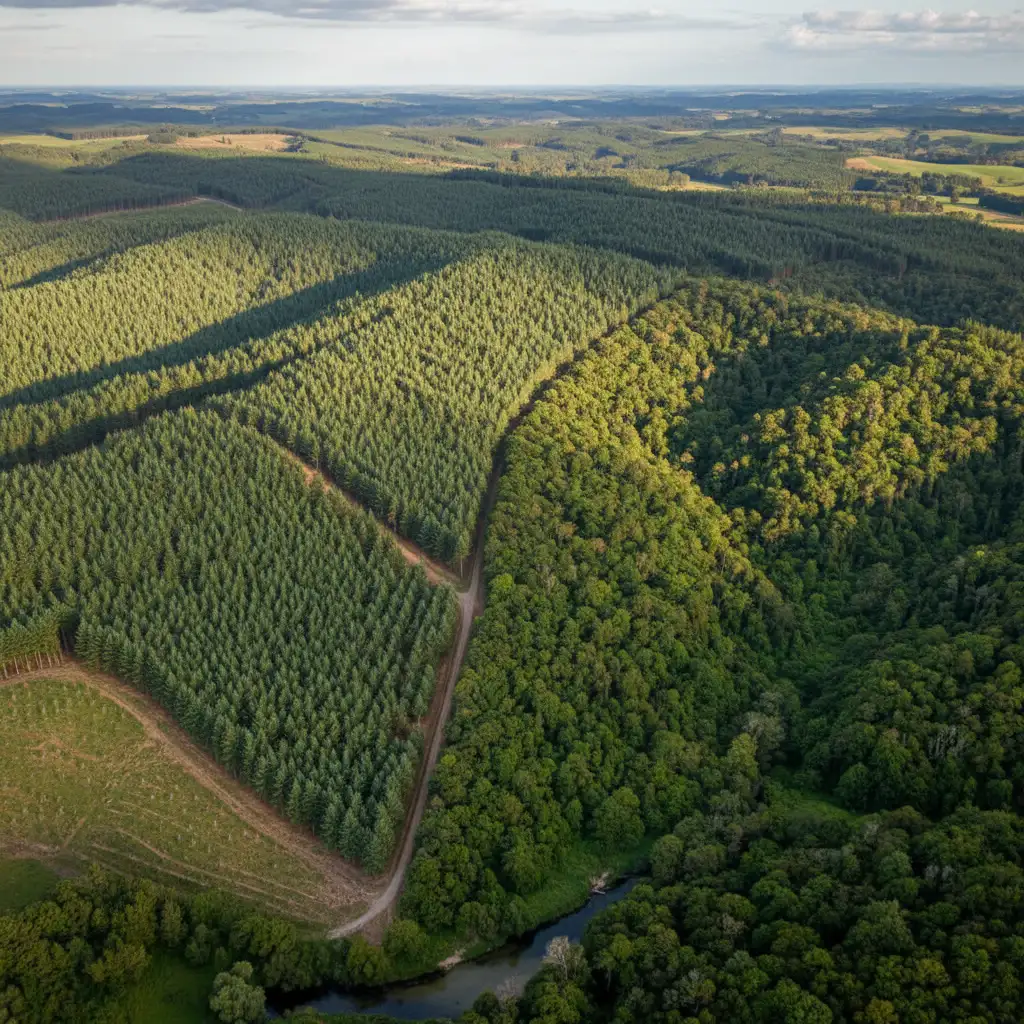
Forestry plays a massive role in the NZ ETS because trees act as ‘carbon sinks,’ absorbing CO2 as they grow. This makes forestry the primary source of ‘removal’ units in the scheme. For landowners, the ETS represents a significant commercial opportunity, but it also comes with long-term land-use obligations.
Post-1989 vs. Pre-1990 Forests
The scheme distinguishes between land that was forested before 1990 and land that was forested after 1989. Owners of ‘Post-1989’ forest land can voluntarily join the ETS to earn NZUs as their trees grow. However, if they harvest the trees without replanting, or if the forest is destroyed, they must pay back (surrender) the units. ‘Pre-1990’ forest owners face stricter rules; they are generally required to keep the land in forest or face heavy deforestation penalties, reflecting the baseline carbon stock New Zealand held when international climate treaties were first signed.
Averaging Accounting and Permanent Forests
Recent reforms have introduced ‘averaging accounting’ for new forests. Under this system, foresters earn NZUs up to the average carbon stock the forest will hold over several harvest cycles. This simplifies the process by removing the need to surrender units upon harvest, provided the land is replanted. Additionally, a new ‘Permanent Forest’ category has been created for those who intend to leave trees standing for at least 50 years, specifically targeting native restoration and long-term carbon storage.
The Zero Carbon Act and Future Outlook
The NZ ETS is not a static policy; it is the engine room of the Zero Carbon Act. The Act mandates that New Zealand reach net-zero emissions of all greenhouse gases (except biogenic methane) by 2050. To achieve this, the government receives independent advice from the Climate Change Commission on ’emissions budgets’—five-year stepping stones that dictate how many NZUs can be in circulation.
Industrial Allocation: Protecting Competitiveness
Some New Zealand industries, like steel and aluminium production, are ’emissions-intensive and trade-exposed’ (EITE). To prevent ‘carbon leakage’—where these businesses simply move overseas to countries with laxer climate rules—the government provides them with some free NZUs. This is known as industrial allocation. However, as the global economy shifts toward decarbonisation, these free allocations are being phased out to ensure all sectors eventually pay the full price of their emissions.

The Agriculture Question
Agriculture accounts for nearly half of New Zealand’s gross emissions, primarily in the form of methane from livestock. Currently, agriculture sits outside the surrender obligations of the ETS. However, the government has been working on a separate pricing mechanism (formerly known as He Waka Eke Noa) to address these emissions. The integration of agriculture into some form of pricing remains one of the most significant and politically sensitive challenges for New Zealand’s climate strategy.
Compliance and Penalties
Participation in the NZ ETS is a legal requirement for many. Participants must open an account in the New Zealand Emission Unit Register (NZETR), which functions like an online bank account for carbon. They must submit annual emissions returns that are subject to audit. Failure to surrender the correct number of units by the annual deadline results in significant financial penalties, often three times the prevailing market price of an NZU, plus the original obligation to surrender the missing units.
People Also Ask
What is the current price of an NZU?
The price of a New Zealand Unit (NZU) varies daily based on market trading. It is influenced by government auction results, policy changes, and supply-demand dynamics. You can check current spot prices on carbon trading platforms like Jarden or Carbon Match.
How do I register for the NZ ETS?
To register, you must apply through the Environmental Protection Authority (EPA) and open an account in the New Zealand Emission Unit Register (NZETR). If you are a landowner with post-1989 forest, you will need to provide mapping data to prove the eligibility of your land.
Which sectors are exempt from the NZ ETS?
Currently, the biological emissions from agriculture (methane and nitrous oxide) are exempt from surrender obligations, though they must report emissions. Small businesses below certain emission thresholds may also be exempt from mandatory participation.
What is the ‘Cost Containment Reserve’ in NZ ETS auctions?
The Cost Containment Reserve (CCR) is a reserve of NZUs that the government releases into an auction if the bidding price hits a specific high threshold. This is designed to prevent the carbon price from spiking too high and causing economic shock.
Can I sell carbon credits from my backyard trees?
Generally, no. To earn NZUs, the forest land must be at least one hectare in size, have a canopy cover of more than 30% from trees capable of reaching five meters in height, and meet specific ‘forest land’ definitions under the Climate Change Response Act.
How does the ETS reduce emissions?
By putting a price on carbon, the ETS makes it more expensive to burn fossil fuels or engage in high-emission activities. This encourages businesses and consumers to switch to cleaner energy sources, improve efficiency, and invest in new technologies to avoid the cost of buying NZUs.