Voluntary Carbon Markets NZ
Voluntary carbon markets in New Zealand allow businesses and individuals to purchase carbon credits on a discretionary basis to offset their greenhouse gas emissions, separate from the mandatory New Zealand Emissions Trading Scheme (NZ ETS). These markets primarily fund projects like native forest regeneration, offering biodiversity benefits alongside carbon sequestration to support corporate social responsibility (CSR) goals.
As the global urgency to combat climate change intensifies, New Zealand stands at a pivotal juncture. While the government-regulated New Zealand Emissions Trading Scheme (NZ ETS) handles compliance for large emitters, a parallel ecosystem is flourishing: the voluntary carbon market (VCM). This sector is driven not by regulation, but by the proactive desire of Kiwi businesses and international investors to achieve Net Zero status, enhance brand reputation, and restore local biodiversity.
Understanding the nuances of voluntary carbon markets NZ is essential for any stakeholder looking to navigate the complex landscape of the Zero Carbon Act, verified standards, and high-integrity offsets.
What are Voluntary Carbon Markets in New Zealand?
The voluntary carbon market in New Zealand represents a mechanism where carbon credits are traded by entities that are not legally obliged to reduce their emissions but choose to do so. Unlike the compliance market, which is driven by government caps on emissions, the voluntary market is fueled by corporate sustainability goals, consumer demand for low-carbon products, and investor pressure regarding Environmental, Social, and Governance (ESG) criteria.
In this marketplace, one carbon credit typically equates to one tonne of carbon dioxide equivalent (CO2e) that has been either prevented from entering the atmosphere or removed from it. In the New Zealand context, the market is heavily skewed towards removal credits—specifically through forestry—rather than avoidance credits (like renewable energy projects), which are more common in developing nations.

VCM vs. NZ ETS: Understanding the Difference
A common point of confusion for businesses is distinguishing between the voluntary market and the compliance market. It is critical to understand that these are currently two distinct systems, although they influence one another.
The New Zealand Emissions Trading Scheme (NZ ETS)
The NZ ETS is the government’s primary tool for meeting international climate obligations. It requires certain sectors (transport, energy, waste, etc.) to surrender New Zealand Units (NZUs) to cover their emissions. This is a mandatory legal obligation.
The Voluntary Carbon Market (VCM)
The VCM operates outside this cap-and-trade system. A business might calculate its carbon footprint and purchase voluntary credits to claim “carbon neutrality” or “climate positive” status. Crucially, under current guidelines, credits used for voluntary offsetting should be cancelled or retired so they cannot be sold again. There is also a complex debate regarding “double counting”—whether a voluntary credit also counts towards New Zealand’s Nationally Determined Contributions (NDCs) under the Paris Agreement.
Verified Carbon Standard (VCS) and Integrity
Trust is the currency of the voluntary carbon market. Without rigorous verification, credits are worthless, often labelled as “hot air.” To ensure integrity, New Zealand projects often align with recognized international and domestic standards.
International Standards: Verra and Gold Standard
The Verified Carbon Standard (VCS), managed by Verra, is the world’s most widely used voluntary GHG program. While less common for small NZ projects due to high audit costs, large-scale forestry projects may seek VCS accreditation to appeal to international buyers. Similarly, the Gold Standard focuses heavily on sustainable development co-benefits.
Domestic Standards: Toitū and Ekos
In New Zealand, local providers have established high-integrity frameworks tailored to the unique flora and fauna of the country.
- Toitū Envirocare: A subsidiary of Manaaki Whenua – Landcare Research, Toitū offers science-based certification. Their carbonzero and carbonreduce programmes are the gold standard for NZ businesses proving their claims.
- Ekos: Specializes in indigenous forest carbon. Ekos connects buyers with projects that ensure the growth of resilient, permanent native forests rather than monoculture pine plantations.
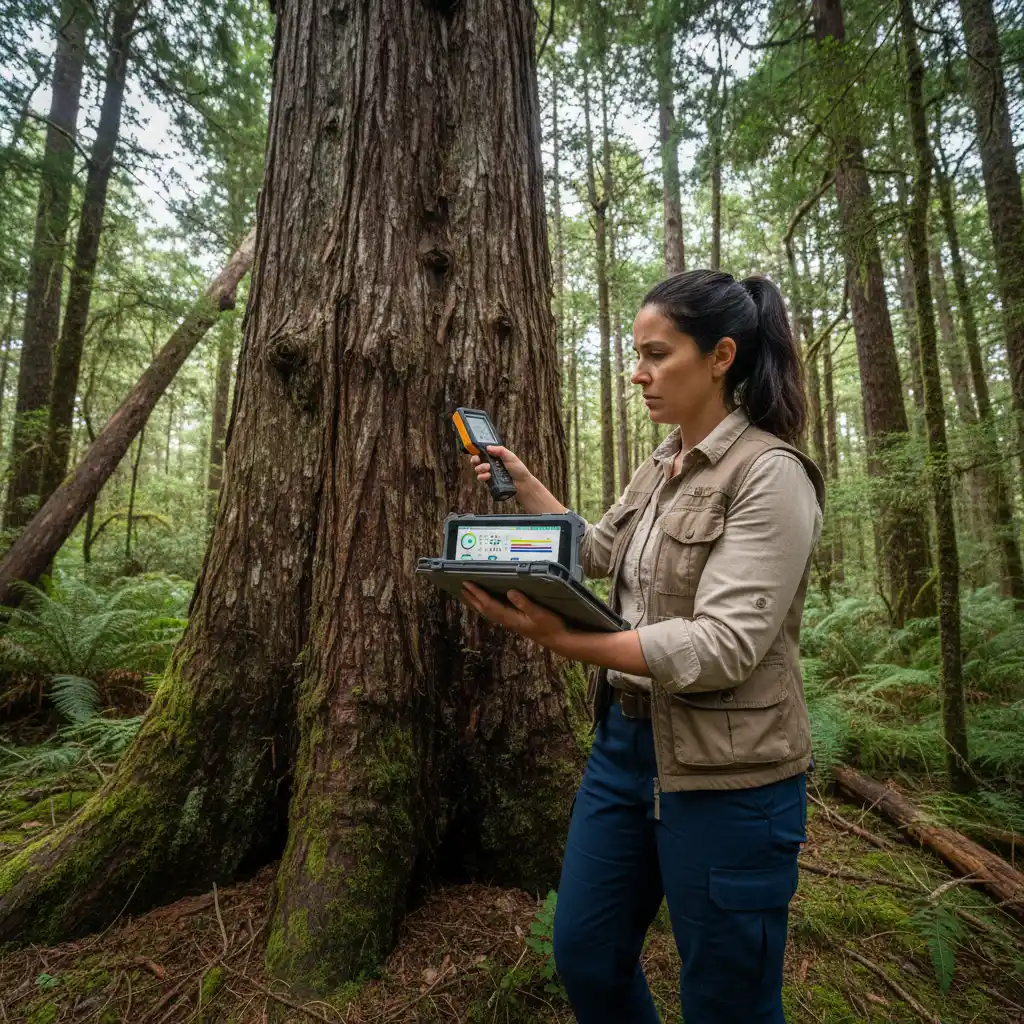
The Premium Value of Native Forest Offsets
Not all carbon credits are created equal. In the New Zealand voluntary market, there is a significant price and prestige bifurcation between exotic (Pinus radiata) and native forest credits.
Why Native Credits Command a Premium
Native forest offsets are highly sought after by NZ corporations. While exotic pine grows fast and sequesters carbon quickly (making it cheaper), it arguably offers fewer ecological co-benefits and carries risks regarding long-term landscape permanence and fire susceptibility.
Native regeneration (Manuka, Kanuka, Totara, Rimu) sequesters carbon more slowly but offers:
- Biodiversity Enhancement: Habitat for endangered birds like the Kiwi and Kākāpō.
- Water Quality Improvement: Better filtration and reduced erosion compared to harvested pine.
- Cultural Heritage: Alignment with Kaitiakitanga (guardianship) principles valued by Māori landowners and stakeholders.
Because of these factors, voluntary credits generated from native forests often trade at a significant premium compared to NZUs or international generic credits. Buyers are paying for the story and the ecological integrity as much as the carbon molecule.
Corporate Social Responsibility (CSR) & ESG Strategy
The driving force behind the demand for voluntary carbon markets in NZ is the evolution of Corporate Social Responsibility (CSR) into rigorous Environmental, Social, and Governance (ESG) frameworks.
Beyond Greenwashing
In the past, CSR might have involved a simple donation or a tree-planting day. Today, stakeholders—including banks, insurers, and institutional investors—demand quantifiable climate action. Companies are utilizing VCMs to:
- Manage Reputational Risk: Consumers are increasingly scrutinizing green claims. Using high-quality NZ-based offsets provides a defensible position against accusations of greenwashing.
- Attract Talent: Younger generations prefer working for employers with clear climate strategies.
- Supply Chain Requirements: Large entities (like supermarkets or government agencies) are beginning to require their suppliers to disclose and offset emissions (Scope 3 emissions).
However, the narrative is shifting. The priority in CSR is now “Reduction First, Offset Second.” Companies must demonstrate they are reducing their gross emissions before buying credits to neutralize the residual unavoidable emissions.

Implications of the Zero Carbon Act
The Climate Change Response (Zero Carbon) Amendment Act 2019 set a domestic target for New Zealand to reduce net emissions of all greenhouse gases (except biogenic methane) to zero by 2050.
The Role of Voluntary Action in National Targets
This legislation creates a complex environment for the voluntary market. If a NZ company buys a credit from a NZ forest to offset its emissions, and the NZ government also counts that forest’s sequestration toward the national 2050 target, a theoretical “double claiming” issue arises. The government gets the benefit, and the company claims the benefit.
Despite this technicality, the government encourages voluntary action. The Climate Change Commission has signaled that voluntary offsetting should be additional to the hard work of decarbonization. Future policy updates may clarify the distinction between credits used for “Carbon Neutral” claims (which may need corresponding adjustments) and “Contribution Claims” (where companies fund climate action without claiming the neutralization of their own emissions).
How to Buy and Sell Voluntary Credits
Participating in the voluntary carbon market requires due diligence. Unlike the NZ ETS, there is no single centralized exchange for voluntary credits, making the market fragmented and “Over-The-Counter” (OTC) by nature.
For Buyers (Corporates)
- Assess Footprint: Use a certified calculator (e.g., Toitū) to measure Scope 1, 2, and 3 emissions.
- Select Projects: Choose between local native projects (high cost, high story value) or reputable international projects (lower cost).
- Purchase & Retire: Buy the credits through a broker or registry (like Carbonz or CarbonClick) and ensure they are retired in a public registry to prevent resale.
For Sellers (Landowners)
- Eligibility Check: Land must meet specific criteria regarding vegetation cover and history (post-1989 forest land).
- Measurement: Engage a forestry consultant to model carbon sequestration rates.
- Registration: Register with a standard (Ekos, PFSI, or NZ ETS if aiming to convert NZUs to voluntary markets).

Current Market Challenges and Risks
While the VCM offers immense potential, it is not without risks. Participants must navigate a landscape that is rapidly evolving.
Price Volatility
The price of voluntary credits is not fixed. It fluctuates based on supply (how many trees are planted), demand (corporate profits and economic climate), and regulatory changes. Native credits generally hold value better due to scarcity, but they are a long-term investment.
The Integrity Crisis
Global scrutiny on voluntary markets has increased following reports that some international REDD+ projects (avoided deforestation) overstated their impact. This has led to a “flight to quality.” New Zealand projects are generally viewed as high-integrity due to our strong legal frameworks and scientific monitoring, positioning NZ voluntary credits as a premium product globally.
Regulatory Uncertainty
The NZ government is currently reviewing the ETS and permanent forestry settings. Changes to how permanent forests are treated in the ETS will inevitably ripple through to the voluntary market prices and supply.
People Also Ask
What is the price of a voluntary carbon credit in NZ?
The price varies significantly based on the project type. While standard NZUs (compliance units) fluctuate based on market auctions (often between $50-$80 NZD), voluntary native forest credits typically command a premium, often trading between $80 to over $120 NZD per tonne due to their biodiversity co-benefits and scarcity.
Can I use NZ ETS units for voluntary offsetting?
Yes, businesses can purchase New Zealand Units (NZUs) from the compliance market and voluntarily cancel (retire) them. This effectively takes that allowance out of the general pool, tightening the cap on national emissions. However, many businesses prefer specific voluntary credits (like Ekos) because they are tied to a specific local forest project with a tangible story.
Is carbon trading taxable in New Zealand?
Yes, generally. For landowners, income derived from selling carbon credits is usually treated as taxable income. For businesses purchasing credits, the cost may be deductible depending on whether it is considered a marketing expense (CSR) or a cost of goods sold. It is highly recommended to consult a tax specialist familiar with the ETS and forestry rights.
What is the difference between carbon neutral and net zero?
“Carbon Neutral” typically implies balancing emitted carbon with offsets, often covering a specific timeframe or product. “Net Zero” is a more rigorous, science-based standard (like SBTi) requiring a company to reduce its emissions by 90%+ in line with 1.5°C warming limits, using offsets only for the final <10% of unavoidable emissions.
How do native forest offsets help biodiversity?
Unlike monoculture pine plantations which support limited wildlife, native forest regeneration restores complex ecosystems. This provides food sources (berries, nectar) and habitat for New Zealand’s unique birdlife, insects, and lizards, effectively solving two crises (climate and biodiversity) simultaneously.
Are voluntary carbon markets regulated in NZ?
The voluntary market itself is not directly regulated by the government in the same way the NZ ETS is. However, consumer protection laws (Fair Trading Act) apply to claims made about carbon neutrality. The Financial Markets Authority (FMA) also monitors “green” financial products to prevent misleading conduct.
About The Author
