Youth Climate Action NZ Resources
Youth climate action NZ refers to the coordinated mobilization of rangatahi (young people) across Aotearoa to influence legislative policy, specifically the Zero Carbon Act, through grassroots movements like School Strike 4 Climate, local government youth advisory groups, and educational initiatives centered on Kaitiakitanga and climate justice.
The Landscape of Youth Climate Action in Aotearoa
New Zealand occupies a unique position in the global fight against climate change. With its “clean, green” image often scrutinized against the reality of high agricultural emissions, the youth of Aotearoa have stepped into a critical accountability role. The movement here is not merely about protest; it is deeply integrated with the legislative framework of the Climate Change Response (Zero Carbon) Amendment Act 2019.
For students, educators, and policymakers, understanding the ecosystem of youth climate action NZ requires looking beyond the headlines. It involves a complex network of NGOs, student councils, and indigenous advocacy groups working to ensure that the government’s goal of net-zero carbon emissions by 2050 is met with tangible, immediate action rather than deferred promises.

The Role of Generation Zero
Before diving into current school strikes, it is essential to acknowledge the groundwork laid by groups like Generation Zero. This youth-led organization was instrumental in drafting the blueprint for the Zero Carbon Act. Their success demonstrated that youth climate action in NZ is capable of high-level policy architectural work, moving beyond awareness campaigns to drafting actual legislation. Today’s youth movements stand on this foundation, pushing for the enforcement and strengthening of these laws.
School Strike 4 Climate NZ: Demands and History
School Strike 4 Climate (SS4C) NZ remains the most visible face of the movement. Inspired by Greta Thunberg’s Fridays for Future, the New Zealand chapter has mobilized record-breaking numbers, including the historic 2019 strike which saw an estimated 170,000 people march across the country—one of the largest protests in New Zealand history.
Core Demands of SS4C NZ
Unlike some international counterparts, SS4C NZ has tailored its demands to the specific geopolitical and cultural context of Aotearoa. Their platform typically revolves around five key pillars:
- Te Tiriti o Waitangi Justice: Recognizing that climate justice is indigenous justice. This involves returning land to Māori and ensuring iwi (tribes) lead the climate response.
- Halting Fossil Fuel Exploration: A complete ban on new exploration permits and the cancellation of existing consents.
- Agricultural Emissions Pricing: Bringing agriculture—NZ’s largest emitter—fully into the Emissions Trading Scheme (ETS).
- Regenerative Agriculture: Subsidizing a transition away from intensive dairy farming toward sustainable land use.
- lowering the Voting Age: Advocating for “Make it 16” to give youth a direct say in their climate future.
Participating in SS4C provides students with practical experience in civic engagement, logistics, and media relations. For those looking to get involved, local chapters operate in most major cities including Auckland, Wellington, Christchurch, and Dunedin.

Youth Advisory Groups & Policy Influence
Protest is the external pressure; advisory groups are the internal mechanism for change. Across New Zealand, various government bodies and NGOs have established Youth Advisory Groups (YAGs) to formalize the input of young people into climate policy.
Ministry for the Environment (MfE) & Local Councils
The Ministry for the Environment often convenes youth panels to review policy documents before they go to public consultation. Furthermore, local councils, heavily involved in climate adaptation planning (managing sea-level rise and infrastructure), are increasingly establishing youth boards.
Joining a local council youth advisory group is one of the most effective ways to influence “youth climate action NZ” at a granular level. These groups often influence:
- Public Transport Subsidies: Pushing for free or discounted fares for students to reduce car dependency.
- Waste Management: Implementing circular economy initiatives within the district.
- Urban Planning: Ensuring cycleways and green spaces are prioritized in new developments.
How to Join a Youth Advisory Group
Positions are usually advertised annually. Aspiring members should demonstrate a basic understanding of the Local Government Act and the Resource Management Act (RMA), although passion and a willingness to learn are often the primary criteria. Look for opportunities with organizations like The Hive, which bridges the gap between youth voice and government policy.
Educational Toolkits for Students and Teachers
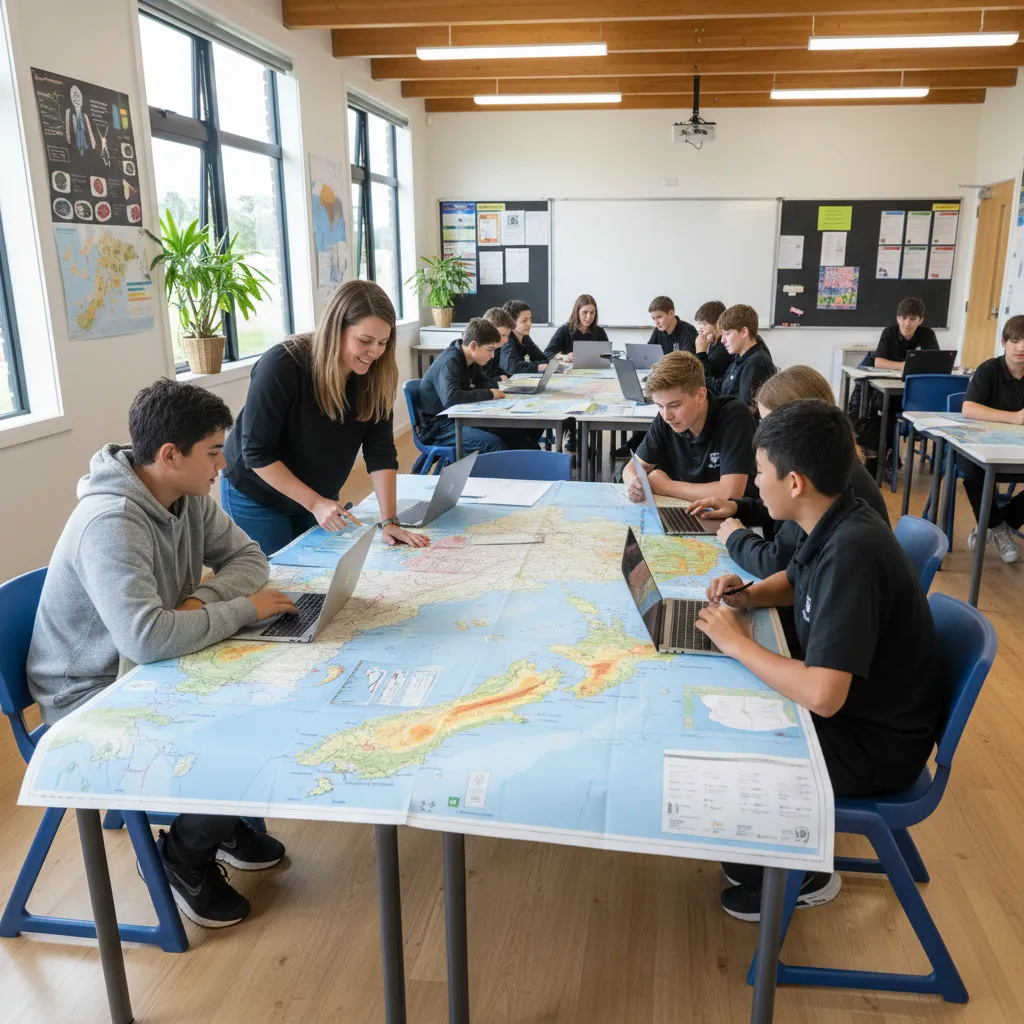
For climate action to be sustained, it must be supported by education. There is a wealth of resources available for New Zealand schools designed to integrate climate science and civic action into the curriculum.
Enviroschools
The Enviroschools program is a nationwide action-based education program where young people plan, design, and implement sustainability projects. It is not just about recycling; it is a holistic approach to “living lightly” on the planet. Schools can achieve Bronze, Silver, or Green-Gold status based on their integration of sustainability into school life.
Science Learning Hub – Pokapū Akoranga Pūtaiao
This is a premier resource for NZ-specific climate data. It connects students with real science being conducted by Crown Research Institutes (CRIs) like NIWA and GNS Science. Key topics covered include:
- Evidence of Climate Change in NZ: Glacial retreat data and temperature records.
- Ocean Acidification: Impacts on NZ’s kaimoana (seafood) stocks.
- Mitigation Strategies: The science behind methane inhibitors in agriculture.
Climate Change Commission Resources
The Climate Change Commission (He Pou a Rangi) provides accessible summaries of their advice to the government. These documents are excellent for senior high school students studying geography or social studies, as they provide primary source material on the economic and social pathways to decarbonization.
Te Ao Māori and Indigenous Youth Leadership
In Aotearoa, effective climate action cannot exist without Te Ao Māori (the Māori worldview). Indigenous youth are leading the charge in framing climate change not just as a scientific crisis, but as a spiritual and whakapapa (genealogical) crisis.
Te Ara Whatu
Te Ara Whatu is a group of rangatahi Māori and Pasifika fighting for climate justice. They represent indigenous voices at UN climate talks (COP) and work locally to ensure that the transition to a zero-carbon economy does not disproportionately harm indigenous communities.
Their resources emphasize Kaitiakitanga (guardianship). This concept goes beyond “conservation”; it implies a reciprocal relationship with the environment where the land cares for the people only if the people care for the land. For educators and student activists, incorporating these values is crucial for building an inclusive movement.
How to Start Your Own Action Group
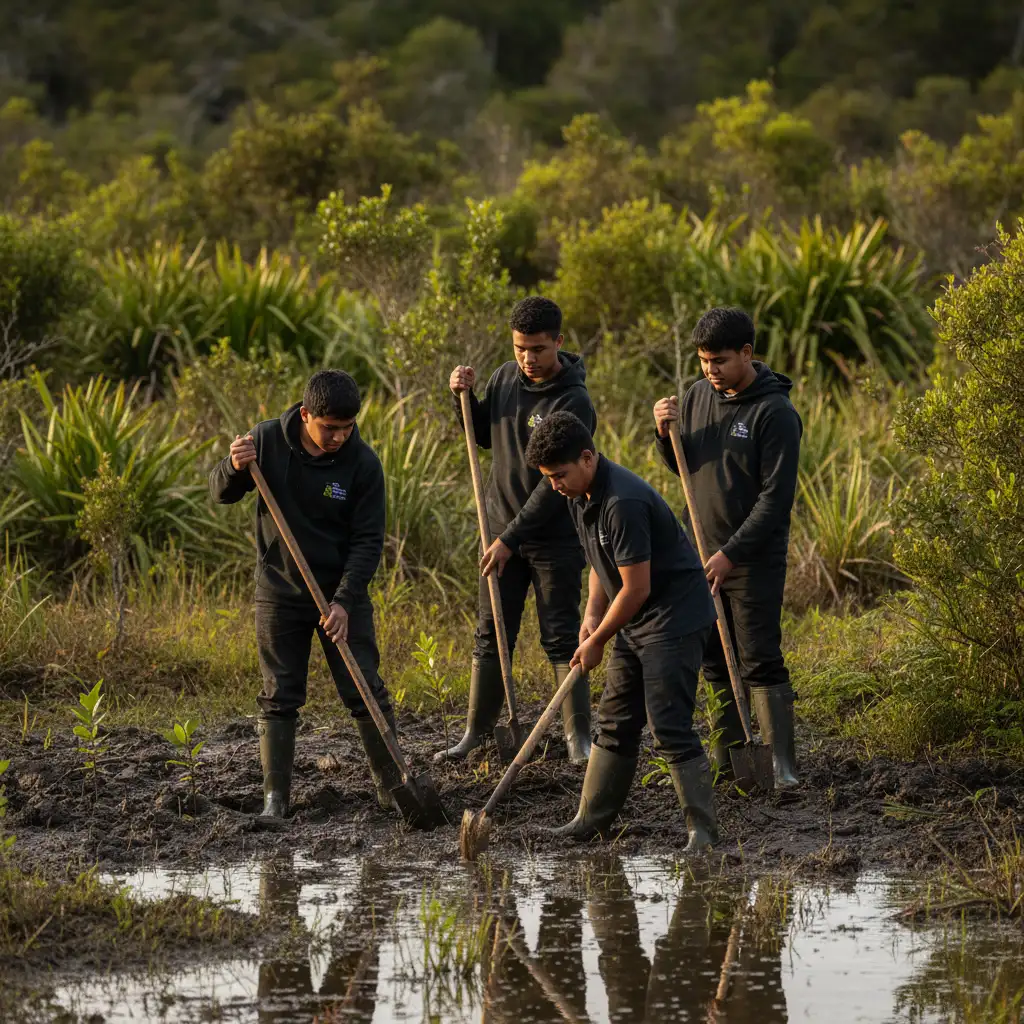
If there isn’t an existing branch of SS4C or a youth council in your area, starting a local group is a powerful way to contribute to youth climate action in NZ. Here is a step-by-step framework:
1. Define Your Scope
Are you focused on national policy (lobbying MPs) or local action (tree planting, waste reduction)? A narrow focus often yields better results in the beginning.
2. Understand the Legal Framework
New Zealand law protects the right to peaceful protest. However, if you are organizing strikes during school hours, you need to navigate school policies. Work with sympathetic teachers and Boards of Trustees. Present your group as an educational extension, not a disruption.
3. Connect with National Networks
Don’t reinvent the wheel. Reach out to the New Zealand Climate Action Network (NZCAN) or 350 Aotearoa. They can provide resources, graphic design assets for flyers, and sometimes small grants for event costs.
4. Leverage Social Media
NZ youth activism lives on Instagram and TikTok. Create content that breaks down complex policy (like the Emissions Trading Scheme) into digestible, shareable videos. Visual storytelling is key to recruitment.
Frequently Asked Questions
What is the Zero Carbon Act and why does it matter for youth?
The Climate Change Response (Zero Carbon) Amendment Act 2019 is the legal framework committing NZ to net-zero carbon emissions by 2050. It matters to youth because it legally binds the government to climate targets, ensuring that the burden of climate change is not passed entirely to the next generation.
How can I join School Strike 4 Climate NZ?
You can join by following their official social media channels (Instagram/Facebook) to find your local chapter. They regularly post details about upcoming strikes, hui (meetings), and sign-making workshops.
Are there grants available for youth climate projects in NZ?
Yes, grants are often available through local councils (Community Grants), the Ministry for Youth Development, and specific environmental trusts like the WWF New Zealand Conservation Fund.
What is the voting age campaign related to climate action?
The “Make it 16” campaign argues that because 16 and 17-year-olds will bear the brunt of climate change consequences, they should have the right to vote for the leaders making those decisions today.
How does Te Tiriti o Waitangi relate to climate action?
Te Tiriti guarantees Māori authority over their lands and taonga. Climate action in NZ must uphold these rights, ensuring Māori are partners in decision-making and that climate policies do not infringe on indigenous sovereignty.
Can I get NCEA credits for climate action?
Yes, specifically in subjects like Education for Sustainability (EfS), Geography, and Social Studies. Projects involving climate activism, research, or community action can often be assessed against NCEA achievement standards.
About The Author
