Register for ETS Small Forester
To register for the ETS as a small forester, you must own at least one hectare of post-1989 forest land that meets specific crown cover and height requirements. The process involves mapping your forest land accurately, providing proof of ownership, and submitting a formal application through the Ministry for Primary Industries’ Tupu-ake online portal.
What are the Eligibility Requirements for Small Land Parcels?
Registering for the New Zealand Emissions Trading Scheme (ETS) as a small forester requires a thorough understanding of what constitutes “forest land” under the Climate Change Response Act 2002. A small forester is generally defined as a participant who has less than 50 hectares of forest land registered in the scheme. However, the foundational eligibility remains consistent across all scales.
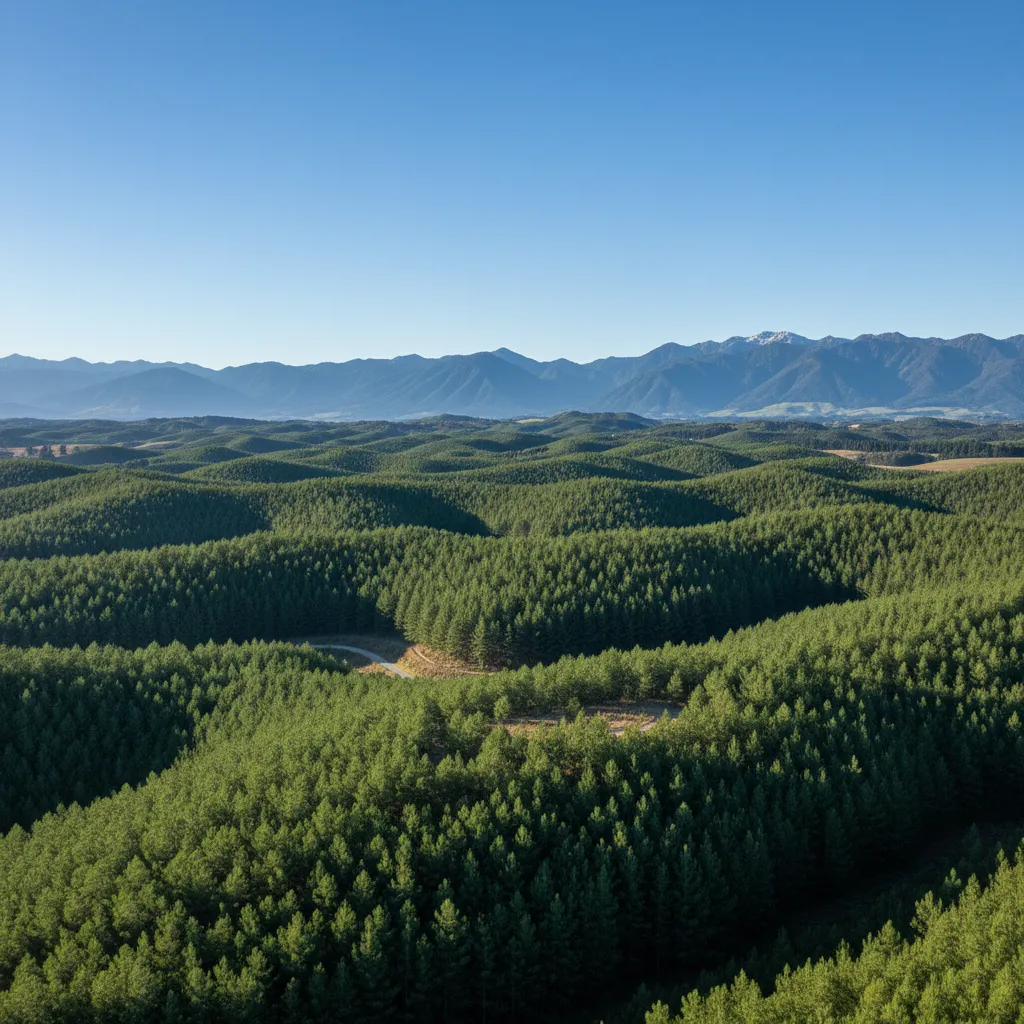
To be eligible for registration, your land must be considered “post-1989 forest land.” This means the land was not forest land on December 31, 1989, or if it was, it was deforested between January 1, 1990, and December 31, 2007. The land must currently be in forest or being converted to forest. The ETS defines a forest as an area of at least one hectare with forest species that have (or have the potential to reach) a height of at least five meters at maturity in the place they are growing. Additionally, these trees must provide a canopy cover of more than 30% in each hectare.
The 50-Hectare Threshold
While any landowner with more than one hectare can apply, the “small forester” classification (under 50 hectares) often benefits from simplified reporting and lower administrative hurdles compared to large-scale commercial operations. If your total forest landholding exceeds 50 hectares, you move into a different tier of reporting, which may require more frequent or detailed emissions returns. For those with small parcels, the focus is often on diversifying farm income or contributing to local biodiversity while earning New Zealand Units (NZUs).
What are the Mapping Requirements for ETS Registration?
One of the most technical aspects of the application is the creation of digital maps. The Ministry for Primary Industries (MPI) requires precise geospatial data to define the Carbon Accounting Areas (CAAs) you wish to register. These maps must adhere to strict standards to ensure that the area of forest is calculated accurately, as this directly dictates the number of NZUs you can claim.
Mapping for a small forester involves identifying the boundaries of the forest species. You must exclude areas that do not meet the forest definition, such as wide tracks, clearings larger than 0.1 hectares, or areas with non-forest species like gorse or blackberry that won’t reach the required height. The maps must be submitted as shapefiles (.shp) or in a format compatible with the Tupu-ake system.

Common Mapping Pitfalls
Many small foresters face application delays due to mapping errors. Common issues include overlapping boundaries with neighboring properties, including riparian strips that are too narrow to meet the 30-meter width requirement, or failing to account for internal gaps in the canopy. It is often recommended to use a professional forestry consultant or a GIS specialist to ensure the shapefiles meet the MPI’s Section 60 standards. Accurate mapping is the bedrock of your registration; if the area is overestimated, you may face penalties later for over-claiming credits.
What is the Step-by-Step Application Process?
The process of registering for the ETS has been modernized through the Tupu-ake portal, but it still requires careful attention to detail. Following these steps will ensure a smoother transition from landowner to carbon participant.
Step 1: Set Up Your Digital Identity
Before accessing the ETS systems, you must have a verified RealMe identity. This is the standard secure login for New Zealand government services. Once your RealMe is active, you will need to create an account in the Tupu-ake portal, which is the dedicated platform for managing forestry in the ETS.
Step 2: Define Your Carbon Accounting Areas (CAAs)
Using your GIS data, you will define your CAAs. A CAA is a specific area of land that you intend to manage as a single unit for carbon accounting. You can have multiple CAAs within one registration. During this stage, you will also need to decide whether you are entering the land under “Averaging Accounting” or as a “Permanent Forest.”
Step 3: Submit the Application
Once your CAAs are defined and your documentation is uploaded, you submit the application for review. MPI will assess the eligibility of the land, the accuracy of the maps, and your legal right to the land. This review process can take several months depending on the complexity of the application and the current volume of requests.

Step 4: Opening a Registry Account
If your application is approved, you are not yet ready to receive credits. You must also open an account in the New Zealand Emissions Trading Register (NZETR), often referred to as the “holding account.” This is essentially a digital bank account where your NZUs will be deposited once you file an emissions return.
What Fees and Documentation are Needed?
Registering for the ETS is not free, and small foresters should budget for both government fees and professional service costs. As of the latest updates, MPI charges a fee for processing an application to add post-1989 forest land. This fee covers the administrative costs of verifying the land’s history and the mapping data provided.
Required Documentation
You must prove that you have the legal right to register the land. This usually requires a Record of Title. If the land is owned by a trust, a copy of the Trust Deed is necessary. If there are multiple owners or if the land is leased, you will need written consent from all interested parties. Furthermore, documentation proving the land’s status as of 1989—such as historical aerial photography or records of previous land use—may be requested if the land’s history is not immediately clear from MPI’s records.
Estimated Costs
While government fees are fixed (typically ranging from $500 to $2,000 depending on the complexity and number of CAAs), the hidden costs lie in professional advice. A GIS specialist might charge $1,000 to $3,000 for mapping, and a forestry consultant may charge similar fees for the initial eligibility assessment. For a small forester, these upfront costs are an investment that is usually recouped through the first issuance of NZUs.
Understanding Carbon Accounting Regimes
When you register, you must choose how you will account for your carbon. For most new registrations of small forests, the choice is between Averaging Accounting and Permanent Forest. This decision is critical as it dictates your long-term financial returns and liabilities.
Averaging Accounting: This is the default for most new forests. Under this regime, you receive credits for the first growth cycle of the forest up to a certain point (the average carbon stock). Once the forest reaches its average carbon level, you stop receiving credits, but you also don’t have to pay them back when you harvest, provided you replant. This removes the “harvest liability” that previously deterred many small foresters.
Permanent Forest: If you do not intend to harvest the timber for at least 50 years, you can register as a Permanent Forest. In this category, you continue to earn credits for as long as the forest grows, but the penalties for clearing the land are significantly higher. This is often the preferred choice for native restoration projects.

Compliance and Ongoing Obligations
Registration is just the beginning. As a participant in the ETS, you have ongoing legal obligations. The most important of these is filing Emissions Returns. For small foresters, these are typically filed every five years during a Mandatory Emissions Return Period (MERP), although you can choose to file voluntary returns annually to receive your credits sooner.
You must also notify MPI if there are changes to the land, such as a change in ownership, a fire that destroys part of the forest, or a decision to harvest. Failure to comply with these reporting requirements can lead to significant fines. Furthermore, the ETS is subject to legislative changes. Staying informed about government policy updates is essential for protecting your investment in the carbon economy.
People Also Ask
How much does it cost to register for the ETS as a small forester?
The current application fee for adding post-1989 forest land is approximately $500 to $800 per application, but you should also factor in costs for professional mapping and legal advice, which can add $2,000 to $5,000 to the total setup cost.
Can I register native forest in the ETS?
Yes, native forests are eligible as long as they were established after 1989 on land that was not previously forested. Native forests often qualify for the ‘Permanent Forest’ category, allowing for long-term credit earning.
What is the minimum land size for ETS registration?
The minimum area is one hectare. This hectare must meet the forest definition, including a minimum width of 30 meters and the potential to reach 5 meters in height with 30% canopy cover.
Do I need a consultant to register for the ETS?
While not legally required, it is highly recommended. The mapping requirements and eligibility rules are complex, and errors can lead to application rejection or future financial liabilities.
How are carbon credits (NZUs) calculated for small forests?
For forests under 100 hectares, credits are calculated using regional look-up tables provided by MPI. These tables estimate carbon sequestration based on the species, age of the trees, and the region in New Zealand.
What happens if my forest is destroyed by fire or wind?
If your forest is destroyed by a natural event, you must notify MPI. Depending on your accounting regime, you may not have to pay back credits immediately, but you will generally stop earning new credits until the forest recovers to its previous state.
About The Author
