ETS Registration for Landowners
ETS registration for landowners is the formal process by which owners of eligible post-1989 forest land in New Zealand join the Emissions Trading Scheme to earn New Zealand Units (NZUs) for carbon sequestration. Managed by Te Uru Rākau (New Zealand Forest Service), registration requires submitting precise geospatial mapping, proving land eligibility, and committing to ongoing reporting of carbon stock changes.
Participating in the New Zealand Emissions Trading Scheme (NZ ETS) offers a significant opportunity for landowners to monetize the carbon sequestration of their forests. However, it is a complex regulatory environment governed by the Climate Change Response Act 2002. Whether you are looking to register a new pine plantation or regenerating native bush, understanding the nuances of eligibility, mapping standards, and long-term liabilities is crucial for success.
This comprehensive guide details the technical requirements for registering forest land, the transition to “averaging accounting,” and the specific obligations required to maintain compliance and avoid penalties.
Am I Eligible for ETS Registration?
Before investing time in mapping and application fees, landowners must conduct a rigorous eligibility assessment. The NZ ETS distinguishes strictly between “Post-1989” forest land and “Pre-1990” forest land. Only Post-1989 forest land can be voluntarily registered to earn carbon credits (NZUs).
What Defines Post-1989 Forest Land?
To register, your land must meet the definition of “Post-1989 forest land.” This means the land was not forest land on 31 December 1989, or it was forest land on that date but was deforested between 1 January 1990 and 31 December 2007, and subsequently reverted to forest.
Furthermore, the current forest must meet specific physical metrics to qualify:
- Area: The forest must cover at least one hectare (1 ha).
- Width: It must have an average width of at least 30 meters.
- Canopy Cover: The trees must be capable of reaching at least 30% canopy cover in each hectare at maturity.
- Height: The tree species must be capable of reaching at least 5 meters in height at maturity in that specific location.
Exclusions and Ineligible Vegetation
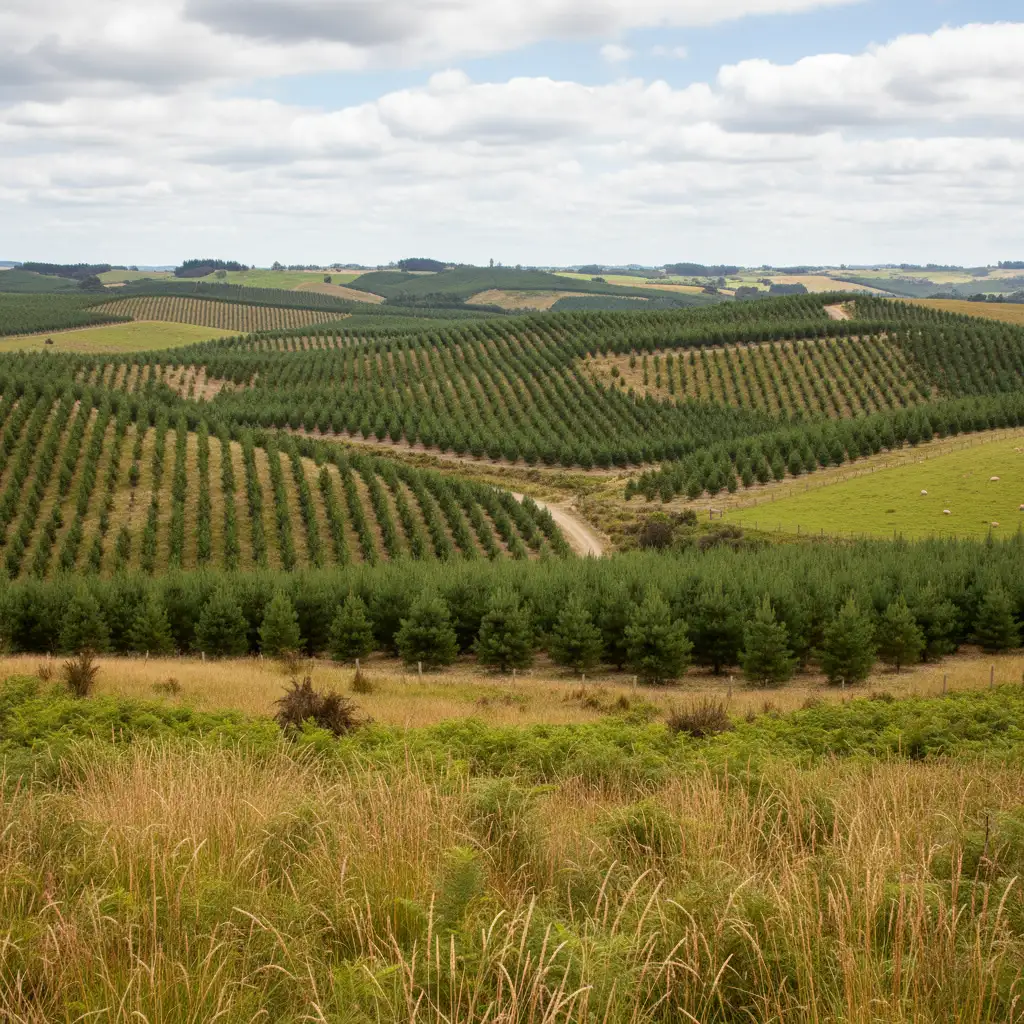
Not all woody vegetation qualifies. Fruit and nut trees, shelterbelts (unless they meet specific width requirements and are not pruned to prevent canopy closure), and certain ornamental plantings are generally excluded. Additionally, if the land was already established forest prior to 1990, it is considered “Pre-1990 forest land.” You cannot register this land to earn credits; however, you face liabilities if you deforest it.
The Application Process and Mapping Requirements
The application process is handled through the Ministry for Primary Industries (MPI) online portal, Tupu-ake. The most critical component of your application is the geospatial mapping.
How to Prepare Compliant Shapefiles?
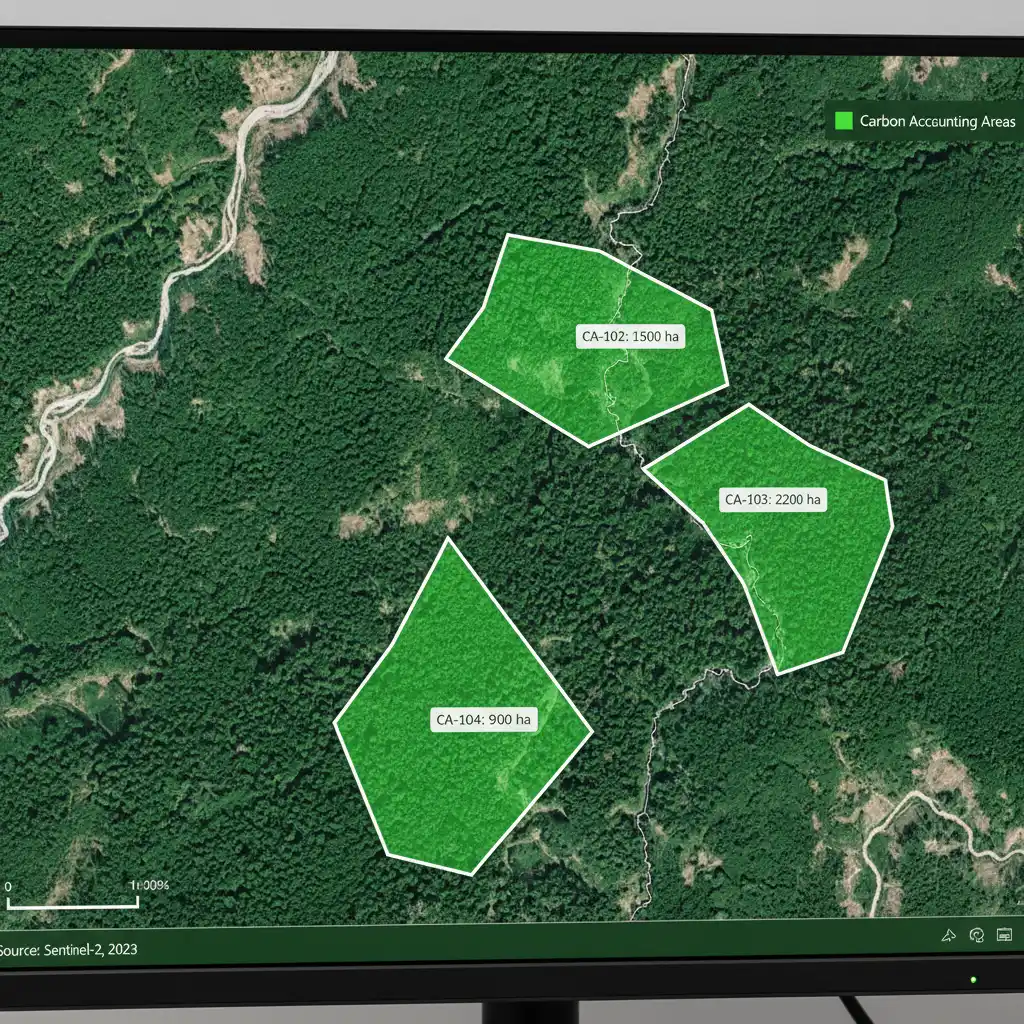
You cannot simply draw lines on a PDF map. The ETS requires precise digital mapping data, typically submitted as shapefiles (.shp) compatible with GIS software. These maps must adhere to the Geospatial Mapping Information Standard.
Your mapping must clearly delineate:
- Carbon Accounting Areas (CAAs): The specific areas of forest you are registering.
- Exclusions: Any gaps in the forest (e.g., roads, rocky outcrops, waterways) that exceed specific thresholds must be mapped out.
- Forest Type: Sub-areas must be categorized by forest type (e.g., Radiata Pine, Douglas Fir, Indigenous).
Failure to map exclusions accurately is the most common reason for application rejection. If a clearing is larger than 15 meters wide, it generally must be excluded from the Carbon Accounting Area.
Submitting via Tupu-ake
Once your shapefiles are ready, you will create an account on Tupu-ake. The process involves:
- Party Registration: Registering the legal entity (individual, trust, or company) that owns the land.
- Land Registration: Uploading the shapefiles and legal titles to prove ownership.
- Declaration: Confirming the land status (Post-1989) and agreeing to the scheme’s obligations.
Breakdown of Fees and Administrative Costs
Entering the ETS is not free. The government recovers costs through various fees, and landowners often incur private consultant costs. Understanding these expenses is vital for calculating the net return on your carbon investment.
MPI Application Fees
As of the latest regulations, MPI charges specific fees for processing applications. While these are subject to change, you should budget for:
- Registration Fee: A fee for processing the application to register as a participant.
- Land Inclusion Fee: A fee for adding Carbon Accounting Areas (CAAs) to your registration. This is often calculated based on the complexity or number of areas.
- Annual Fees: There is an annual charge for maintaining an account in the New Zealand Emissions Trading Register (NZETR).
Consultancy and Mapping Costs
Most landowners engage a forestry consultant to handle the mapping and eligibility assessment. Professional mapping services ensure that the shapefiles meet the strict geospatial standards, reducing the risk of rejection. These costs vary significantly based on the size of the land and the complexity of the terrain but are often tax-deductible as business expenses for carbon farmers.
Carbon Accounting: Averaging vs. Stock Change
One of the most significant changes in recent years is the shift in accounting methods. The method you use determines how many NZUs you receive and when.
What is Averaging Accounting?
For all new post-1989 forests registered from 2023 onwards, Averaging Accounting is the default method. Under this system, you earn carbon credits as the forest grows until it reaches its long-term “average carbon stock.”
The key benefit of averaging is that you do not have to surrender units when you harvest, provided you replant the forest. This removes the significant liability risk at harvest time that existed under the old system. Once the forest reaches its average age (e.g., roughly age 16-17 for Pinus radiata), you stop earning credits, but you can harvest and replant without penalty.
What is Stock Change Accounting?
Stock Change (or “carbon stock change”) was the previous standard. Participants earned credits for every tonne of growth and surrendered credits for every tonne removed at harvest. While this allowed for earning credits over a longer period (up to usually 28 years for pine), it created a massive liability at harvest. This method is now largely restricted to existing participants or specific categories of permanent forestry.
Permanent Forestry Category
Landowners can also choose the “Permanent Forestry” category. Under this category, you use the stock change method and earn credits for as long as the forest grows (potentially 50+ years for exotics, longer for natives). However, you are legally prohibited from clear-felling the forest for at least 50 years. This is a high-commitment option suitable for steep, erosion-prone land where harvesting is uneconomic.
Ongoing Reporting Obligations and Audits
Registration is not a “set and forget” activity. Being an ETS participant carries legal status similar to filing tax returns. You are dealing with tradable financial instruments (NZUs), and the penalties for non-compliance are severe.
Mandatory Emissions Returns
You must file an Emissions Return at least once every mandatory reporting period (typically every five years). However, most participants choose to file annually to receive their allocation of NZUs sooner for cash flow purposes.
The Emissions Return calculates the change in carbon stock over the period. It requires:
- Updated mapping (if boundaries changed).
- Reference to the standard look-up tables provided by MPI (for forests under 100 hectares).
- Field Measurement Approach (FMA) data (for forests over 100 hectares).
The Field Measurement Approach (FMA)
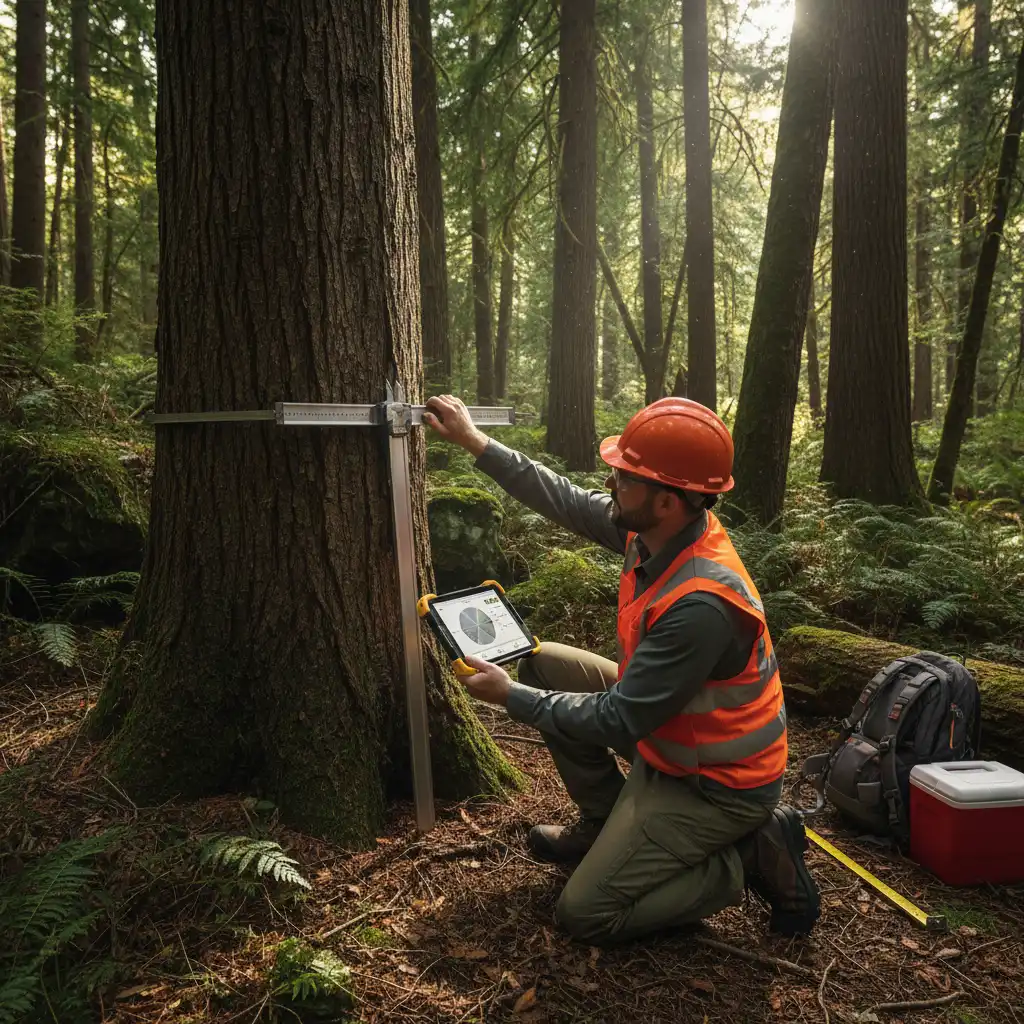
If you register more than 100 hectares of forest, you cannot use the standard look-up tables. You are required to participate in the Field Measurement Approach. This involves establishing physical sample plots in your forest to measure actual growth. This data is used to create participant-specific look-up tables, ensuring that the credits you receive reflect the actual biomass of your specific forest rather than a national average.
Audit and Compliance
MPI conducts regular audits of ETS participants. They may inspect your mapping, request evidence of land ownership, or conduct site visits to verify forest existence and health. If you are found to have claimed more units than you were entitled to, you will be required to repay the units, often with penalties and interest.
Frequently Asked Questions
Can I register native bush in the ETS?
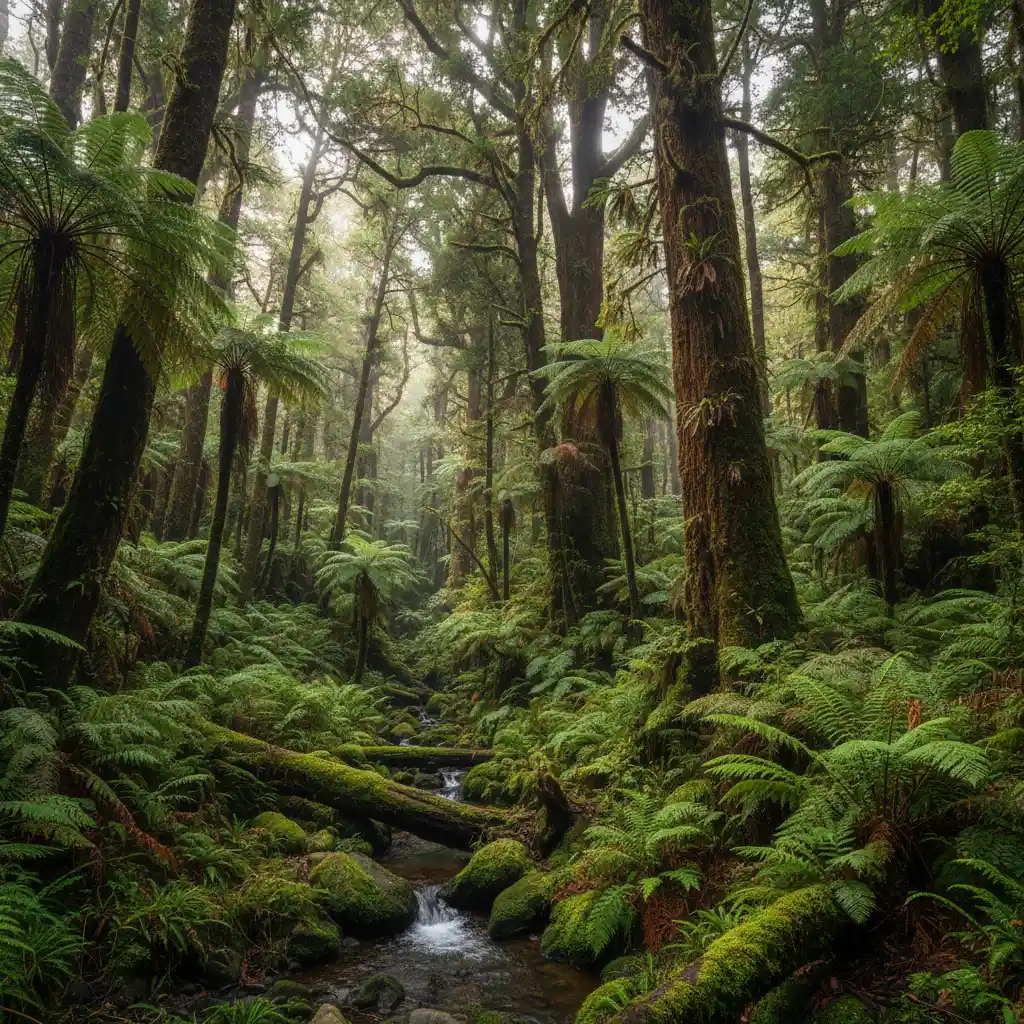
Yes, you can register native bush (indigenous forest) if it meets the post-1989 criteria. This means the land must have been pasture or non-forest land in 1989 and has since reverted to native forest (either naturally or via planting). Native forests sequester carbon slower than exotics, meaning fewer annual credits, but they are often favored for biodiversity and long-term permanent forestry options.
How much does it cost to register for the ETS?
The direct fees to MPI typically constitute several hundred dollars for the application and land inclusion. However, the primary cost is the professional services for geospatial mapping and consultancy, which can range from $1,500 to over $5,000 depending on the size and complexity of the land. Ongoing annual fees for the NZETR account are roughly $30 per year.
What happens if I sell the land?
If you sell registered ETS land, the participation and obligations generally transfer to the new owner. However, you must inform MPI of the transfer. If you wish to retain the carbon credits earned prior to the sale, this must be negotiated in the sale and purchase agreement, but the liability for the forest usually passes to the new landowner.
Can I leave the ETS once I have registered?
Yes, you can deregister from the ETS at any time. However, upon deregistration, you must surrender (pay back) all the NZUs you have earned for that land up to that point. This “unit surrender” acts as an exit fee, ensuring that the carbon credits in circulation represent actual stored carbon.
What is the minimum land size for ETS registration?
The minimum size for a single Carbon Accounting Area (CAA) is 1 hectare. The area must also have an average width of at least 30 meters. Narrow strips of planting (like riparian strips) that are less than 30 meters wide are generally not eligible, even if they are long enough to exceed 1 hectare in total area.
Do I need to pay tax on carbon credits?
Generally, yes. The receipt of NZUs is often treated as taxable income by the Inland Revenue Department (IRD) at the time they are sold or deemed to be revenue. Furthermore, the value of the forest growth itself may have tax implications. It is highly recommended to consult with an accountant specializing in agri-business and forestry taxation.
About The Author
