Post-1989 Forest Land Requirements
Post-1989 forest land is defined under the New Zealand Emissions Trading Scheme (ETS) as land that was not forest land on 31 December 1989, or land that was forest on that date but was deforested between 1 January 1990 and 31 December 2007. To qualify, the area must contain eligible tree species capable of reaching five meters in height and achieving 30% crown cover.
What is Post-1989 Forest Land?
In the context of New Zealand’s climate change policy and the carbon economy, the distinction between “Pre-1990” and “Post-1989” forest land is the single most critical classification for landowners. Post-1989 forest land represents the primary vehicle for active participation in carbon sequestration markets. Unlike Pre-1990 forest land, which carries automatic deforestation liabilities, Post-1989 forest land offers voluntary entry into the New Zealand Emissions Trading Scheme (NZ ETS) to earn New Zealand Units (NZUs).
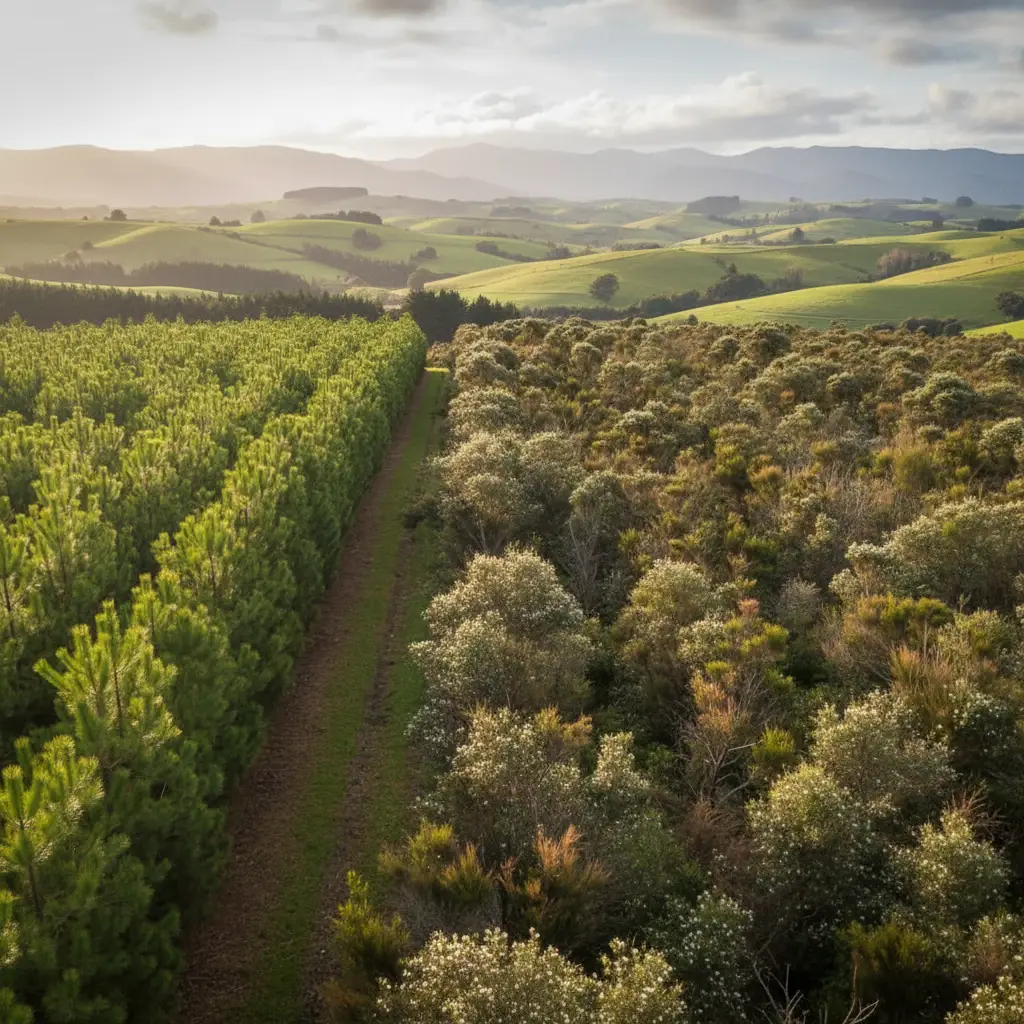
The classification hinges on the land use status as of midnight on 31 December 1989. If the land was pasture, gorse, or scrub at that specific moment and was subsequently planted or allowed to regenerate into forest, it falls into the Post-1989 category. This distinction allows the New Zealand government to meet international obligations under the Kyoto Protocol and the Paris Agreement by incentivizing new afforestation.
Eligibility Criteria for the NZ ETS
Not all trees planted after 1989 qualify as “forest land” for the purpose of earning carbon credits. The Ministry for Primary Industries (MPI) and Te Uru Rākau (New Zealand Forest Service) enforce strict geospatial and biological metrics to ensure the integrity of the carbon units issued.
Biological Requirements
To be eligible, the forest species used (whether exotic like Radiata Pine or indigenous like Totara and Manuka) must be biologically capable of reaching specific thresholds at maturity in that specific location:
- Height: The trees must be capable of reaching at least 5 meters.
- Canopy Cover: The trees must be capable of covering more than 30% of the land area (crown cover) at maturity.
Geospatial Dimensions
The physical layout of the forest block is equally important. To register a Carbon Accounting Area (CAA), the land must meet the following minimums:
- Area: The forest block must be at least 1 hectare in size.
- Width: The average width of the forest block must be at least 30 meters.
These rules prevent narrow shelterbelts, fruit orchards, or scattered ornamental plantings from entering the ETS, as these are not considered “forests” under international carbon accounting standards.
Evidence Required for Land History
One of the most challenging aspects of registering Post-1989 forest land is the burden of proof. The landowner must definitively prove the land’s status as of 31 December 1989. If the land was already forest at that date, it is likely Pre-1990 forest land, which is ineligible for earning new credits (and carries liability if cleared).
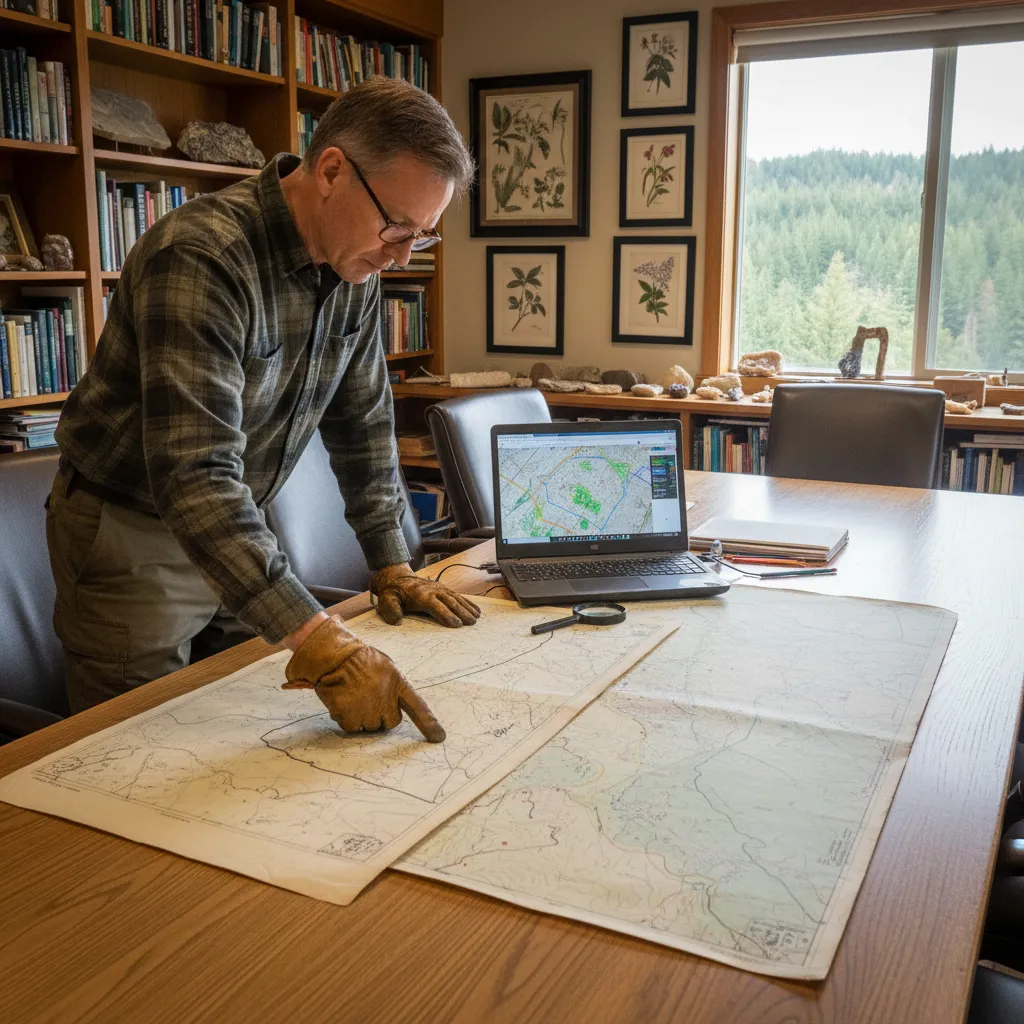
To successfully register, you must provide robust evidence demonstrating that the land was not forest on the cutoff date. This usually involves a combination of historical imagery and vegetation analysis.
Acceptable Forms of Evidence
1. Historical Aerial Photography:
This is the gold standard. High-resolution scans of aerial surveys taken near 1989 are used to visually confirm land cover. If clouds obscure the view or the photo date is too far from 1990, supplementary evidence is required.
2. Farm Records and Diaries:
Verified farm diaries recording stock numbers, grazing rotations, or land clearing activities (like crushing gorse) in the late 80s can support the claim that the land was under pastoral management.
3. Vegetation Age Assessment:
In cases where the forest is regenerating natives, stump analysis or core sampling of the oldest trees can prove that the current vegetation established itself after 1989.
Entry and Exit Rules for the ETS
Participation in the NZ ETS with Post-1989 forest land is generally voluntary, but once entered, strict rules apply regarding compliance and exit strategies.
The Registration Process
Landowners must register with the EPA (Environmental Protection Authority) or MPI. This involves mapping the Carbon Accounting Areas (CAAs) using GIS software. Once registered, the landowner becomes a “participant” and is legally obligated to file emissions returns.
Deregistration and Surrender
If a landowner wishes to remove their land from the ETS (deregistration), or if the forest is deforested and the land use changes, they must “surrender” units. This means paying back the carbon credits previously earned for that land. If the carbon price has risen significantly since the credits were earned, this can result in a substantial financial loss.
Carbon Accounting: Averaging vs. Stock Change
Recent reforms to the NZ ETS have introduced “Averaging Accounting,” which fundamentally changes how Post-1989 forests earn credits compared to the legacy “Stock Change” method.
Stock Change Accounting (Legacy)
Under this method, participants earn units as trees grow and absorb carbon, but must surrender units when trees are harvested. This creates a “sawtooth” pattern of income and liability. While it offers high initial cash flow, the harvest liability requires careful financial management.
Averaging Accounting (Standard for New Forests)
As of 2023, most new Post-1989 forests entering the ETS must use Averaging Accounting. Under this system, participants earn credits as the forest grows only up to the long-term average carbon storage of the forest over multiple rotation cycles.
The Benefit: You earn fewer credits upfront compared to stock change, but you do not have to surrender credits upon harvest, provided you replant the forest. This removes the harvest liability risk, making it a safer option for most commercial foresters.
Transferring Participation During Land Sales
Transactions involving Post-1989 forest land are complex and require specialized legal clauses in the Sale and Purchase Agreement. The status of the forest in the ETS does not automatically reset upon sale.
Transmission of Interest
When registered Post-1989 forest land is sold, the participation in the ETS can either be transferred to the new owner, or the seller can deregister prior to settlement.
- If Transferring: The buyer must become a participant in the ETS. The seller transfers the ETS obligations and the history of the land to the buyer. The buyer effectively inherits the carbon liability if they decide to deforest later.
- If Deregistering: The seller must file a final emissions return and surrender units for the carbon stock on the land up to the point of sale. The land then leaves the ETS, and the buyer receives it with a “clean slate” (though they can re-register it).
Critical Warning: Buyers must conduct thorough due diligence. If you buy land that is registered in the ETS and you do not submit a “Transmission of Interest” form, the ETS status may lapse, or you may unknowingly inherit liabilities for carbon credits the previous owner sold.
Compliance and Reporting Obligations
Managing Post-1989 forest land is an ongoing administrative task. Participants must submit Mandatory Emissions Returns (MER) at the end of every five-year compliance period (e.g., 2023-2025). Furthermore, voluntary returns can be filed annually to claim credits for that year’s growth.
Field Measurement Approach (FMA)
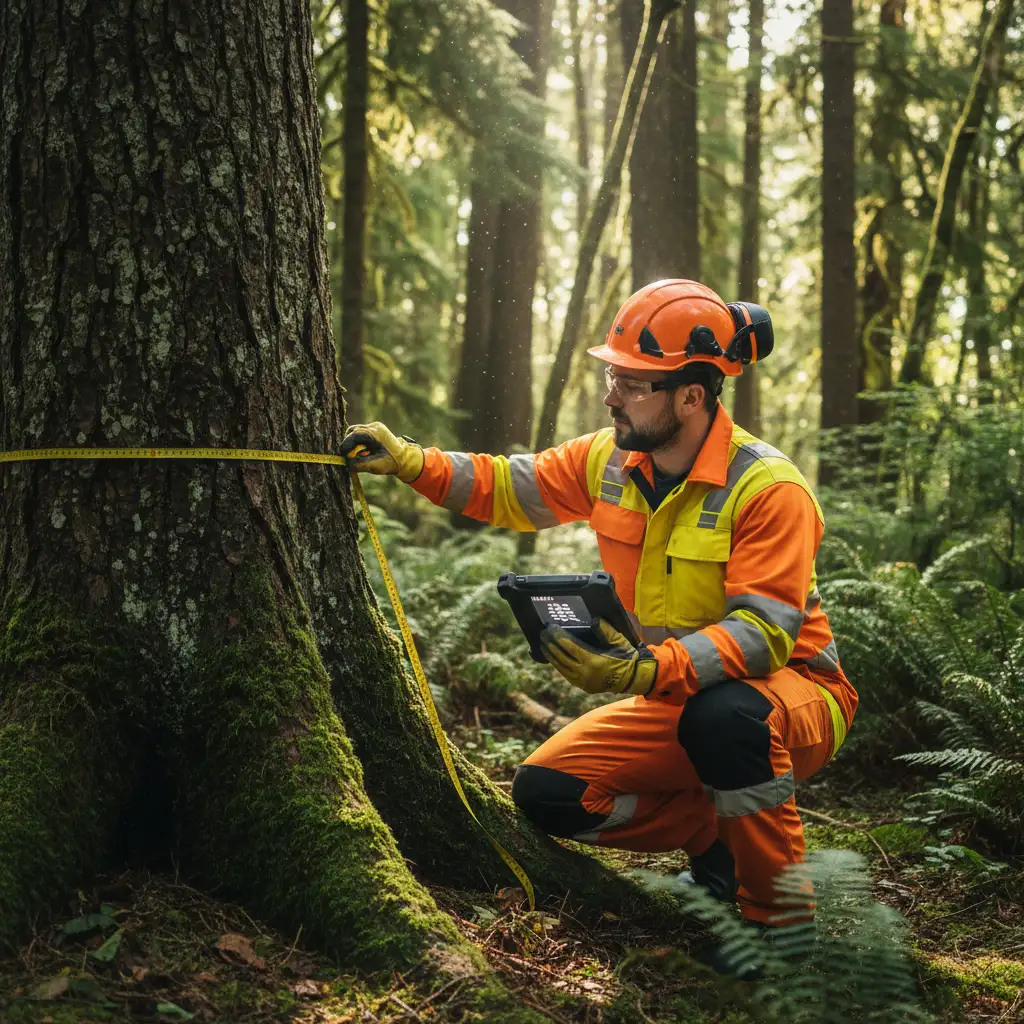
For forests larger than 100 hectares, relying on standard lookup tables for carbon calculations is not permitted. Participants must use the Field Measurement Approach. This involves establishing physical sample plots within the forest to measure actual tree height and diameter. These measurements are used to create participant-specific tables, ensuring that the carbon credits claimed reflect the actual biomass of the forest.
Frequently Asked Questions
What is the difference between Pre-1990 and Post-1989 forest land?
Pre-1990 forest land was established before December 31, 1989, and owners face liabilities if they deforest. Post-1989 forest land was established after that date, and owners can voluntarily join the ETS to earn carbon credits for sequestration.
Can I plant native trees for Post-1989 forest land?
Yes, indigenous species like Manuka, Totara, and Beech are eligible for the ETS as Post-1989 forest land, provided they meet the height (5m) and canopy cover (30%) requirements at maturity.
Is gorse considered forest land?
Generally, no. Gorse is usually classified as a weed or scrub. However, if gorse is acting as a nurse crop for regenerating native forest, the land may eventually qualify as forest land once the eligible tree species overtop the gorse.
What happens if I sell my Post-1989 forest land?
You can transfer the ETS participation to the new owner, or you can deregister the land. If you deregister, you must pay back (surrender) the carbon units for the forest’s current carbon stock before the sale settles.
What is the minimum size for ETS forest registration?
The minimum area for a Carbon Accounting Area (CAA) is 1 hectare. Additionally, the forest must have an average width of at least 30 meters to qualify.
How much is a carbon credit worth in New Zealand?
The price of a New Zealand Unit (NZU) fluctuates based on market supply and demand, similar to a stock market. Prices are determined by auctions and secondary market trading. You should check current NZU spot prices for accurate valuation.
About The Author
