Carbon Farming Income Streams NZ
Carbon farming income in New Zealand is generated primarily through the Emissions Trading Scheme (ETS) by sequestering carbon in forests to earn New Zealand Units (NZUs). Landowners monetize these units by selling them on the secondary market, leasing land to carbon developers, or offsetting on-farm agricultural emissions to ensure long-term regulatory compliance and profitability.
Understanding the NZ Carbon Economy
The landscape of New Zealand’s rural economy is undergoing a seismic shift. For generations, income was derived almost exclusively from what grew on top of the soil—wool, meat, and dairy. Today, the carbon stored within the biomass of trees has become a tradable commodity, creating a lucrative parallel revenue stream known as carbon farming. For landowners, understanding the mechanics of the New Zealand Emissions Trading Scheme (ETS) is the prerequisite for unlocking this capital.
At its core, the NZ ETS puts a price on greenhouse gas emissions. Sectors that emit carbon must surrender New Zealand Units (NZUs) to the government, while those who remove carbon from the atmosphere—primarily through forestry—can earn NZUs. One NZU represents one tonne of carbon dioxide equivalent (CO2e). The market price of these units fluctuates based on supply, demand, and government policy settings, creating a dynamic marketplace that savvy landowners can leverage.
However, entering the carbon market is not a passive investment. It requires rigorous adherence to the Ministry for Primary Industries (MPI) regulations, precise land mapping, and a strategic choice between different accounting methodologies, such as “averaging accounting” versus “stock change accounting.” The commercial intent here is clear: to maximize the Return on Investment (ROI) per hectare by optimizing land use capability (LUC).
Integrating Carbon Forestry with Livestock
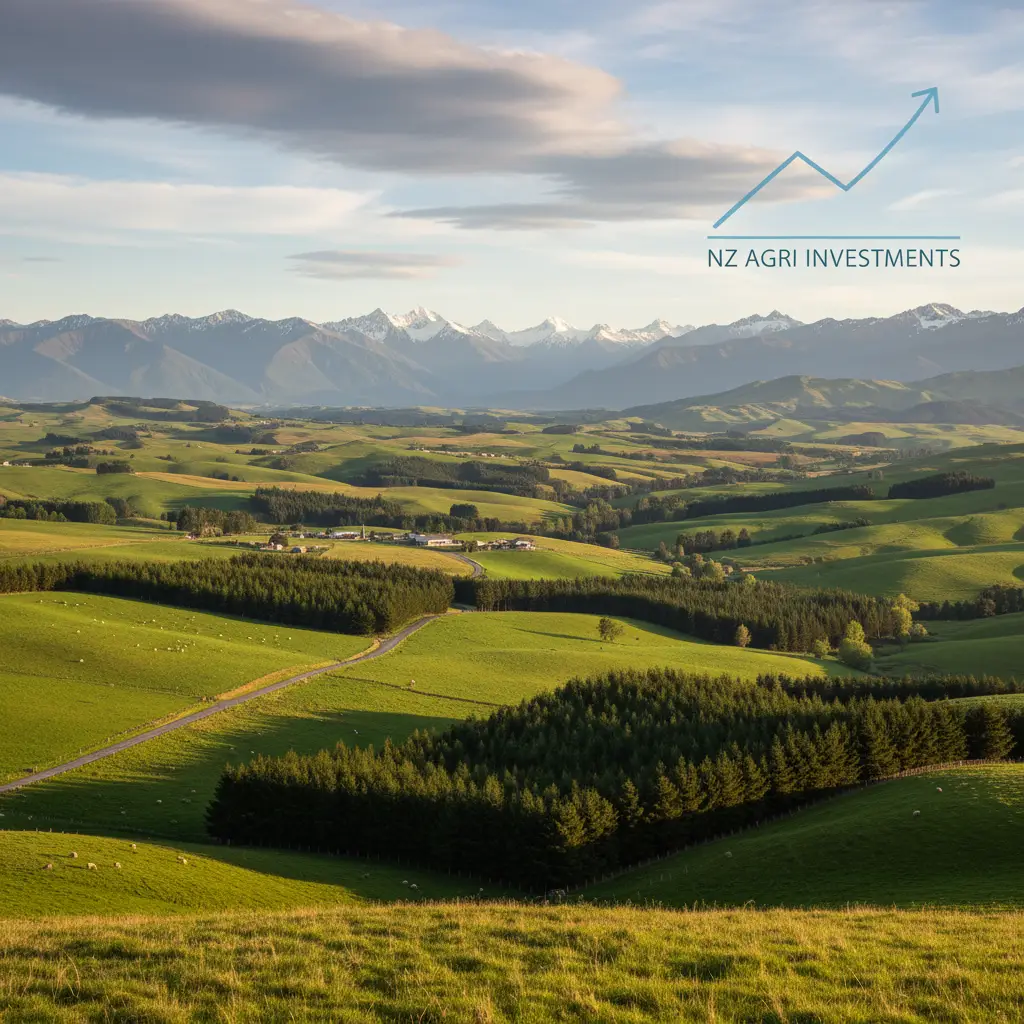
The most resilient carbon farming models often do not involve blanketing entire farms in pine trees. Instead, they utilize a diversified approach that integrates forestry with existing livestock operations. This concept, often referred to as the “Right Tree, Right Place” philosophy, allows farmers to monetize marginal, erosion-prone land while maintaining productive grazing on better soils.
The Economics of Silvopasture
Silvopasture—the intentional combination of trees and grazing—offers a dual income stream. By planting wide-spaced poplars, willows, or pines, farmers can claim carbon credits (depending on canopy cover density requirements under the ETS) while continuing to run sheep or cattle underneath. This provides:
- Shelter and Animal Welfare: Improved shade and wind protection lead to better lambing percentages and weight gain.
- Erosion Control: Stabilizing hill country preserves the asset value of the land.
- Carbon Revenue: Earning NZUs on land that was previously under-utilized.
Marginal Land Utilization
Many NZ farms possess steep gullies or sidlings that are barely profitable for grazing due to mustering costs and low pasture growth. Converting these specific zones into high-density carbon forests (exotic or native) turns a liability into an asset. The income from carbon sequestration on Class 6, 7, or 8 land often significantly outperforms the gross margin of sheep and beef farming on that same hectareage, effectively cross-subsidizing the livestock operation.
Leasing Land for Carbon Sequestration
For landowners who wish to retain ownership of their property but lack the capital or expertise to establish a forest, leasing land to carbon developers is a viable commercial pathway. This model has gained traction as investment funds seek land banks for carbon sequestration.
Structure of Carbon Leases
Carbon leases are typically long-term arrangements, often spanning 30 to 50 years to match the rotation length of the forest. There are two primary structures:
- Fixed Rental: The developer pays an annual per-hectare rental fee, indexed to inflation. The developer covers all establishment and maintenance costs and retains 100% of the NZUs. This provides the landowner with risk-free, guaranteed cash flow.
- Profit Share / Joint Venture: The landowner provides the land, and the developer provides the capital and expertise. The resulting NZUs are split according to a pre-agreed percentage (e.g., 20% to landowner, 80% to developer). This exposes the landowner to market volatility but offers significantly higher upside if carbon prices rise.
Critical Consideration: When leasing, landowners must ensure the contract addresses the “surrender liability” at harvest. If the trees are cut down, NZUs must be paid back to the government. Contracts must specify who bears this cost to prevent the landowner from being left with a massive liability decades down the line.

Selling NZUs vs. Holding for Future Liability
Once a forest is registered in the ETS and generating units, the landowner faces a critical commercial decision: sell now for immediate cash flow or hold for future capital gains and liability offsetting.
The Case for Selling (Cash Flow)
Selling NZUs annually provides immediate liquidity. This revenue can be used to service debt, invest in farm infrastructure, or expand operations. For exotic forests (Pinus radiata), carbon sequestration rates peak between years 6 and 18. Selling during this window creates a substantial income spike. However, under “averaging accounting,” you only earn credits up to a certain benchmark age, after which the income stops, but the liability on harvest is minimized.
The Case for Holding (Asset Appreciation & Compliance)
Many strategic planners advise holding a portion of NZUs. There are two drivers for this:
- Market Speculation: If the price of carbon rises from $50 to $100, holding the asset generates significant capital gains tax-free (under current laws, though tax advice is essential).
- Future Farm Emissions Liability: With regulations looming regarding agricultural emissions (methane and nitrous oxide), farmers may soon need to pay for their on-farm emissions. Holding NZUs creates a “self-insurance” policy, allowing the farm to offset its own emissions internally rather than buying credits on the open market later at potentially higher prices.
Financial Modeling for Carbon Farms
Successful carbon farming requires robust financial modeling. It is not as simple as planting trees and collecting cheques. A comprehensive model must account for establishment costs, ongoing maintenance, and the nuances of ETS accounting.
Cost Structures
To calculate net carbon income, you must deduct the following from your gross NZU revenue:
- Establishment: Seedlings, planting labor, and land preparation (spraying/clearing). For pine, this can range from $1,500 to $2,500 per hectare. Natives are significantly higher, often exceeding $10,000 to $20,000 per hectare due to higher plant costs and maintenance requirements.
- Maintenance: Pest control (possums, goats, deer) is non-negotiable. If pests destroy the canopy, the carbon stock decreases, and you may be liable to repay units.
- Insurance: Fire and windthrow insurance is critical to protect the carbon asset.
- ETS Administration: Consultant fees for mapping, emissions returns, and audits.

Revenue Projections: Look-up Tables vs. Measurement
For forests under 100 hectares, owners generally use MPI’s “Look-up Tables,” which provide average sequestration rates based on region and species. This offers certainty but may undervalue a high-performing forest. For forests over 100 hectares, Field Measurement Approach (FMA) is mandatory. This involves physical plots to measure actual biomass. If your forest grows faster than the average, FMA yields more NZUs; if it grows slower, you receive fewer.
Native vs. Exotic: The Economic Trade-offs
The choice of species dictates the financial profile of the carbon farm. This is the most debated topic in the NZ carbon industry.
Pinus Radiata (Exotic)
Pros: Extremely fast growth rates, meaning rapid accumulation of NZUs. Low establishment costs. High liquidity.
Cons: Environmental concerns regarding monocultures. Political risk (government changes to ETS regarding permanent exotic forests). Short lifespan for carbon income before harvest or saturation.
Native Regeneration
Pros: superior biodiversity outcomes, erosion control, and social license. Long-term sequestration (natives absorb carbon for centuries, not decades).
Cons: Very slow sequestration rates initially, meaning low early cash flow. High establishment costs. However, the government is exploring “biodiversity credits” which could stack on top of carbon credits to make natives more financially viable.

Risks, Compliance, and Tax Implications
Carbon farming is not a “set and forget” passive income. It carries specific liabilities that can bankrupt an unprepared operation.
The Surrender Liability
If a forest is damaged by fire, wind, or disease, the landowner may be required to surrender NZUs equivalent to the carbon lost. If the landowner has already sold those units and the price has since risen, they must buy them back at the new market rate to pay the government. This “short squeeze” risk necessitates maintaining a buffer of unsold units or robust insurance coverage.
Tax Treatment
Income from the sale of NZUs is generally treated as taxable income in the year of sale. However, the costs of establishing the forest are often deductible. The timing of sales versus expenditure is a crucial tax planning element. Furthermore, the valuation of NZUs held on the balance sheet can have implications depending on the entity structure. Professional accounting advice specific to the ETS is mandatory.
In conclusion, carbon farming in New Zealand offers a sophisticated mechanism for diversifying rural income. Whether through integrating silvopasture, leasing land, or managing dedicated carbon crops, the potential for high returns is significant. However, success depends on rigorous financial modeling, understanding the regulatory environment, and executing a strategy that balances immediate cash flow with long-term liability management.
How much is a carbon credit worth in NZ?
The price of a New Zealand Unit (NZU) fluctuates on the open market, driven by supply and demand within the ETS. Historically, prices have ranged significantly, often sitting between $50 and $85 in recent years. Landowners should consult the latest spot market prices on trading platforms like Jarden or CommTrade for real-time data.
Is carbon farming profitable in NZ?
Yes, carbon farming can be highly profitable, particularly on marginal land where stock grazing returns are low. Pinus radiata offers the highest short-term returns due to rapid growth rates. However, profitability depends on establishment costs, current NZU prices, and ongoing pest control expenses.
How many hectares do you need for carbon farming?
To enter the ETS, a forest area must be at least one hectare in size, have an average width of at least 30 meters, and have a tree crown cover of more than 30% per hectare. Smaller blocks can be aggregated, making it viable for smaller lifestyle blocks as well as large stations.
Can you graze stock in a carbon forest?
Yes, grazing stock under trees (silvopasture) is permitted and encouraged to manage grass growth and reduce fire risk. However, care must be taken to ensure livestock do not damage young trees, which could reduce the carbon stock and affect ETS eligibility.
What is the difference between averaging and stock change accounting?
Averaging accounting allows you to earn credits up to the long-term average carbon storage of the forest, providing a lower risk profile for production forests that will be harvested. Stock change accounting tracks the actual rise and fall of carbon, offering higher potential returns but carrying the liability of repaying units upon harvest.
Is there a tax on carbon credits in NZ?
Yes. Generally, the revenue generated from selling NZUs is considered taxable income. Conversely, the costs associated with establishing and maintaining the forest are typically tax-deductible. Holding units without selling them usually does not trigger a tax event until they are sold, but specific accounting rules apply.
About The Author
