Auctioning NZUs Guide
Auctioning NZUs is the primary mechanism by which the New Zealand Government supplies New Zealand Units (NZUs) to the market under the Emissions Trading Scheme (NZ ETS). Conducted quarterly via the Managed Auction Service, these events allow participants to purchase carbon credits required for compliance, governed by specific volume limits, price floors, and confidential reserve prices.
The transition to auctioning NZUs marked a significant evolution in New Zealand’s climate policy, moving away from fixed-price options to a market-led approach designed to cap emissions effectively. For businesses with surrender obligations, investors, and foresters, understanding the nuances of this auctioning system is critical for financial planning and regulatory compliance.
How Do NZ ETS Auctions Work?
The New Zealand Emissions Trading Scheme (NZ ETS) is the government’s main tool for meeting domestic and international climate change targets. Within this framework, auctioning is the method used to sell New Zealand Units (NZUs) into the market. An NZU represents one metric tonne of carbon dioxide equivalent.
Prior to the introduction of auctions in 2021, the market relied heavily on the Fixed Price Option (FPO), which acted as a price ceiling. The move to auctioning was driven by the Climate Change Response (Emissions Trading Reform) Amendment Act 2020, aiming to align the supply of units with New Zealand’s emissions budgets.
Auctions are held four times a year. They are sealed-bid, single-round auctions. This means bidders submit their bids without seeing what others are bidding. Once the bidding window closes, the clearing price is determined based on the lowest successful bid that clears the available volume. Importantly, all successful bidders pay this single clearing price, regardless of the price they originally bid.

Auction Calendar and Volumes
Understanding the schedule and the volume of units available is the first step in participating in the auctioning of NZUs. The government sets these parameters well in advance to provide market certainty.
When are the auctions held?
Auctions generally occur on the third Wednesday of March, June, September, and December. The specific dates are published annually by the Ministry for the Environment. Consistency in these dates allows participants to arrange necessary collateral and liquidity ahead of time.
How are auction volumes determined?
The volume of NZUs available for auction is not arbitrary. It is set annually by the Minister of Climate Change, following advice from the independent Climate Change Commission. This process ensures that the number of units released into the scheme aligns with New Zealand’s five-year emissions budgets.
The total annual volume is divided equally among the four quarterly auctions. However, if an auction fails (e.g., the clearing price does not meet the confidential reserve price), the unsold units roll over to the next auction within the same calendar year. If units remain unsold at the final auction of the year, they do not roll over to the following year; they are effectively cancelled, tightening supply.
Price Controls: CRP and CCR
To ensure market stability, the government employs specific price control mechanisms during the auctioning of NZUs. These controls prevent prices from crashing too low or spiking too high, protecting both the environmental integrity of the scheme and the economy.
What is the Auction Price Floor?
The price floor is the absolute minimum price at which units can be sold. If bidding does not reach this level, no units are sold. This floor ensures that the cost of carbon remains significant enough to encourage emissions reductions.
What is the Cost Containment Reserve (CCR)?
The Cost Containment Reserve (CCR) is a mechanism designed to prevent the auction price from becoming unacceptably high. It acts as a “release valve.” If the auction clearing price reaches a specific “trigger price,” an additional reserve volume of NZUs is released into the auction.
The CCR volume and trigger price are set by regulation. If triggered, these extra units increase supply, theoretically dampening the price spike. However, releasing CCR units is a trade-off, as it allows for more emissions than initially budgeted within the standard cap.
Understanding Confidential Reserve Prices
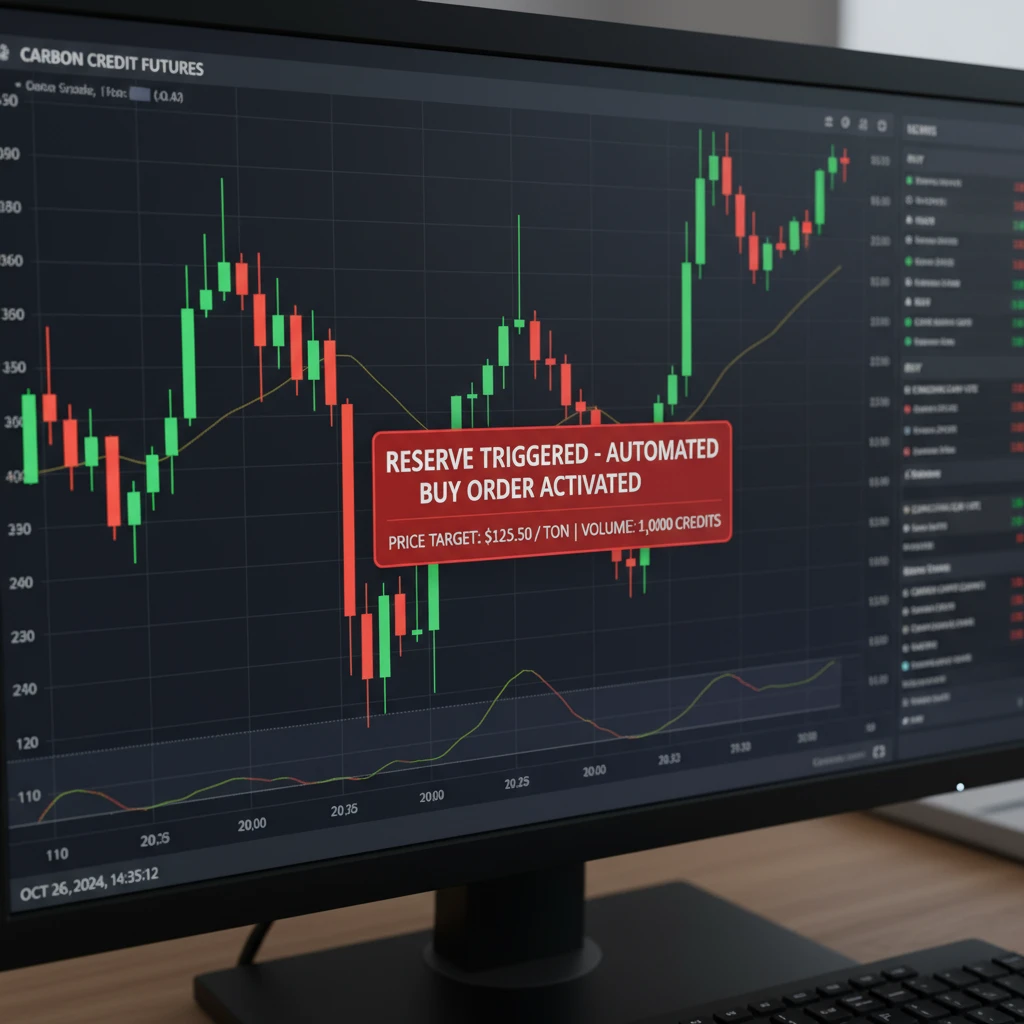
One of the most critical, yet often misunderstood, aspects of the auctioning nzus guide is the Confidential Reserve Price (CRP). Unlike the published price floor, the CRP is not disclosed to the market before the auction.
Why is there a Confidential Reserve Price?
The CRP serves to ensure that NZUs are not sold significantly below the prevailing secondary market price. While the auction drives price discovery, the government does not want to undercut the secondary market, which could devalue existing holdings and reduce the incentive to decarbonize.
How is the CRP calculated?
The methodology for calculating the CRP is kept confidential to prevent gaming. However, it is generally understood to be based on the weighted average price of NZU trades in the secondary market over a period leading up to the auction. If the clearing price determined by the bids is lower than the CRP, the auction is “declined,” and no units are sold. These unsold units then roll forward to the next auction in the same year.
This mechanism was famously triggered in several auctions throughout 2023, where the market’s bid prices were lower than what the government (via the CRP) deemed acceptable based on secondary market activity. This resulted in zero volume being sold, creating a supply shock that participants must factor into their strategies.
How to Bid: A Step-by-Step Guide
Participating in an auction requires preparation. The auctions are operated by NZX on behalf of the Ministry for the Environment via the Managed Auction Service. Below is the process for engaging in the auctioning of NZUs.
Step 1: Registration
Before you can bid, you must be a registered user of the New Zealand Emissions Trading Register (NZETR). Once you have an NZETR holding account, you must apply to become a participant in the Managed Auction Service. This involves Anti-Money Laundering (AML) checks and Know Your Customer (KYC) verification.
Step 2: Posting Collateral
You cannot bid with empty pockets. Participants must provide collateral (cash or letter of credit) to the clearing manager at least five business days before the auction. The amount of collateral you post determines your “bidding limit.” You cannot bid for more value than you have secured with collateral.
Step 3: Submitting Bids
On auction day, the bidding window is typically open from 9:00 am to 12:00 pm. Participants log into the auction platform and submit their bids. A bid consists of:
- Quantity: The number of NZUs you wish to buy.
- Price: The price per NZU you are willing to pay.
You can submit multiple bids at different price points. This is a common strategy to hedge risk; bidding a small volume at a high price to ensure some supply, and a larger volume at a lower price.

Step 4: Auction Results
Results are usually announced in the afternoon of the auction day. The auction operator calculates the clearing price. If your bid price was at or above the clearing price, you are successful. All successful bidders pay the clearing price, not their bid price.
Settlement and Unit Transfer
Winning the bid is only half the process; settlement is the finalization of the transaction. The efficiency of the settlement process is vital for liquidity management.
How does payment work?
If your bid is successful, the cost is deducted from your posted cash collateral. If you used a letter of credit or if your cash collateral is insufficient (though bidding limits usually prevent this), you must settle the outstanding amount immediately. Failure to settle results in default, significant penalties, and a ban from future auctions.
When are units transferred?
Once payment is confirmed, the NZUs are transferred from the Crown’s auction account to the participant’s NZETR holding account. This typically happens within a few days of the auction closing. Once in your holding account, these units can be surrendered for compliance, held for future use, or sold on the secondary market.
Strategic Market Implications
The auctioning of NZUs has profound effects on the broader carbon market in New Zealand. The clearing price set at auction often acts as a benchmark for the secondary market (spot market) for the following quarter.
When an auction clears at the CCR trigger price, it signals high demand and potentially insufficient supply, often driving secondary market prices up. Conversely, if an auction is declined due to the Confidential Reserve Price, it removes supply from the market temporarily. While this might seem bullish (less supply), it also signals a disconnect between government valuation and buyer willingness to pay, which can lead to market volatility.
For large emitters, a mixed procurement strategy is often recommended. Relying solely on auctions carries the risk of “declined” auctions or CCR triggers. Therefore, many supplement auction participation with bilateral agreements or spot market purchases to average out their compliance costs.
Frequently Asked Questions
What happens if an NZU auction is declined?
If an auction is declined because the clearing price did not meet the Confidential Reserve Price or the price floor, no units are sold. The unsold volume is rolled over to the next scheduled auction in the same calendar year. If the final auction of the year is declined, those units are cancelled and not available for future sale.
Who can participate in auctioning NZUs?
Any individual or organization with a New Zealand Emissions Trading Register (NZETR) account can participate, provided they register with the Managed Auction Service and pass the required Anti-Money Laundering (AML) and Know Your Customer (KYC) checks. This includes compliance buyers, foresters, and speculators.
Is the auction price the same as the spot price?
Not necessarily, though they are usually close. The auction price is determined by sealed bids at a specific point in time, while the spot price fluctuates continuously on the secondary market based on bilateral trades. The Confidential Reserve Price helps keep the auction price aligned with the secondary market.
What is the minimum bid volume in an NZU auction?
The minimum bid volume is typically 500 NZUs. Bids must be made in multiples of 100 units. This ensures that the auction is accessible to medium-sized participants while maintaining administrative efficiency.
How does the Cost Containment Reserve affect the NZU price?
The Cost Containment Reserve (CCR) releases extra units if the price hits a high trigger level. This increase in supply is intended to soften price spikes. However, once the CCR is exhausted, prices can continue to rise if demand remains strong.
Can I sell NZUs back to the government at auction?
No. The auctions are strictly for the government to sell units to the market. If you wish to sell NZUs you currently hold, you must do so on the secondary market through private brokers, trading platforms, or bilateral agreements with other participants.
About The Author
