Solar Power Incentives NZ
Solar power incentives in New Zealand primarily consist of bank-issued “Green Loans” offering 0% or 1% interest rates for sustainable upgrades, alongside Grid Export Credits (buy-back rates) where retailers pay for excess electricity generated. While direct government cash subsidies for private solar installations are currently limited, these financial mechanisms significantly reduce upfront costs and improve long-term ROI.
New Zealand is at a pivotal moment in its transition toward renewable energy. Driven by the Zero Carbon Act and the increasing volatility of electricity prices, homeowners are turning to solar photovoltaic (PV) systems not just for environmental reasons, but as a robust financial investment. Unlike some jurisdictions that offer direct cash rebates, the New Zealand market focuses on financing accessibility and operational revenue through export credits.
What Are the Primary Solar Power Incentives in NZ?
When discussing solar power incentives NZ, it is crucial to distinguish between direct government handouts and market-driven financial tools. Currently, the landscape is dominated by banking institutions and electricity retailers rather than taxpayer-funded grants for the general public.
The primary incentives available to New Zealanders in 2024 include:
- Low-Interest “Green” Loans: Major banks offer top-up home loans at significantly reduced interest rates (often 0% or 1%) specifically for energy-efficient upgrades, including solar panels and batteries.
- Solar Buy-Back Rates (Export Credits): Electricity retailers pay homeowners for the surplus energy they export back to the national grid.
- Kāinga Ora Initiatives: Specific programs for public housing to reduce energy hardship, though these are less accessible to the private market.
These mechanisms are designed to lower the barrier to entry. The initial capital expenditure (CapEx) for a standard 3kW to 5kW system can range from $8,000 to $14,000. By utilizing low-interest financing, homeowners can often align their loan repayments with the savings generated from their power bills, creating a cash-flow-neutral or positive scenario from year one.
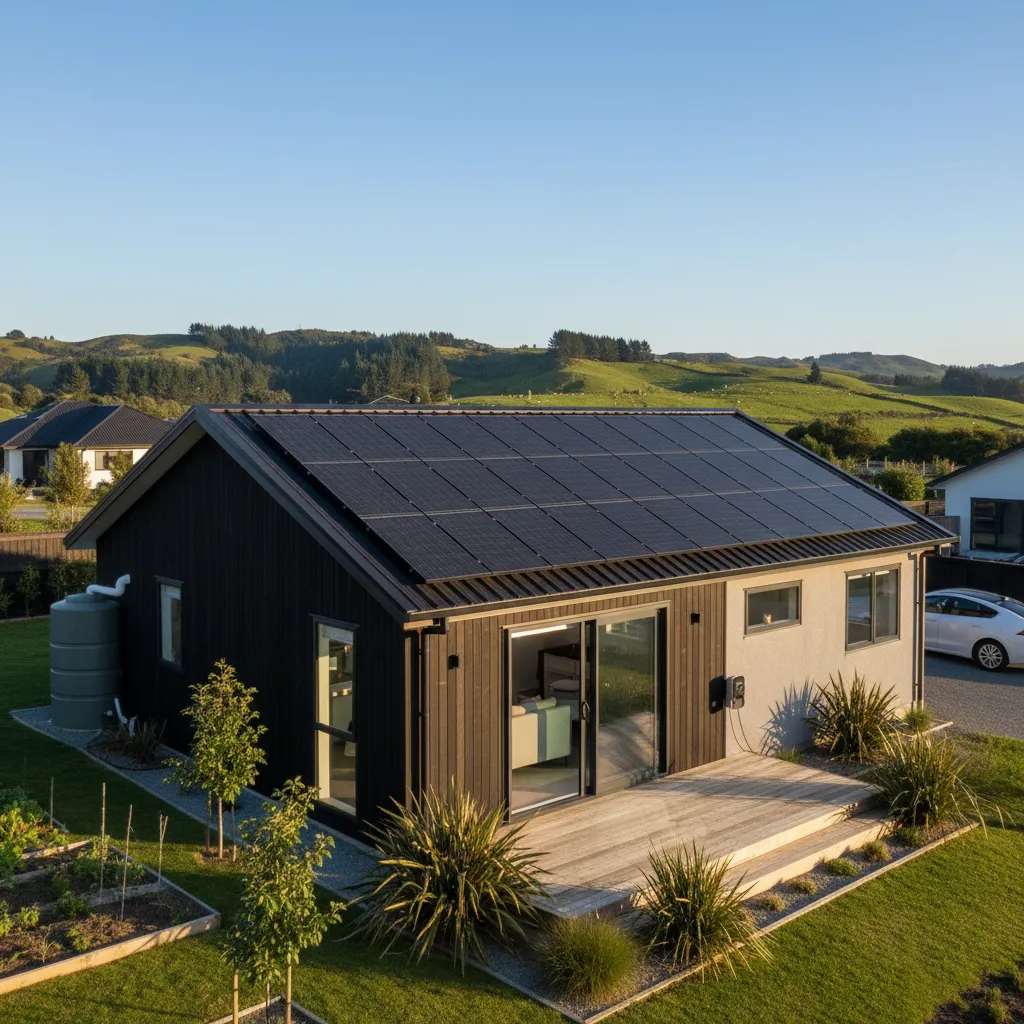
How Do Interest-Free Solar Loans Work?
The most powerful driver for solar adoption in New Zealand currently is the competitive lending environment. Banks have recognized that energy-efficient homes are lower-risk assets. Consequently, they have introduced “Green Loan” top-ups that are vastly cheaper than standard mortgage rates or personal loans.
Major Bank Offerings
Understanding the nuances between lenders is key to maximizing your financial advantage:
- ANZ Good Energy Home Loan: ANZ allows customers to top up their home loan by up to $80,000 at a fixed rate of 1% for 3 years. This can cover solar panels, batteries, and electric vehicle chargers.
- Westpac Warm Up Loan: Westpac offers an interest-free loan (0% interest) for up to $40,000 for five years. This is one of the most aggressive incentives in the market, effectively making the capital cost of solar cheaper than inflation.
- ASB Better Homes Top Up: ASB provides a 1% fixed interest rate for three years for up to $80,000.
- BNZ Green Home Loan Top Up: Similar to others, offering a 1% rate for three years on balances up to $80,000.
- Kiwibank Sustainable Energy Loan: Kiwibank has historically supported sustainable energy initiatives; checking their latest specific “green” top-up offer is recommended as terms update frequently to match competitors.
The Financial Impact of 0% vs. Standard Rates
Consider a $15,000 solar installation. On a standard floating mortgage rate (approx 7-8%), the interest cost over 5 years would be significant. Under a Westpac 0% scheme, you pay zero interest. If you save $250 a month on power bills and your loan repayment is $250 a month, the system effectively pays for itself immediately. This financial structure is the cornerstone of the current solar power incentives NZ framework.
What Are Grid Export Credits and Buy-Back Rates?
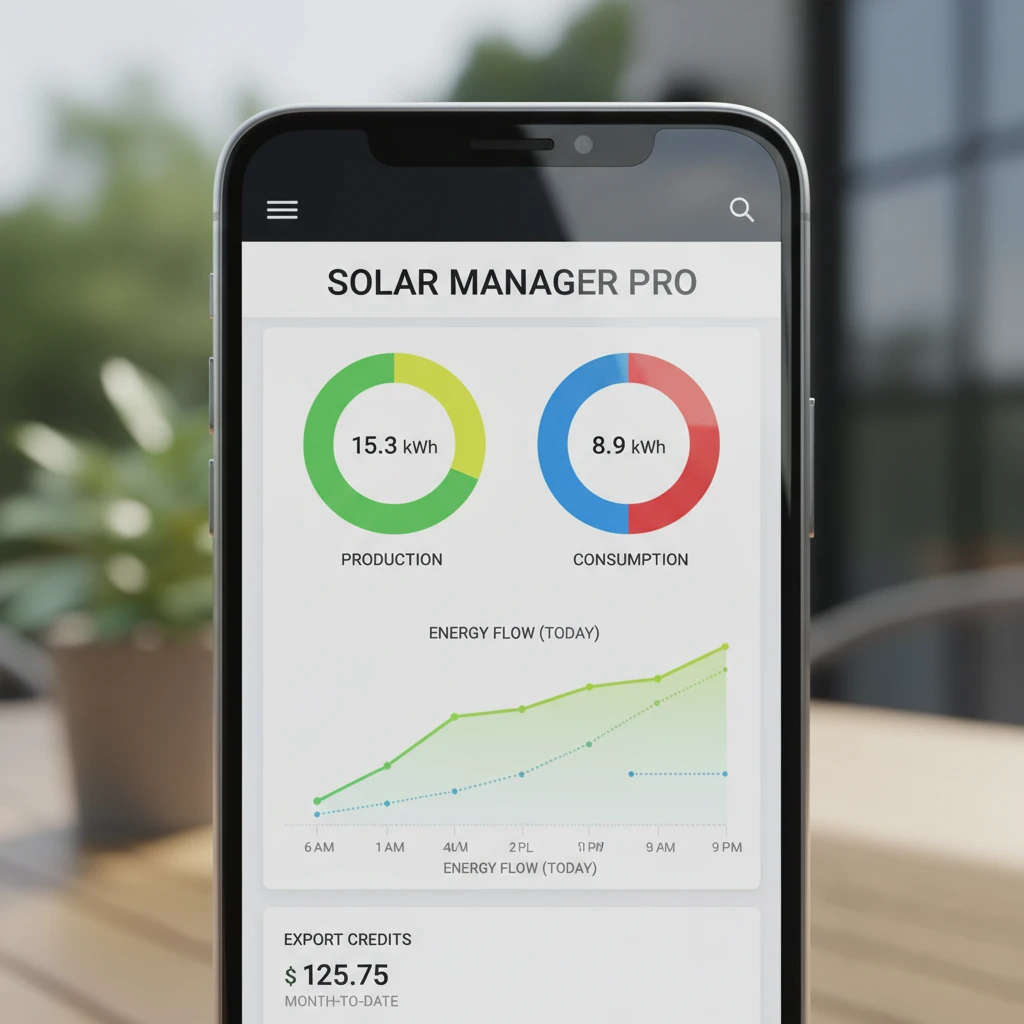
Once your panels are installed, you become a micro-generator. During the day, if your system generates more power than your household consumes, that excess electricity flows back into the grid. Your electricity retailer will credit your account for this export. This is known as the “Buy-Back Rate” or “Feed-in Tariff.”
It is vital to understand that buy-back rates are not subsidies; they are commercial payments for energy. However, they vary wildly between retailers and can significantly alter the ROI of your system.
Comparing Retailer Rates
As of late 2024, rates typically fluctuate between 7c and 17c per kWh, though some dynamic plans offer spot-market pricing which can be higher during peak demand.
- Meridian Energy: Offers competitive buy-back rates, often guaranteeing terms for 5 years for customers who purchase their solar hardware through them.
- Contact Energy: Provides distinct rates for solar customers, sometimes bundling with “free power” hours which can be strategic for battery owners.
- Octopus Energy: Known for innovative tariffs, they may offer rates that track closer to wholesale prices, rewarding you for exporting when the grid is under stress.
- Genesis Energy: Offers standard buy-back rates, often incentivizing customers to bundle gas and electricity.
Strategy Tip: Do not choose a retailer solely on the highest export rate. You must balance the export rate against the import rate (what you pay when you buy power). A retailer offering a high 15c export rate but charging a massive 40c import rate may be less economical than a balanced 10c/25c split, depending on your self-consumption ratio.
Does the Government Provide Direct Solar Subsidies?
Many homeowners search for “government solar rebates NZ” expecting a cash refund similar to the Clean Car Discount. It is important to clarify the government’s stance under the Climate Change Response (Zero Carbon) Amendment Act.
Currently, the New Zealand government focuses its direct funding on:
- Warmer Kiwi Homes: This program offers grants for insulation and heating (heat pumps) for low-income homeowners, covering up to 80% of costs. It generally does not cover solar PV panels.
- Public Housing Projects: Kāinga Ora is rolling out solar on state housing to reduce energy hardship for tenants.
- Community Energy Fund: There are funds available for community-level renewable energy projects rather than individual private wealth generation.
The government’s strategy is to facilitate the market via the Electricity Authority regulations (ensuring you can connect to the grid) and banking regulations (encouraging green capital), rather than subsidizing private asset purchases directly. This approach aims to ensure long-term market sustainability without reliance on fluctuating political budgets.
What Are the Best Practices for Solar Installation?
To maximize the benefits of the incentives mentioned above, the physical installation must be optimized for New Zealand’s specific geography and sun paths. A poorly installed system will yield low export credits and slow ROI.
Orientation and Tilt
New Zealand is in the Southern Hemisphere, meaning the sun is in the North. Ideally, panels should face True North. However, variations are acceptable:
- North-West Facing: Excellent for capturing afternoon sun, which aligns with peak household demand (cooking, heating, lights) and reduces the need to buy expensive evening grid power.
- East-West Split: Useful for all-day generation, smoothing out the curve and reducing the sharp midday peak that often gets exported at low rates.
Accreditation Matters
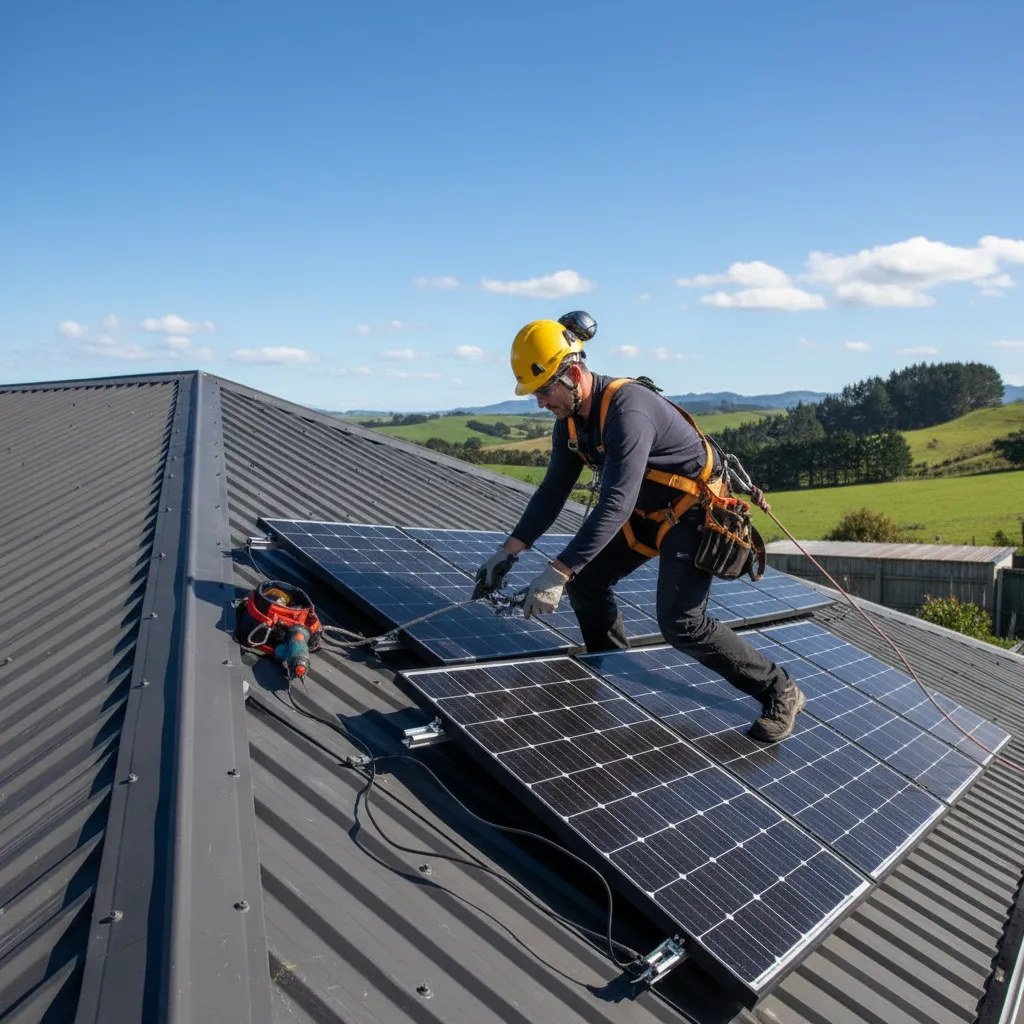
To qualify for bank Green Loans and grid connection, you typically must use a SEANZ (Sustainable Energy Association New Zealand) accredited installer. This ensures:
- Compliance with AS/NZS 3000 electrical standards.
- Valid equipment warranties (usually 25 years for performance).
- Safe grid integration to prevent islanding during blackouts (unless you have a specific backup gateway).
How to Calculate ROI on Solar in New Zealand?
Calculating the Return on Investment (ROI) involves three main variables: System Cost, Self-Consumption Rate, and Import/Export Tariffs.
The Golden Rule: Self-Consumption
The most lucrative “incentive” is the money you don’t pay to the power company. If you pay 30c/kWh for power and sell it for 10c/kWh, every unit of solar energy you use yourself is worth three times more than what you sell.
Example Calculation:
- System Cost: $12,000 (funded via 0% interest loan).
- Annual Generation: 5,000 kWh.
- Self-Consumption (50%): 2,500 kWh x $0.30 = $750 savings.
- Export (50%): 2,500 kWh x $0.10 = $250 earnings.
- Total Annual Benefit: $1,000.
- Simple Payback: 12 years (without factoring in rising power prices).
However, electricity prices in NZ are trending upward. If prices rise by 5% annually, the payback period drops significantly, often to the 7-9 year mark. With a 0% interest loan, the cash flow is often positive immediately because the loan repayments are offset by the $1,000 annual savings.
Future Outlook: Virtual Power Plants and Batteries
The future of solar power incentives NZ lies in battery storage and Virtual Power Plants (VPPs). As the grid becomes more congested, transpower and local lines companies are looking for ways to stabilize voltage.
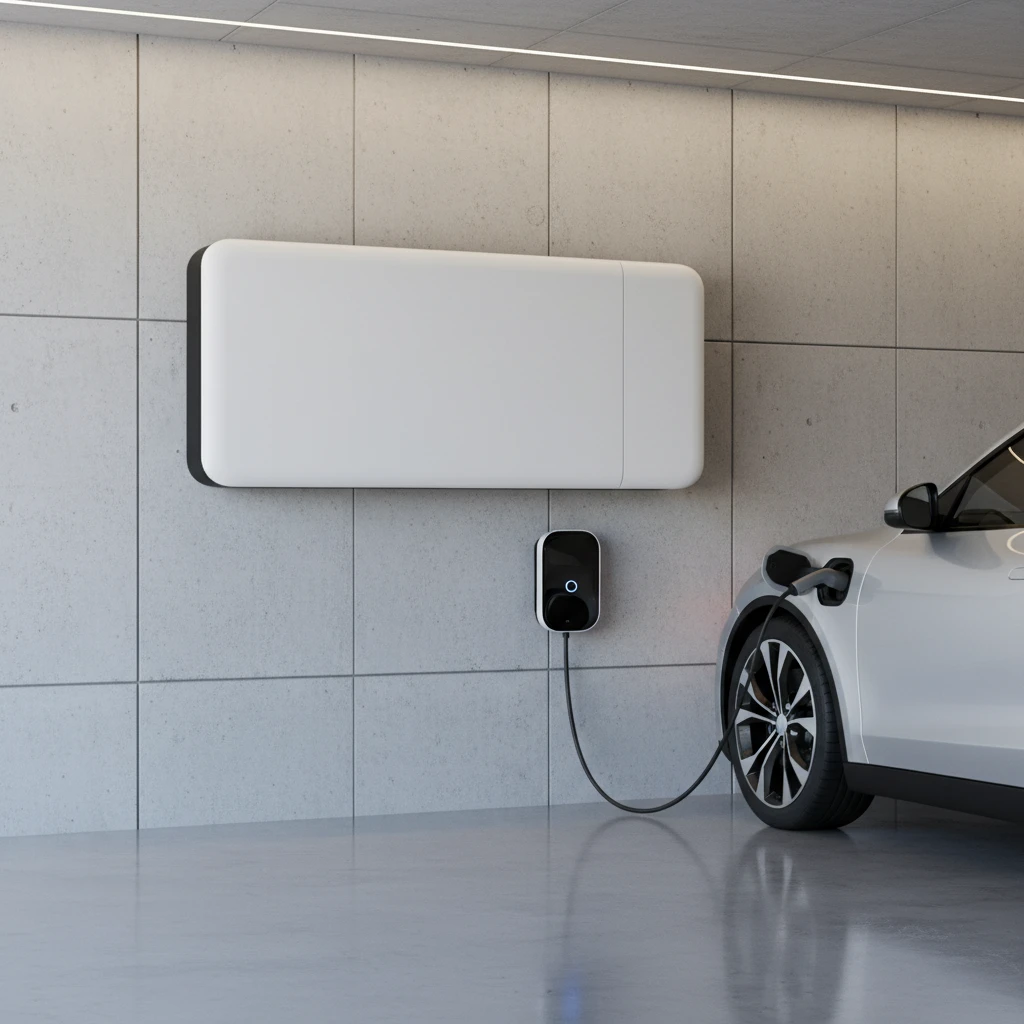
VPPs allow electricity companies to remotely access your battery stored energy during peak demand events (like a cold winter evening) to support the grid. In exchange, they pay premium rates—sometimes significantly higher than standard export credits. While still in the early stages in NZ, VPPs represent the next frontier of incentives, turning a passive solar system into an active income-generating asset.
Frequently Asked Questions
Are solar panels worth it in New Zealand without a government subsidy?
Yes. Even without direct cash grants, the combination of high electricity prices, low-interest “Green Loans” from banks, and reasonable export rates makes solar a strong financial investment with a typical ROI of 7-10 years.
Can I get a free solar system in NZ?
Generally, no. While some companies market “zero upfront cost” solar, these are usually lease-to-own agreements or Power Purchase Agreements (PPAs) where you pay for the power generated over time. Always read the fine print regarding ownership and property liens.
Do solar panels work in cloudy NZ weather?
Yes, solar panels rely on daylight, not just direct heat or blinding sunlight. While production drops on cloudy days, modern PV panels are efficient enough to generate significant power even during New Zealand’s overcast winter days.
What happens to my solar power during a blackout?
For safety reasons, standard grid-tied solar systems shut down during a power cut to prevent electrocuting linesmen. To have power during a blackout, you need a hybrid inverter and a battery with “island mode” or backup capability.
Is a battery worth the extra cost in 2024?
Batteries are expensive (often doubling system cost), but they allow you to store cheap solar power for use during expensive evening peaks. With the emergence of time-of-use tariffs and VPP incentives, batteries are becoming increasingly viable financially.
How long do solar panels last in NZ conditions?
Quality panels typically come with a 25-year performance warranty. They are built to withstand NZ’s UV levels, wind, and rain. Inverters usually have shorter lifespans (10-15 years) and may need replacement once during the system’s life.
About The Author
