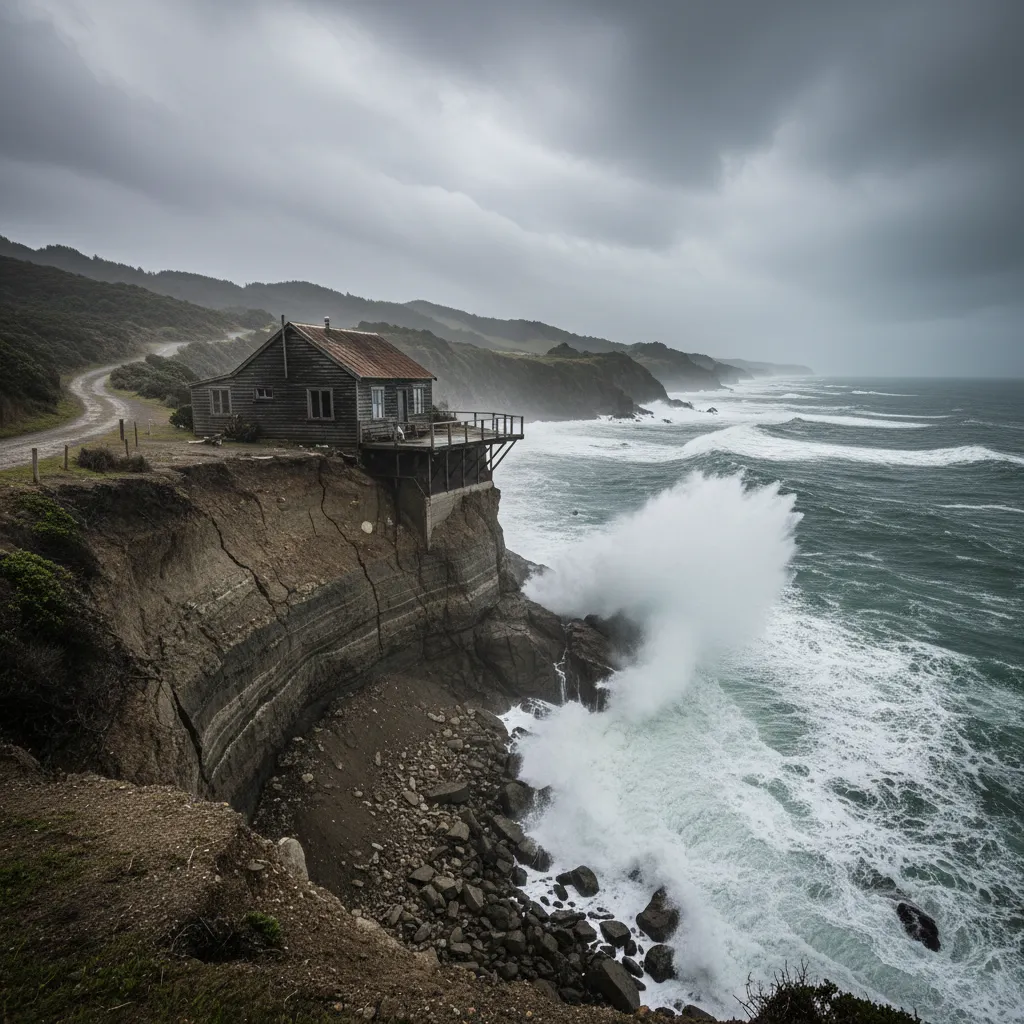
Coastal Hazards and Managed Retreat
Managed retreat NZ policy refers to the strategic relocation of communities, assets, and infrastructure away from areas at high risk of natural hazards, particularly coastal erosion and sea-level rise. This framework integrates central government legislation, such as the National Adaptation Plan, with local council planning to proactively manage climate...
Read More

Waste Minimisation Act NZ
The Waste Minimisation Act 2008 is New Zealand’s primary legislation governing waste reduction, recovery, and disposal. It establishes a legal framework for managing waste impacts, implementing regulated product stewardship schemes, and imposing levies on waste disposal facilities to fund sustainability initiatives and transition New Zealand toward a low-emissions circular...
Read More

Local Government Climate Mandates
Local government climate mandates in NZ are legislative requirements compelling councils to integrate climate change adaptation and mitigation into strategic decision-making. Governed primarily by the Local Government Act 2002 and the Zero Carbon Act, these mandates require councils to account for climate risks in Long-Term Plans, infrastructure strategies, and...
Read More

Community Climate Change Grants
To apply for climate change grants in NZ, identify relevant funding streams such as the Ministry for the Environment’s Community Environment Fund or specific local council sustainability schemes. Review eligibility criteria carefully, ensuring your project aligns with the Zero Carbon Act by demonstrating measurable emission reductions or increased community...
Read More

EV Subsidies and Infrastructure NZ
As of 31 December 2023, the New Zealand government officially ended the Clean Car Discount scheme, meaning direct financial subsidies and rebates for purchasing electric and plug-in hybrid vehicles are no longer available. Current policy focuses on expanding national charging infrastructure and managing the transition to Road User Charges...
Read More

Residential Energy Efficiency NZ
Residential energy efficiency NZ refers to the strategic optimization of housing performance to minimize energy consumption and carbon emissions, directly supporting the Climate Change Response (Zero Carbon) Amendment Act. It encompasses upgrading thermal envelopes through advanced insulation, installing high-efficiency heating systems, and utilizing smart technologies to reduce utility costs...
Read More

Auckland Regional Climate Action
Auckland regional climate action centers on Te Tāruke-ā-Tāwhiri: Auckland’s Climate Plan, a comprehensive strategy to halve regional emissions by 2030 and reach net zero by 2050. It integrates transport decarbonization, sustainable housing, and community resilience to mitigate climate risks while aligning with New Zealand’s Zero Carbon Act. As New...
Read More

Buying Carbon Offsets NZ
Buying carbon offsets in New Zealand involves purchasing verified credits from certified providers like Toitū, Ekos, or CarbonClick to neutralize your greenhouse gas emissions. These credits fund validated projects, such as native forest regeneration or renewable energy initiatives, allowing individuals and businesses to meet sustainability goals and align with...
Read More

Voluntary Carbon Markets NZ
Voluntary carbon markets in New Zealand allow businesses and individuals to purchase carbon credits on a discretionary basis to offset their greenhouse gas emissions, separate from the mandatory New Zealand Emissions Trading Scheme (NZ ETS). These markets primarily fund projects like native forest regeneration, offering biodiversity benefits alongside carbon...
Read More

ETS Compliance for EITE Businesses
ETS compliance for businesses involves the mandatory monitoring, reporting, and surrendering of emission units under the New Zealand Emissions Trading Scheme. Participants must submit annual emissions returns to the Environmental Protection Authority and surrender New Zealand Units (NZUs) corresponding to their greenhouse gas output to avoid significant financial penalties....
Read More